
Pucari songs are invocatory songs, a "song of praise" (tutip patal), that the dramatists who perform at Draupadi festivals sing at the beginnings and ends of their nightlong dramas. It can also be said that Pucari songs were devotional songs to Draupadi. At around 10 P.M., before the first characters are introduced, it is sung chorally, along with other songs, as the audience gathers to sit on the ground surrounding the stage. At dawn, after the play is over, the leading actor, in certain plays impersonating Draupadi herself, sings it, backed by some of the troupe`s musicians, while circumambulating the processional icons. These icons usually including one of Draupadi in combination with other epic figures will have arrived to "watch" the conclusion of the drama after touring the town or village till late into the night on a richly decorated bullock cart or "chariot" to announce the drama and the goddess`s local sovereignty during the time of her festival. The actor circumambulates the "chariot" icons holding aloft a tray bearing a camphor flame and turmeric powder, and he daubs spots of turmeric onto the foreheads of those who have been moved by the drama to come forth to receive this mark of yellow powder as a sign of Draupadi`s blessing. Yet the song is not just about the epic Draupadi. The goddess who tours the village on her "chariot" and whose epic story is enacted on stage will have her fixed and locally presiding stone icon in her village temple, where her priest, or pucari (Sanskrit pujarii), honours her with songs that are similar to the dramatists` song in one signal respect: both invoke her as "the lady who resides in Gingee." At all such singings, the claim is thus renewed that Draupadi is not only the chief heroine of the Mahabharata, but a goddess connected with the rural market town of Gingee , today a taluk headquarters in one of the most out-of-the-way, depopulated, non-industrialized, hot, mountainously rugged, boulder-ridden, and beautiful areas of Tamil Nadu, and once the home of kings.
The focus of the song, however, is not Gingee town, nor is it simply the more celebrated Gingee Fort, along side of which the town grew up and in a sense outlasted as an administrative center once the fort was finally abandoned in 1761 after over five centuries of dramatic history. Though the song certainly evokes the royal splendors and horrors of Gingee`s past, it focuses above all on a small village called Melacceri, which lies about three miles to the north of the Gingee Fort. This village is still known as "Old Gingee" and has traces of ancient fortifications estimated to have been built around A.D. 1200 and to antedate the first constructions of the Gingee Fort proper. It is here in Melacceri that the world of the Draupadi cult has its tenuous foothold in both history and myth.
The songs dedicated to Draupadi have eighteen verses. The reason as to why the songs have eighteen verses because it can be said that Mahabharata had eighteen parvas and also the war of Mahabharata had continued for eighteen days. Not only these but according to mythology eighteen is also the classical number of weapons which Goddess Durga holds in her eighteen arms.
It can be said about the song that in many places the song has moved away from the Draupadi cult of Mahabharata and establishes a cult of its own.
The Pucari songs can be classified as (1) allusions to the classical (Tamil as well as Sanskrit) Mahabharata; (2) "folk" modifications of this "classical" epic tradition; and (3) deepening evocations of the Hindu goddess.
The songs also deepen Draupadi`s identification as a form of the goddess, both mythologicaly and cosmologically. Variant verses of the dramatists` song and verses of the pucari songs connect her with the lion: ultimately the mount of the warrior goddess Durga, but also, more locally in South Indian villages, the vehicle of various "village goddesses" headed by Mariyamman.
The pucari songs highlight Draupadi`s associations with fire. It is usually the pucaris who play the most prominent ritual roles in the fire walking ceremonies that culminate Draupadi festivals. And it is also no coincidence that it is through images of fire that the goddess is invoked in her cosmic and most salvific forms.
Pucari Songs
Pucari Songs are devotional songs dedicated to Draupadi. With the help of such songs Draupadi is given the status of a goddess. Sometimes she is raised to the platform of Goddess Durga.
Recently updated articles in Religion in India
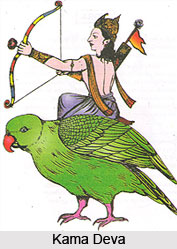
Kusumayudha
Kusumayudha is a name of Kamadeva, the Hindu God of Love. Depicted with a sugarcane bow and flower-tipped arrows, he represents attraction and longing...
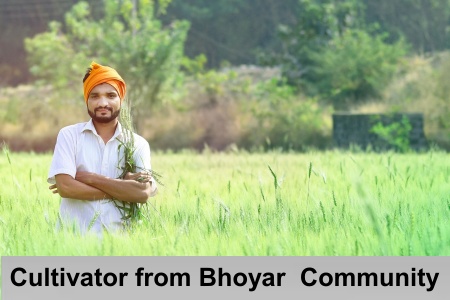
Bhoyar Caste
Bhoyar Caste is largely found in the Central Provinces of the country. Traditional occupation of Bhoyars is agriculture. They are good cultivators and...
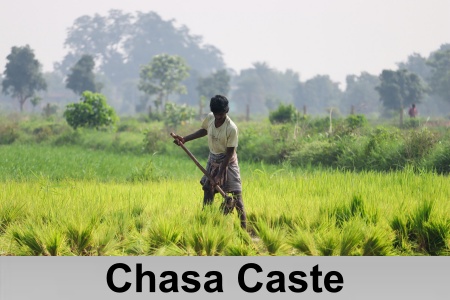
Chasa Caste
Chasa caste is a prominent agrarian community native to Odisha. Traditionally associated with cultivation and farming, Chasas have historically played...
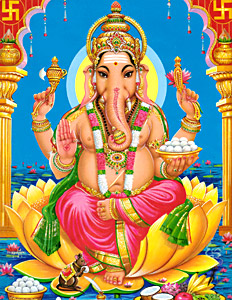
Vigneswara, A Form of Lord Ganesha
Lord Vigneswara is another form of Lord Ganesha or Vinayaka, prominently worshipped as the God of intelligence and good luck in the Indian subcontinen...
Maheswara
Maheswara, meaning “the Great Lord,” is a revered name of Lord Shiva in Hindu tradition. It represents Shiva’s supreme authority over creation, preser...
Related articles in Religion in India
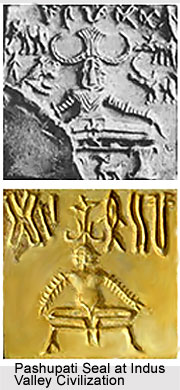
Religion in Indus Valley Civilization
Religion in Indus Valley Civilisation included Hinduism, Buddhism and Jainism. Details about the religion in Indus Valley Civilization have been gathe...
Iyer Brahmin
Iyer Brahmins are originally from Tamil Nadu of South India. They are known for their adherence to Advaita philosophy and Smarta traditions. Tradition...
Kumbhakar / Kumhar Caste
Kumbhakar or Kumhar caste is a traditional artisan community in India known for pottery making. Derived from Sanskrit word Kumbhakar, meaning potter,...

Gujjars in Mughal Era
Gujjars in the Mughal era enjoyed great power. Further their power increased with the decline of Aurangzeb, Mughal emperor.
Gotra in Hinduism
In Hinduism, gotra refers to a lineage system tracing descent from ancient sages, primarily through the paternal line. Originating from Vedic traditio...