
The most important characteristic of the Act of 1935 was the establishment of provincial autonomy. This was in accordance with the August Declaration of 1917. The Act of 1919 had given little control over the administration of the provinces to the Indian control over the administration of the provinces to the Indian ministers. Provincial autonomy was a definite improvement on diarchy in the provinces under the Government of India Act 1919 . However, that does not mean that The Government of India Act of 1935 established full-fledged responsible Government in the provinces. Ordinarily, a Governor was required to act according to the advice of the ministers and when he did so he acted as a Constitutional head. However, he was also authorised to act in his individual judgement. While doing so, he listened to the advice of the ministers but he might or might not act upon their advice.
History records that the Governor acted in his individual judgement while performing the following special responsibilities:
•1. Prevention of any grave menace to peace and tranquillity of the province or any part of it
•2. Safeguarding of the rights and legitimate interests of the public servants and their dependants
•3. Safeguarding of the rights and interests of the Indian states and the dignity of their rulers
•4. Safeguarding of the legitimate interests of the minorities
•5. Administration of partially-excluded areas
•6. Prevention of commercial discrimination against Englishmen and their goods
•7. Execution of the orders and directions of the Governor General issued by him in his discretion
•8. It was the duty of the Governor of the Central Provinces to see that a reasonable share of the provincial revenues was spent for the benefit of the people of Berar
•9. It was the duty of the Governor of Sindh to secure the proper administration of the Lloyd Barrage and the Canals` Scheme
In the following cases, the Governor acted in his discretion and while doing so he did not even consult the ministers:
•1. He could appoint and dismiss ministers. This was not a very substantial power. In the case of Bengal and the North-West Frontier Province, the power was used by the Governors to exclude a certain party and keep the other party in power. The Governor presided over the meetings of the Council of Ministers. By doing so, he could influence the deliberations and conclusions of the ministers. His great administrative experience must have been an asset to him while dealing with the ministers
•2. The Governor could issue two kinds of ordinances. One kind of ordinance could be issued by him at any time and that lasted for 6 months. The other kind of ordinance was issued by him when the provincial legislature was not sitting. He could issue what are known as Governor`s Acts. In certain cases, the previous sanction was required for the introduction of certain bills in the provincial legislatures. He could not stop the further discussion of any bill in the legislature at any time. Even when a bill was passed he could veto the same or send the same back for reconsideration by the legislature. He could also reserve the same for the assent of the Governor General
•3. The Governor appointed members of the Provincial Public Service Commission. He was given large powers regarding the police force and the authority to suppress terrorists
•4. The Governor decided what items of expenditure were to be regarded as "expenditure charged upon revenues of the province". These items were taken out of the control of the legislature. The non-votable items formed about 40 percent of the budget. If the whole of the budget was rejected, the Governor had the authority to restore the same
•5. Under Section 93 of the Act, the Governor was given the authority to suspend the Constitution and take over the administration in his own hands
But at the same time it should be mentioned that the Governors enjoyed substantial power under the Act of 1935. The powers given to them were not merely in theory. They were intended to be exercised and were actually exercised. However the extent to which these powers were exercised depended upon the character of the individual Governor and the position and prestige enjoyed by the provincial autonomy.
About Provincial Autonomy it can be said that it was definitely an improvement on the diarchy but it was not intended to establish responsible Government in the province.
Provincial Autonomy
Provincial Autonomy which was declared in the Government of India Act 1935 gave some amount of control of the provinces in the hands of the Indians.
Recently updated articles in History of India
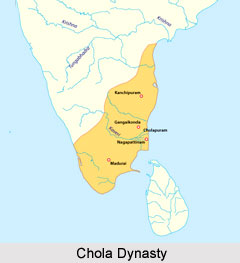
Chola Dynasty
Chola Dynasty is a Tamil dynasty and had longest duration of ruling in parts of South India. Chola dynasty had ruled South India successfully for a ex...
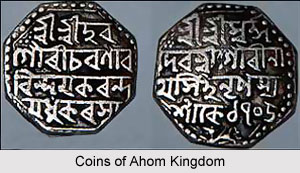
Suhungmung
Suhungmung was the fourteenth ruler of the Ahom dynasty who ruled from the period 1497 to 1539 AD. His reign was significant in terms of expansion of...
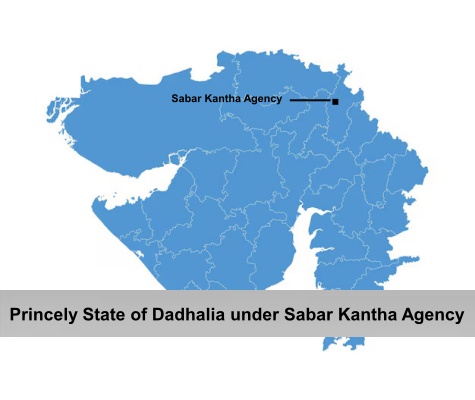
Princely State of Dadhalia
Princely State of Dadhalia was located in the present state of Gujarat. The state covered a total area of 28 sq miles and comprised of 15 villages. Th...
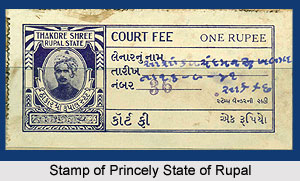
Princely State of Rupal
Princely State of Rupal was a part of the Baroda Agency, a sub division of Western India States Agency. It was under the administrative control of the...
Archaeological Sites of West Bengal
Archaeological sites of West Bengal reveal several aspects of ancient India. Excavations by the Archaeological Survey of India have furnished artefact...
Related articles in History of India

Mughal Architecture during Babur
Mughal architecture during Babur marked the foundation of a new architectural era in India, blending Timurid, Persian, and local influences. His reign...

Architecture during Sayyid and Lodi Dynasty
Architectures during the Sayyid and Lodi dynasty were mainly the tombs and monuments for the dead rulers. It were carefully designed and meticulously...

Brahmanical Sources of Ancient History
Brahmanical Sources of ancient history are contained in the Vedas and they constitute one of the most important literary sources of information about...

Coins of Chola Empire
Coins of Chola Empire were issued in gold, silver and copper and carried the Chola emblem.

Coins of Khilji Dynasty
Coins of Khilji Dynasty had an influential feature that was followed by the other dynasties.