
Protection of Prince as a part of king`s personal responsibility has been discussed in chapter XVII of Book I of Arthashastra. Ever since born the king is supposed to take personal care of him along with his responsibility towards the wives. While the protection of the prince has largely been discussed by other scholars, Kautilya says that when the king has only one son who is either devoid of all worldly pleasures or is king`s most affectionate then he can be kept under checks whereas if the king possesses more than one son he can be sent to other far off places who either do not have heirs or a child just born.
Protection of prince also identifies three types of sons: one who possess sharp intelligence; one with stagnant intelligence and some with perverted minds. Accordingly the prince who possessed with good and amicable qualities, he may be made the commander in chief or the heir apparent. He who carries into practice whatever he is taught concerning righteousness and wealth is one of sharp intelligence; whoever never carries into practice the good instructions he has imbibed is one of stagnant intelligence; and whoever entangles himself in dangers and hates righteousness and wealth is one of perverted mind.
Protection of Prince further makes provisions that if a king has an only son (of perverted type), attempts shall be made to procreating a son to him; or sons may be begotten on his daughters.
When a king is too old or diseased (to beget sons), he may appoint a maternal relation or a blood relation (Kula) of his or any one of his neighbouring kings possessed of good and amicable qualities to sow the seed in his own field. As such it has been made clear that a son with perverted mind and wicked temperament will never be allowed to be the king.
Thus, Protection of a Prince remains vital as he shall be responsible to be the ideal ruler in future carrying the moral ethics of the kingdom. Any negligence on the upbringing and security of the prince will lead to mislead the kingdom.
Protection of the Prince
Protection of the Prince is one of the vital aspects of administration in which the king shall have to personally take interest. The prince holds an important position in a kingdom as he is the one who shall inherit the kingdom and who shall decide the future of his kingdom in the upcoming days and years.
Recently updated articles in History of India
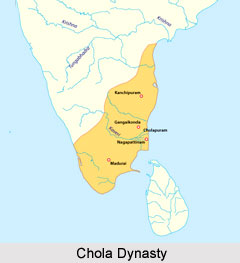
Chola Dynasty
Chola Dynasty is a Tamil dynasty and had longest duration of ruling in parts of South India. Chola dynasty had ruled South India successfully for a ex...

Suhungmung
Suhungmung was the fourteenth ruler of the Ahom dynasty who ruled from the period 1497 to 1539 AD. His reign was significant in terms of expansion of...

Princely State of Dadhalia
Princely State of Dadhalia was located in the present state of Gujarat. The state covered a total area of 28 sq miles and comprised of 15 villages. Th...

Princely State of Rupal
Princely State of Rupal was a part of the Baroda Agency, a sub division of Western India States Agency. It was under the administrative control of the...

Archaeological Sites of West Bengal
Archaeological sites of West Bengal reveal several aspects of ancient India. Excavations by the Archaeological Survey of India have furnished artefact...
Related articles in History of India

Mughal Architecture during Babur
Mughal architecture during Babur marked the foundation of a new architectural era in India, blending Timurid, Persian, and local influences. His reign...

Architecture during Sayyid and Lodi Dynasty
Architectures during the Sayyid and Lodi dynasty were mainly the tombs and monuments for the dead rulers. It were carefully designed and meticulously...

Brahmanical Sources of Ancient History
Brahmanical Sources of ancient history are contained in the Vedas and they constitute one of the most important literary sources of information about...

Coins of Chola Empire
Coins of Chola Empire were issued in gold, silver and copper and carried the Chola emblem.

Coins of Khilji Dynasty
Coins of Khilji Dynasty had an influential feature that was followed by the other dynasties.