
Procedure of Forming Royal Writs which had been an integral part of the Hindu kingdom has been widely discussed by Kautilya in Book II of Arthashastra. Performance of royal writes puts a lot of stress on the observation of `Sasana` or discipline which is equal for all including the `Raja` as well as his `praja` or his subjects. At the beginning of all auspicious work, performance of royal writs had been uniformly followed by all the ancient Indian kingdoms. Arthashastra gives a detailed description of these write, their procedure, the punishment involved in neglecting them and the personal requirements needed to maintain the purity of the writs.
Procedure of Forming Royal Writs can be attended by all those who possess ministerial qualification, are acquainted with all customs, smart in composition, good in legible writing, and sharp in reading shall be appointed as a writer who should be sincere in listening to king`s orders and after having well thought of the matters should be able to reduce the order of writings. Any writ which is offered to the lord should possess polite mention of his country, his people, his name and make a polite mention of the name of his country. Having paid sufficient attention to the caste, family, social rank, age, learning (sutra), occupation, property, character, blood-relationship (yaunanubandha) of the addressee as well as to the place and time (of writing), the writer shall form a writ befitting the position of the person addressed.
The chapter then elaborates on the conditions of writing which mention as to how a writ is arranged. Specifically arrangement of subject matters, relevancy, completeness, sweetness dignity and lucidity are the necessary qualities of a writ. It further states all the words to be used while writing and suggests that the act of mentioning the facts in order is arrangement; when the subsequent facts are not contradictory then it is relevant; when written extensively without much errors, it is treated as complete; description with exquisite style is sweetness; use of good words other than colloquial is dignity; and use of well known words is lucidity. A writer who is writing a writ must keep these things which shall make his job better.
Procedures of forming Royal Writs also mentions certain things which the writer should avoid doing. The writer should be clear and specific in selecting the nouns and verbs to be used as this will determine the meaning of the writ; he should make use of a group of words which will give a complete meaning; it should contain not less than one word and not more than three words to form harmonise the meanings of the immediately following words. The purpose of writing a writ includes thirteen purposes for which the writ is issued. This includes calumniation, commendation, enquiry, narration, request, refusal, censure, prohibition, command, conciliation, promise of help, threat and persuasion.
Procedure for Forming Royal Writs then separately discusses the purpose of writing writ. Alongwith all other thirteen points the chapter includes three types of persuasion as made for the purpose of money, or made in case one`s failure in fulfilling one`s promise and or made on the occasion of any trouble. Also writs are required to bestow honour to someone for some specific purpose; likewise writ is required to issue licence or permission which is to be enjoyed in either word or deed. It is also required for various kinds of public visitations; for negotiations; rewards and for praising one`s quality and so on. Overall a royal writ holds a status of all legal validity which is to be formal and accountable.
Thus, Performance of Royal Writ is significant in Arthashastra as it mentions every details of life and is scientifically written for the benefit of the king. It at the same time reveals the presents of order in the society.
Procedure of Forming Royal Writs
Procedure of Performing Royal Writs as mentioned in the Chapter X of Book II in Arthashastra, had been of great importance to the royal kings as well as the priests of the kingdom as this was treated to be the beginning of all auspicious work which included a raja’s victory in the all the war he wages against his enemy.
Recently updated articles in History of India
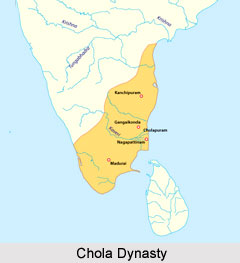
Chola Dynasty
Chola Dynasty is a Tamil dynasty and had longest duration of ruling in parts of South India. Chola dynasty had ruled South India successfully for a ex...
Suhungmung
Suhungmung was the fourteenth ruler of the Ahom dynasty who ruled from the period 1497 to 1539 AD. His reign was significant in terms of expansion of...
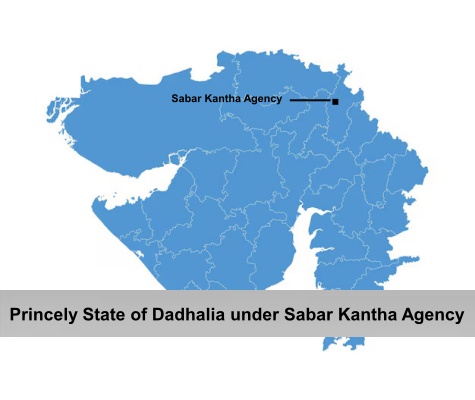
Princely State of Dadhalia
Princely State of Dadhalia was located in the present state of Gujarat. The state covered a total area of 28 sq miles and comprised of 15 villages. Th...
Princely State of Rupal
Princely State of Rupal was a part of the Baroda Agency, a sub division of Western India States Agency. It was under the administrative control of the...
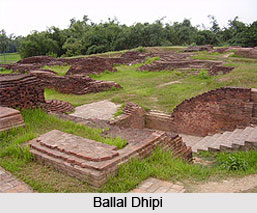
Archaeological Sites of West Bengal
Archaeological sites of West Bengal reveal several aspects of ancient India. Excavations by the Archaeological Survey of India have furnished artefact...
Related articles in History of India
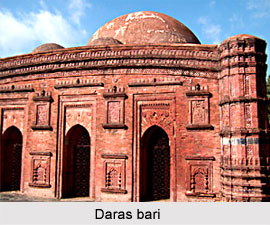
Mughal Architecture during Babur
Mughal architecture during Babur marked the foundation of a new architectural era in India, blending Timurid, Persian, and local influences. His reign...
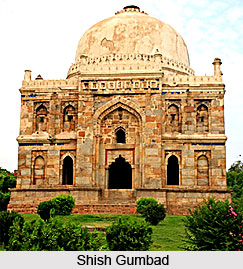
Architecture during Sayyid and Lodi Dynasty
Architectures during the Sayyid and Lodi dynasty were mainly the tombs and monuments for the dead rulers. It were carefully designed and meticulously...
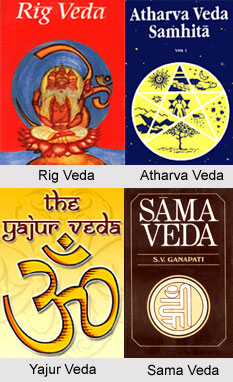
Brahmanical Sources of Ancient History
Brahmanical Sources of ancient history are contained in the Vedas and they constitute one of the most important literary sources of information about...
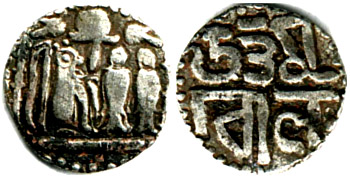
Coins of Chola Empire
Coins of Chola Empire were issued in gold, silver and copper and carried the Chola emblem.
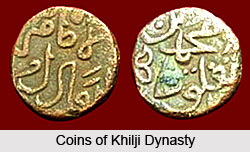
Coins of Khilji Dynasty
Coins of Khilji Dynasty had an influential feature that was followed by the other dynasties.