 Andhra Pradesh has borne numerous religious and spiritual gurus. They have guided the common people, answered their questions and have helped them to discover simple paths to reach out to God as well as quenched their spiritual thirst.
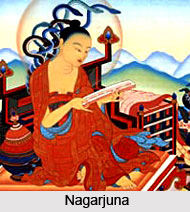
Nagarjuna, the celebrated Buddhist philosopher, was born in an Andhra Brahmin family in Vidarbha. He was an exponent of the Madhyamika philosophy in Buddhism and was regarded as having a master mind. He wrote a commentary on Panchavimsatisahasrika-Prajnaparamitra which is extant in its Chinese translation. He expounded the doctrine of existence and non-existence and became the head of the Buddhist sangha at Nalanda.
The Ultimate, according to Nagarjuna is sunyata (the void) or tatatha (suchness) and cannot be categorized as these are beyond the reach of mind and speech.
His name is perpetuated in history by a Buddhist university and, about the middle of the present century, a dam, Nagarjunasagar in Andhra Pradesh. It has been named after him.
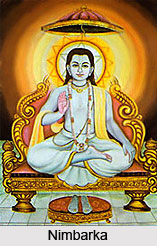 Nimbarka (11th century) was born in a Telugu Brahmin family in a village that bears his name (now in Karnataka). He wrote a commentary on the Brahma Sutra and spent most of his life in Brindavan. He propounded the theory of Advaitodvaita (dualistic non-dualism). According to him, the jiva is knowledge as well as the possessor of knowledge, just as the sun is light as well as the source of light. The universe cannot be dismissed as a mere illusion since it is a manifestation of what is contained subtly in the nature of God.
Vallabha (14th century), a Brahmin of Andhra Pradesh, lived mostly in North India. His doctrine is called Subhadvaita (pure non-dualism). According to him, the whole world is real and is subtly Brahmin. The individual souls and the inanimate world are in essence one with Brahman. God is `sachchidhananda` and has qualities; the Sruti passages that state that he has no qualities mean merely that he has not the ordinary qualities.
Vidyaranya, the guru of Harihara and Bukka Rayulu, the founders of the Vijayanagar empire, was a famous exponent of advaita. Among his works are Jivanmuktiviveka and Panchandasi. He became the Sankaracharya of the Sarada Peetham, Sringeri.