
Periyar E. V. Ramasamy was a born atheist and did not believe in any particular religion. In school Periyar thought that there was no religion named as Vedic Hinduism derived from the name of a place. With no proper doctrine and no proper sacred book, it was said to be an imaginary religion preaching the greatness or superiority of Brahmin the inferiority of Shudra and the untouchability of the Panchama. His contemptuous attitude to the baleful influence of Hinduism in Indian public life is strikingly akin to the anti-Catholic diatribes of the enlightenment philosophers.
Through the Self-Respect Movement in Tamil Nadu, Periyar preached and taught people that when compared to other religions, Hinduism placed many restrictions on men by prohibiting all except a small minority of Brahmins from reading the religious texts or discussing religious matters and by evolving a caste system in the name of heavenly law, and by creating several gods and festivals to provide an assured income and prosperity to the small Brahmin group at the expense of all others.
Periyar Ramasamy and Mahatma Gandhi, the former on a mission to destroy the essential practices perpetuated under Hinduism and the latter on a mission to protect, safeguard and rejuvenate the essence of Hindu religion-agreed on the basic point of the need to remove many evils practiced in the form of religion. Gandhiji aspired to `reform` the religion by rejecting its formalities and moving out of it. Both believed that the Hindus should realize that Hinduism was not a religion and whatever they practiced in the name of Hindu religion had no religious basis or sanction. Both were of the opinion that religious faith was used to perpetuate inequalities on the basis of birth and ideas of purity and pollution.
When the ideal of Dravidian nationalism was projected in the 1940s, Periyar`s religious philosophy also underwent a modification to assert that Hinduism was not the religion of the Dravidians. There was no Dravidian Veda and the Aryan Vedas prevalent among Dravidians were said to be the sacred books which prescribed how Dravidians should be treated but put a bar on Dravidians from acquiring knowledge of these texts.
During many of his debates, discussions and speech sessions he claimed Hindus must bring reforms within the religion.
The words Hindu and Hinduism were not used by ancient Hindus in any of their works. Historians of world religions say that the sacred books of the Hindus are the Vedas, the Upanishads, the Agamas, the Puranas and the Itihasas. He also commented that none of the ancient religious works of the Dravidians have been included among those religious books. A careful study of the Vedas, etc., proves beyond doubt that they were written with a view to disgrace, enslave and exploit the Dravidians. Periyar felt that Hinduism preached that Dravidians were Sudras and Rakshasas. Again, he added, it is Hinduism which is responsible for the introduction of caste distinction and growth of feud among the sons of the soil. All superstitions and meaningless and absurd rituals and ceremonies are the result of following the tenets of Hinduism, he felt.
In the early days of the Self-Respect Movement when Periyar was vociferous that Hindu religion, Manudharma and the Indian National Congress should be destroyed, he was inclined to play a political game by expressing an opinion that Islam alone was the religion that carried political weight and those depressed in the Hindu order could consider conversion to Islam.
For eradicating the evil of `shudrahood`, the threat of conversion was occasionally exercised. The Dravidian movement repeatedly complained about the imposition of Aryan religion on Dravidians. He emphasized that he was not an advocate of Islam but was only trying to find a remedy to the sufferings under Aryan, brahminical system and to find a rightful place for Dravidians in the independent country.
Periyar and Hinduism
Periyar E. V. Ramasamy never believed in the beliefs and ideology of Hinduism and its religious texts.
Recently updated articles in Personalities in India

Governors of Mizoram
The Governor of Mizoram is the constitutional head of the state and is appointed by the President of India. The Governor performs various constitution...
Governors of Jharkhand
Governors of Jharkhand have served as the constitutional heads of the state since its formation on 15 November 2000. Appointed by the President of Ind...
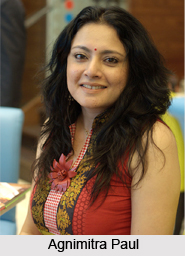
Agnimitra Paul
Agnimitra Paul is an Indian fashion designer and politician serving as a Member of the West Bengal Legislative Assembly from Asansol Dakshin. A senior...
Governors of Uttarakhand
Governor of Uttarakhand is the nominal head of the state. The Governor is also the representative of the President of India in the state of Uttarakhan...
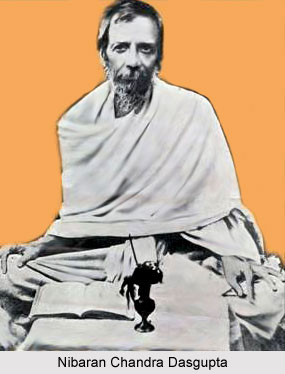
Nibaran Chandra Dasgupta
Nibaran Chandra Dasgupta was a distinct personality of Bengal who became famous for the establishment of ‘Shilpashram,’ a rural industry within the ma...
Related articles in Personalities in India

Sanskrit Theatre Personalities
Sanskrit Theatre Personalities was the main elements of Indian theatre with culture, customs and ethnicity.
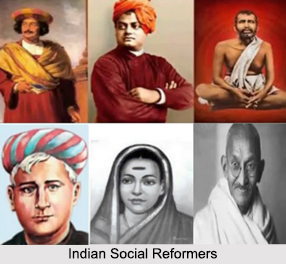
Indian Social Reformers
The Indian Social Reformers are responsible for liberating the nation of several social and religious evils.
Raja Ram Mohan Roy
Raja Ram Mohan Roy is a great Indian social reformer who is celebrated all over the country. He has done many operations for the liberation of women....