
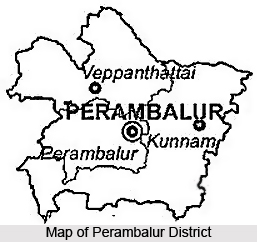
 Perambalur district came into existence after the trifurcation of the Tiruchirappalli district with effect from the 30th of September 1995. The district of Perambalur with Headquarters at Perambalur consists of one revenue division of Perambalur and three taluks of Kunnam, Perambalur and Veppanthattai. The district is bounded on the North by Cuddalore and Salem districts, on the South by Tiruchirappalli, on the East by Ariyalur district, on the West by Tiruchirappalli and Salem districts. According to the 2001 Census the total population of the district of Perambalur is 4, 93,646. The density of population in the district is three hundred and twenty two per square kilometers. This district in the state of Tamil Nadu is fairly rich in mineral deposits. Celeste, shale, lime stone, canker, sand stone and phosphate nodules occur at a number of places in the district.
Perambalur District
Perambalur district was carved out by the trifurcation of the district of Tiruchirappalli in the year 1995. This district possesses a number of temples, a fort and the famous Sathanur Fossil Tree.
Introduction
Perambalur district came into existence after the trifurcation of the Tiruchirappalli district with effect from the 30th of September 1995. The district of Perambalur with Headquarters at Perambalur consists of one revenue division of Perambalur and three taluks of Kunnam, Perambalur and Veppanthattai. The district is bounded on the North by Cuddalore and Salem districts, on the South by Tiruchirappalli, on the East by Ariyalur district, on the West by Tiruchirappalli and Salem districts. According to the 2001 Census the total population of the district of Perambalur is 4, 93,646. The density of population in the district is three hundred and twenty two per square kilometers. This district in the state of Tamil Nadu is fairly rich in mineral deposits. Celeste, shale, lime stone, canker, sand stone and phosphate nodules occur at a number of places in the district.History of Perambalur District
 History of Perambalur district speaks about the Marathas, the Nawabs of Arcot, Tipu Sultan and also the rule of the British till the independence of India. In the year 1741, the Marathas invaded Tiruchirapalli and captured Chanda Saheb. But Chanda Saheb was able to free himself in the year 1748, and was soon engaged in the Great War for the Nawabs` place in the Carnatic against the Nawab of Arcot, Anwardeen and his son Mohammed Ali. Mohamed Ali usurped the two palayams of Ariyalur and Udayarpalayam situated within the present district of Ariyalur on the grounds of their inability to pay the tributes and their failure to help him in crushing the rebellion of Yusuf Khan.
In the month of November 1764, Mohamed Ali represented the issue to Madras Council and was able to get military aid on the 3rd of January 1765. Umdat-Ul-Umara and Donald Campbell entered Ariyalur and captured it along with their forces. The Poligar with his followers fled to Udayarpalayam and on the 19th of January, the army marched upon Udayarpalayam. The troops of Poligar were defeated and the palayams were occupied. The two poligars took refuge in Tharangampadi, a Danish settlement at that time. The annexation of the palayam gave the Navab an undisputed control over all his territories extending Arcot to Tiruchirapalli.
The history of this district followed was a power struggle between Hyder Ali and later Tipu Sultan with the British. After the death of the great Tipu Sultan, the civil and military administration of the Carnatic went into the hands of the British in the year 1801. Thus Tiruchirappalli came in to the hands of the English and the district was formed in the year 1801. In the year 1995, Tiruchirappalli was trifurcated and the new Perambalur district and Karur district were formed. The Perambalur district was formed with its headquarters at Perambalur. This district consists of one revenue division of Perambalur and three taluks of Perambalur, Veppanthattai and Kunnam. This district of Tamil Nadu state is bounded to the north by the Cuddalore district and Salem district, to the south by Tiruchirapalli district, to the east by Ariyalur district, and to the west by Tiruchirappalli district and Salem district.
Geography of Perambalur District
 Perambalur district is located centrally in the south Indian state of Tamil Nadu and is about two hundred and sixty seven kilometers away, in southern direction, from Chennai. The district of Perambalur has an area of three thousand six hundred and ninety one square kilometers and it spreads between 10.54` and 11.30` degree on the Northern latitude and 78.40` and 79.30` degree on the Eastern longitude. This is an inland district without any coastal line. The district has Vellar River in the North and it has well-marked natural divisions. The Pachamalai hill situated on the Northern boundary of Perambalur district is the most important hill in the district.
The most prominent commercial crop grown in this district is sugarcane. The pre-dominate soil in the district of Perambalur is red sanding with scattered pockets of black soil. The soil in the Perambalur district is very much suitable for raising dry crops. This district possesses a high means of temperature and low degree of humidity.
Temples of Perambalur District
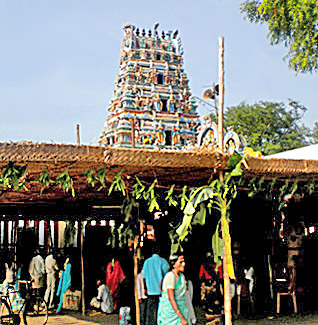 Temples of Perambalur district form the most prominent centers of pilgrimage in the state of Tamil Nadu. The holy deity worshipped in the temples of this district and its related festivals are grandly celebrated in the district of Perambalur. This is an inland district in the Indian state of Tamil Nadu without any coastal line. The district is also rich in cultural heritage and religious prejudices, and therefore the temples of this district in Tamil Nadu state are specially revered.
One of the most famous temples in the state of Tamil Nadu is the Siruvachur Madura Kaliamman temple. This temple is situated at Siruvachur in Perambalur taluk. The presiding deity of this renowned temple is known as Sri Madura Kaliamman. This goddess is one of the forms of the Goddess Kali. Poojas are grandly performed on Monday and Friday of every week. The most prominent annual festival in this temple starts in the last week of Panguni. The Car festival is also celebrated in the first week of Chithirai.
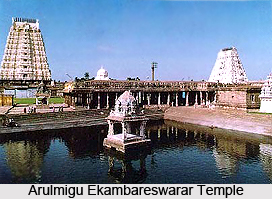
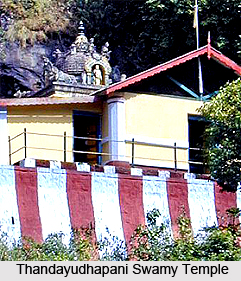
Apart from the Siruvachur Madura Kaliamman temple, there are other two major temples in the district of Perambalur in the state of Tamil Nadu called the Ancient Arulmigu Ekambareswar temple and the Thandayuthapani Swamy Temple. These two temples are located in the Chettikulam Village. These two temples were constructed by King Kulasekara Pandian, some eight hundred years ago. These temples are placed at a distance of twenty two kilometers from Perambalur and eight kilometers to the west of Alathurgate on the Trichy-Chennai National Highway. Both of these temples reflect the architecture of the early days. Like other temples, festival is also celebrated in the Arulmigu Ekambareswarar temple. The Thai Poosam festival is celebrated every year in the month of January for ten days in this temple. During the celebration of this festival in the Arulmigu Ekambareswarar temple, people from different places visit this temple in large numbers and get the blessings of Lord Shiva.
Panguni Uthiram festival is celebrated in the Arulmigu Thandayuthapani temple for a period of fourteen days in the month of April every year. This famous festival is celebrated in a grand manner and a number of cultural programs are conducted at that time in the temple. There is a rock outside the Chettikulam village on the top of which is situated the Balathandapani temple. This is an ancient and renowned shrine constructed by the Cholas. There are several stone inscriptions explaining the history of the temple.
Tourism in Perambalur District
 Tourism in Perambalur district offers a great opportunity to venture into the past history of the place by visiting the Ranjankudi Fort and the famous Sathanur Fossil Tree at Sathanur. There are also several temples in this district which are of great importance. A large number of pilgrims visit the temples in the district of Perambalur throughout the year. Some of the well-known temples in this district include the Siruvachur Mathura Kaliaman Temple, the Chettikulam Thandayuthapani Swami Temple, etc.
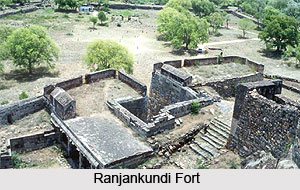
 The Ranjankudi Fort is situated about seventeen kilometers to the north of Perambalur. It was erected by Jaginthar under the Nawab of Carnatic in the 17th century AD. The Fort was the scene of battle of Valikondah between Mohamed Ali and the British on one side and the French and Chanda Sahib on the other side in A.D. 1751. Presently the fort is under the protection of the Archaeological Survey of India.
The temples in this district also attract pilgrims as well as general tourists in large numbers. The ancient Arulmigu Ekambareswarar and Thandayudhapani Swamy Temples situated in Chettikulam village are among the reputed temples in this district. These temples were constructed by King Kulasekara Pandiyan some eight hundred years ago. The Thai Poosam festival and the Panguni Uthiram festivals are celebrated in a grand manner in this district. Another popular shrine in this district is the Mathura Kali Amman at Siruvachur. The main deity of this temple is called Sri. Madura Kali Amman who is one of the forms of Goddess Kali.
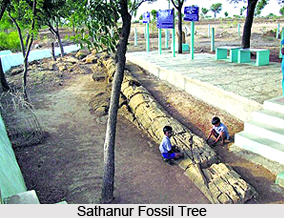
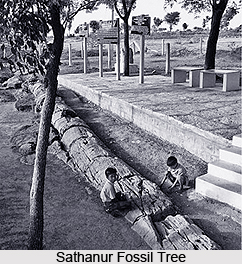
 Apart from the fort and the temples in the Perambalur district of Tamil Nadu state, there is another major tourist interest called the Sathanur Fossil Tree at Sathanur. Geological study shows that more than one hundred and twenty million years ago the sea had transgressed as far as eight to ten kilometres to the west of Sathanur. During this period which is geologically called the cretaceous, the sea possessed a variety of marine animals like those found today. These animals, after death, sank to the bottom and were buried by sands and clays brought down by the rivers. Along with them some of the trees which flourished on the seacoast or near shore were also buried after being carried by the flooded streams and were petrified in course of time. The large trunk of a petrified tree, which can be seen here, lies within the Trichinopoly group of rocks of about 100,000,000 years ago. This tree shows the presence of conifers or the non-flowering plants which dominated the land vegetation before the advent of the flowering plants of the present of day or angiosperms.
The petrified tree trunk found in Sathanur measures more than eighteen meters in length. Similar fossil trees a few meters in length are found along the stream sections near Anaipadi, Varagur, Saradamangalam and Alundalipur. This Fossil Tree is a prominent tourist site of the district of Perambalur.
Recently updated articles in States of India
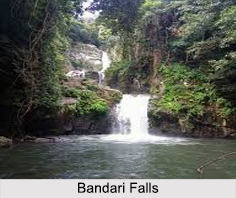
Bandare Waterfalls, Meghalaya
Bandare Waterfalls in South Garo Hills, Meghalaya, is a secluded natural attraction surrounded by dense subtropical forests and rugged mountain terrai...
History of Thissur District
Early History of Thissur District explains flourishing of the port cities. Now these port cities are transformed into archaeological sites.
Tippi Orchid Research Centre, Arunachal Pradesh
Tippi Orchid Research Centre in Arunachal Pradesh is renowned for its rich collection of exotic and endangered orchids. Surrounded by lush rainforest...
Tourism in Nashik District
Pilgrimage tourism in Nashik district involves visiting the various places of Hindu and Jain worship located here. Some of the holiest sites for Hind...
Mangadu, Kerala
Mangadu in Kerala’s Kollam district is a significant megalithic site known for its urn burials, cist burials, menhirs, and stone circles. Excavations...
Related articles in States of India
East Indian States
East Indian States comprises of Bihar, Jharkhand, West Bengal, Odisha and also the Union Territory of Andaman and Nicobar Islands. It defines the cult...
Purnia District in Bihar
Purnia District is located in Bihar and extends from River Ganga to Nepal. The district has a rich Hindu history and glorious past.
Hooghly district
Hooghly District along the bank of the river Hooghly is one of the principal trading ports of West Bengal.
Geography Of Chittoor District
Geography of Chittoor district is spread along the topography of the land which is divided into two natural divisions; Chittoor has a dry and healthy...

Districts of West Bihar
Districts of West Bihar is comprised of medieval monuments that were built by the different governors of Mughal era.