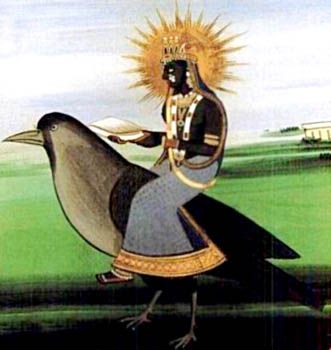
 Goddess Dhumavati has been mentioned mainly in the Ten Mahavidyas. Dhumavati is the Hindu Goddess of widows. Dhumavati embodies unsatisfied desires and is always hungry and thirsty. She is considered as one of the avatars of Parvati, Lord Shiva`s mate. Dhumavati`s name means `the smoky one`, and other names for her include Jyestha, Daridra (poverty), Vidhava (widow), Nirrti (misery), and Alakshmi (misfortune).
Jyestha is an early Hindu goddess who bears resemblance with Dhumavati in iconography.
Like Dhumavati her complexion is dark and ugly and she is associated with the crow. Also like Dhumavati, Jyestha dwells in quarrels, inauspicious places, and is bad tempered. Even Alakshmi and Dhumavati are described as old, carrying a broom and having a crow banner. Both symbolize hunger, thirst, need, and poverty.
While there are similarities between Dhumavati and the three goddesses, they do not find mention in Dhumavati`s nama stotras. The three also lack the fiercer warrior aspects of Dhumavati as well as her positive aspects in the context of the Mahavidyas.
Legends of Dhumavati
Dhumavati is considered as the seventh Mahavidya. The fish incarnation Matsya is said to have originated from Dhumavati.
According to a legend from the Shakta Maha-Bhagavata Purana, Sati, the wife of Lord Shiva and the daughter of Daksha feels insulted when her father does not invite her and Shiva to a yagna. She insists Shiva to visit the Yajna and after futile attempts to convince him, the enraged Sati transforms into the Mahavidyas. She surrounds Shiva from the ten cardinal directions where Dhumavati stands in the southeast.
Another legend from the Shaktisamgama-Tantra narrates Sati committing suicide by jumping into Daksha`s yagna. From there Dhumavati arises with a blackened face from the sad smoke of Sati`s burning body.
The Pranatosini-Tantra relates the widowhood of Dhumavati. One day Mahadev was sitting in Kailash with Parvati. The goddess was very hungry and asked on Shiva to fetch some food. Shiva asked her to wait and went back into meditation. Parvati once again asked Shiva for food. On being rejected for the second time she ate Shiva to appease her hunger. Immediately smoke began to erupt from within her body. Shiva, who was inside her body, had opened his third eye and out of anger cursed her to remain as a widow. Thus the goddess is depicted without any ornaments and in widow apparel. Another oral legend narrates that Dhumavati was created by Goddess Durga during the battle against demons Shumbha and Nishumbha. Dhumavati`s literal name comes from her ability to defeat demons by creating stinging smoke.