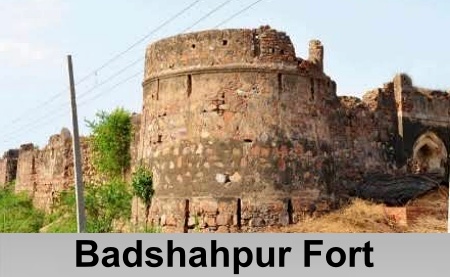
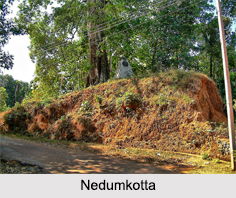
 Nedumkotta in Thrissur, Kerala was once a majestic fortification built as a security against constant attacks and threats from northern kingdoms mainly Tipu Sultan of Mysuru. It was erected by the Dharma Raja Karthika Thirunal, King of Travancore with the support and permission of the Kingdom of Kochi. Nedumkotta was even compared to the Great Wall of China.
History of Nedumkotta
The fort was constructed as a security measure against constant attacks and threats from the Zamorins of Kozhikode and also from the destructive invasions by Hyder Ali Khan and Tipu Sultan.
Nedumkotta was under the protective cover of a small army of Travancoreans under the command of Raja Keshavadas. He was defeated and frustrated near "Alwaye" by a formidable army of Islamic fanatics led by Tipu Sultan.
Fortification of Nedumkotta
Nedumkotta was constructed using clay and mud, with reinforcements using stones, laterite and granite at strategic places. This historic defence line stretched from the Krishan Kotta on the west coast to Annamalai Hills of the Western Ghats. It was about 48 km long, 20 feet wide and 12 feet high. Its alignment was along the Periyar River on the west coast up to Chalakudy River in the east.
There were underground cells to store gunpowder and other war materials, special chambers for soldiers to live, and look-outs and mounted field-guns all along the fortification. Besides, on the north side of the fortification, ditches were dug 20 feet wide and 16 feet deep, and filled with thorny plants, poisonous snakes and hidden weapons. On the south side as well as on the top of the fortification, wide roads were laid for the convenience of military movements. There were also caves in the nearby wells to hide, in the possibility of an unannounced attack.
Present Condition of Nedumkotta
Currently it is known as "Travancore Lines", only the ruins of this majestic fortification are there, and serve as a testimony of many historic battles and wars. Many portions of the wall were destroyed during war, others later eroded away due to heavy rains, and trenches were filled up. Most of the ruins whatever left have also been lost due ignorance about the historical structure among the locals.