
Very little is known about Senji (also called Gingee) one of the military strong holds of Tondaimandalam, Chengleput districts of Tamil Nadu. According to sources, Vijayaranga Nayaka built the fort upon an old Chola foundation in 1442 A.D. Its strategic location makes it an important centre and the Vijayanagara emperor, Krishnadeva Raya made it the headquarters of the province, with Vaiyappa Nayaka as the ruler.
During the ascension of Krishnadeva Raya as a king, he found that the provincial governments and the Nayaks in the Tamil country were not favourably disposed towards the central government. He adopted a conciliatory attitude towards the provincial governors and the Nayakas. According to some scholars, during the reign of Krishnadeva Raya the Todaimandalam region was divided among several petty Nayaks who refused to acknowledge the authority of the emperor. Therefore he had to send a large army under four leaders namely Vaiyappa Nayaka, Tupaki Krishnappa Nayaka, Vijaya Raghava Nayaka and Venkatadri Nayaka in 1520-21 A.D. The expedition advanced to Vellore and from there to Senji. The petty chiefs submitted and agreed to pay tribute. Finally, the whole Tamil region was divided into three distinct Nayakships instead of rajyas.
The first of these divisions was that of Senji, which extended from Nellore in the north to the river Coleroon in the south and this was entrusted to Vaiyappa Nayaka and his son Tupaki Krishnappa Nayaka who thus became the inaugurators of the Senji Nayakship. The subordinate Nayakas came to be called palniyakars (palaiyagars/poligars). They had to supply palmyurns or military forces to the central government through the chief Nayakas. The burden of tribute, which the Nayakas had to pay, seems to have been reduced from one half of the gross income of the feudal fief to one third. This feudal organization was worked out in detail and converted into a useful and beneficial institution by Viswanatha Nayaka of Madurai and his able minister Ariyanatha Mudaliyar, in about 1535.
A study of the inscriptions found state that Vaiyappa Nayaka ruled from 1526 and hence this year must be taken as the beginning of the Nayakship of Senji. The successor of Vaiyappa is mentioned as Pedda Krishnappa in the inscriptions of the period, as Tupaki Krishnappa in the Mackenzie manuscripts and simply as Krishnappa in the ballad on the history of Senji. As Tupaki and Peda are mere prefixes, A. Krishnaswami assumes that both of them refer to Tupaki Krishnappa Nayaka.
The successors of this ruler are listed differently in different records. The Mackenzie Manuscripts give their names as Ramachandra Nayaka, Muthialu Nayaka and Venkatappa Nayaka also called Krishnappa Nayaka II (1570-1608).
Nayaks of Senji
Nayaks of Senji were great warriors of that age.
Recently updated articles in History of India
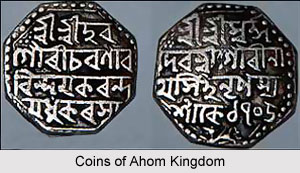
Suhungmung
Suhungmung was the fourteenth ruler of the Ahom dynasty who ruled from the period 1497 to 1539 AD. His reign was significant in terms of expansion of...
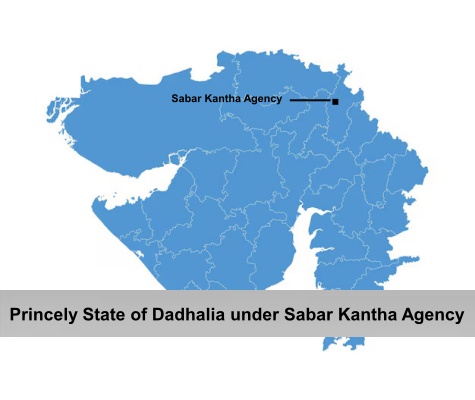
Princely State of Dadhalia
Princely State of Dadhalia was located in the present state of Gujarat. The state covered a total area of 28 sq miles and comprised of 15 villages. Th...
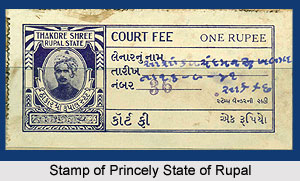
Princely State of Rupal
Princely State of Rupal was a part of the Baroda Agency, a sub division of Western India States Agency. It was under the administrative control of the...
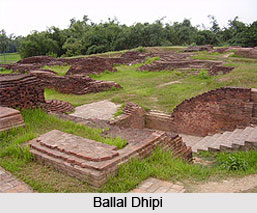
Archaeological Sites of West Bengal
Archaeological sites of West Bengal reveal several aspects of ancient India. Excavations by the Archaeological Survey of India have furnished artefact...

Princely State of Gabat
Princely State of Gabat was one of the native states of India during the Brtish period. Thakors were the native rulers of this state. After India gain...
Related articles in History of India

Mughal Architecture during Babur
Mughal architecture during Babur marked the foundation of a new architectural era in India, blending Timurid, Persian, and local influences. His reign...

Architecture during Sayyid and Lodi Dynasty
Architectures during the Sayyid and Lodi dynasty were mainly the tombs and monuments for the dead rulers. It were carefully designed and meticulously...

Brahmanical Sources of Ancient History
Brahmanical Sources of ancient history are contained in the Vedas and they constitute one of the most important literary sources of information about...

Coins of Chola Empire
Coins of Chola Empire were issued in gold, silver and copper and carried the Chola emblem.

Coins of Khilji Dynasty
Coins of Khilji Dynasty had an influential feature that was followed by the other dynasties.