
 Arcot is one of the fast developing cities of Tamil Nadu. Most of the people of Arcot are literate. The reason for fast development in Arcot is due to the influence of Danish missionaries who settled in Arcot during the earlier centuries. Later Arcot came in the hands of British East India Company and later British Government of India.
Arcot
Arcot is one of the fast developing cities of Tamil Nadu. This city has got its importance from the medieval era.
Introduction
Arcot is one of the fast developing cities of Tamil Nadu. Most of the people of Arcot are literate. The reason for fast development in Arcot is due to the influence of Danish missionaries who settled in Arcot during the earlier centuries. Later Arcot came in the hands of British East India Company and later British Government of India.History of Arcot
According to the medieval history in 1712, the Muslim Nawab of Karnataka captured Arcot from the Marathas. In 1751, Robert Clive (the first Baron Clive of Battle of Plassey) captured Arcot during the conflict between the United Kingdom and France for control of South India. He is widely regarded as a key figure in the establishment of British India.
During the period 1717-1795, Mohamed Ali Khan Walajan became the Nawab of Arcot. He was an ally of the British East India Company. He adored the English people and emulated their customs and manners. His successors soon ran up enormous debts at the hands of English speculators. In 1801, Arcot was annexed by the British East India Company. During the 20th century, Arcot lost importance and was incorporated into the district of Vellore, a city in Tamil Nadu.
During the period 1717-1795, Mohamed Ali Khan Walajan became the Nawab of Arcot. He was an ally of the British East India Company. He adored the English people and emulated their customs and manners. His successors soon ran up enormous debts at the hands of English speculators. In 1801, Arcot was annexed by the British East India Company. During the 20th century, Arcot lost importance and was incorporated into the district of Vellore, a city in Tamil Nadu.
Geography of Arcot
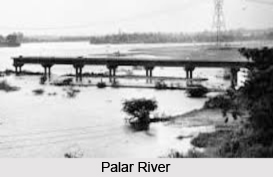 Arcot is a city in the Vellore district of Tamil Nadu. Arcot is located on the banks of Palar River. Arcot is located at 12.9 degree north to 79.33 degree East. It has an average elevation of 164 metres.
Economy of Arcot
The people of Arcot are mainly farmers. Arcot is the principal market for the surrounding agricultural area. Arcot also has a local weaving industry and ground nut oil industry. Arcot is popular for the Star Biriyani and sweets as Makkan Beda.
Culture of Arcot
The people who live in Arcot, especially those who live near the temple town of Tiruvannamalai belong to the clan known as Arcots. These people were warriors and landowners and descended from ancient Dravidians and Hindu Marathas. The Arcot region is one of the quickest areas in Tamil Nadu to develop due to the influence of Danish missionaries. These missionaries established many schools and hospitals in the surrounding villages with the support of Arcots. Today, the region is fast flourishing with learned men and women. Arcot owes much to the Danish missionaries and volunteers for sowing the seeds of progress by establishing schools and colleges.
Demography of Arcot
According to the Population Census in the year 2011, the population of Arcot is 50,267. Males constitute 50% of the population and females 50%. The average literacy rate of Arcot is 75%, which is higher than the national average of 59.5%. In Arcot 54% of the males and 46% of females are literate.
Nawabs of Arcot
The history of The Nawabs of the Carnatic (1690-1855 A.D.) is much older than the State of Tamil Nadu, India.Arcot, sometimes named Carnatic, is a town located in modern Tamil Nadu in India, near Madras. It is the capital city of a state ruled since 1692 by the Nawabs of Arcot, as viceroys of the Mughai emperors. The Nawabs of Arcot a princely family traces its lineage from the Second Caliph of Islam, Hazrath Omar Bin-Khattab.
More than 300 years ago, Zulfikar Ali Khan was summoned from Mecca by Emperor Aurangazeb in order to fight against the Marathas. In the 17th Century when the Marathas were holding sway in the Southern Carnatic from their stronghold at Gingee, Zulfikar Ali Khan came down and inflicted a crushing defeat on the ruler Rajaram. The delighted Mughal emperor made him the Nawab of the Carnatic under the suzerainty of the Nizam of Hyderabad and thus were sown the beginnings of the House of Arcot.
Arcot was brought under the control of the Colonial Government in 1801, annexed by the British in 1825 and the state extinguished in 1855. The dynasty continues as Princes of Arcot. The Prince of Arcot still holds the unique position in Indian politics of being the only member of a royal family who is recognized as a prince, his rank being that of a cabinet minister.
The rulers were:
Nawab Zulfiqar Ali Khan (1692-1703 A.D.)
Nawab Daud Khan (1703-1710 A.D.)
Nawab Muhammed Saadatullah Khan (I 1710-1732 A.D.)
Nawab Dost Ali Khan (1732-1740 (grand nephew), married and had issue. He died in 1740 A.D.)
Nawab Safdar Ali Khan
Nawab Safdar Ali Khan (1740-1742)
Nawab Muhammed Saadatullah Khan II
There were in all 13 Nawabs and the last Nawab regarded as a titular sovereign was Nawab Ghulam Muhammed Ghous Khan (1824-1855 A.D. born 1824, died 7th October 1855.) In his time Arcot was annexed and it became a princely state.
Arcot became a dependency of the British in its early years. By the treaty of 1801 with the British "the whole of civil and military government of Arcot was transferred forever to the English East India Company and the Nawab and his heirs were to preserve their title and dignity and to receive one fifth of the net revenues of the Country." When Muhammed Ghauz died without an issue, the East India Government decided to abolish the title of "Nawab". Lord Dalhousie the then Governor General of India stated, since the regular succession up to 1855 was "by grace of over lordship," it was to be terminated in 1855 by the application of the Doctrine of Lapse. In 1867 the claimant to the Nawabs was recognized as the Prince of Arcot and the first noble in the Madras Presidency. The Princes of Arcot who followed Nawab Ghulam Muhammed Ghous Khan were eight in number including the present one.
The present Nawab HH Nawab Muhammed Abdul Ali, 8th Prince of Arcot since 1993, was born on 9th August 1951. He was Sherriff of Chennai (then Madras) for two terms, from 1984-1985 and again from 1988-1989. He is recognised by the government as the `First Nobleman` in the Muslim community of South India. He enjoys a place equivalent to that of state cabinet ministers and is officially recognized by the President of India as the Prince of Arcot. He is the founder secretary-general of Harmony India, (founded in 1990) an association to promote communal amity, secularism and National Foundation of Communal Harmony. The Prince is a patron of music, art and literature and his hobbies include photography, gardening and reading books. He married HH Sayeeda Begum and has two sons. Their palace in Arcot the Amir Mahal situated in the heart of Chennai, takes you back to history so old and intricate.
More than 300 years ago, Zulfikar Ali Khan was summoned from Mecca by Emperor Aurangazeb in order to fight against the Marathas. In the 17th Century when the Marathas were holding sway in the Southern Carnatic from their stronghold at Gingee, Zulfikar Ali Khan came down and inflicted a crushing defeat on the ruler Rajaram. The delighted Mughal emperor made him the Nawab of the Carnatic under the suzerainty of the Nizam of Hyderabad and thus were sown the beginnings of the House of Arcot.
Arcot was brought under the control of the Colonial Government in 1801, annexed by the British in 1825 and the state extinguished in 1855. The dynasty continues as Princes of Arcot. The Prince of Arcot still holds the unique position in Indian politics of being the only member of a royal family who is recognized as a prince, his rank being that of a cabinet minister.
The rulers were:
Nawab Zulfiqar Ali Khan (1692-1703 A.D.)
Nawab Daud Khan (1703-1710 A.D.)
Nawab Muhammed Saadatullah Khan (I 1710-1732 A.D.)
Nawab Dost Ali Khan (1732-1740 (grand nephew), married and had issue. He died in 1740 A.D.)
Nawab Safdar Ali Khan
Nawab Safdar Ali Khan (1740-1742)
Nawab Muhammed Saadatullah Khan II
There were in all 13 Nawabs and the last Nawab regarded as a titular sovereign was Nawab Ghulam Muhammed Ghous Khan (1824-1855 A.D. born 1824, died 7th October 1855.) In his time Arcot was annexed and it became a princely state.
Arcot became a dependency of the British in its early years. By the treaty of 1801 with the British "the whole of civil and military government of Arcot was transferred forever to the English East India Company and the Nawab and his heirs were to preserve their title and dignity and to receive one fifth of the net revenues of the Country." When Muhammed Ghauz died without an issue, the East India Government decided to abolish the title of "Nawab". Lord Dalhousie the then Governor General of India stated, since the regular succession up to 1855 was "by grace of over lordship," it was to be terminated in 1855 by the application of the Doctrine of Lapse. In 1867 the claimant to the Nawabs was recognized as the Prince of Arcot and the first noble in the Madras Presidency. The Princes of Arcot who followed Nawab Ghulam Muhammed Ghous Khan were eight in number including the present one.
The present Nawab HH Nawab Muhammed Abdul Ali, 8th Prince of Arcot since 1993, was born on 9th August 1951. He was Sherriff of Chennai (then Madras) for two terms, from 1984-1985 and again from 1988-1989. He is recognised by the government as the `First Nobleman` in the Muslim community of South India. He enjoys a place equivalent to that of state cabinet ministers and is officially recognized by the President of India as the Prince of Arcot. He is the founder secretary-general of Harmony India, (founded in 1990) an association to promote communal amity, secularism and National Foundation of Communal Harmony. The Prince is a patron of music, art and literature and his hobbies include photography, gardening and reading books. He married HH Sayeeda Begum and has two sons. Their palace in Arcot the Amir Mahal situated in the heart of Chennai, takes you back to history so old and intricate.
Monuments of Arcot
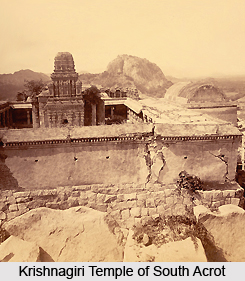 The monuments of Arcot are the handiwork of the Nawabs of the Carnatic who made it their fortified capital. Though few vestiges of its former glory remain, Arcot is of considerable historical interest. It is located at the point where the Palar river valley meets the Coromondal coast, and consequently straddles a highly strategic trade route between Chennai and Bengaluru.
Due to the town`s strategic construction, it has been the site for a number of wars, and this prompted the construction of a formidable fortress therein. It was captured from the Marathas by a Muslim Nawab of Karnataka. Daud Khan, was made governor by Zulfiqar Khan, Aurangzeb`s general, after the fall of Gingee in 1698. In 1710 Saadat-ullah Khan assumed the title Nawab of the Carnatic and made Arcot his capital. The continued feuds between the different dynasties fighting for control of Arcot eventually led to the coming in of the British and French onto the scene, each supporting factions. This was merely an extension of the battle between the British and the French for the control of South India. The capture and subsequent defence of Arcot by a handful of British troops and sepoys against enormous forces is one of the most remarkable feats of British arms in India. The siege lasted fifty days, until 15 November 1751, when reinforcements arrived from Chennai. Subsequently, in 1758, Arcot was surrendered to the French under Lally, but it was recaptured by Colonel Coote in 1760. Mohammed Ali Khan Walajah took over as Nawab, effectively serving as a vassal of the British. His successors soon ran up enormous debts at the hands of English speculators. In 1801, the town was annexed by the British East India Company. It subsequently fell in importance and was incorporated into the district of Vellore of which it is a part today.
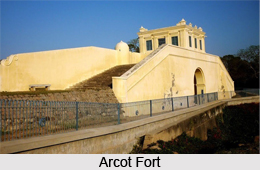
The most significant historical monument of Arcot is the Fort as it is part of the famous battle of Arcot which led to British victory in the Carnatic. The fort was captured by the British and the gate renamed as Delhi gate as it signified the beginning of the capture of Delhi. The entrance was constructed with a Mughal arch. It is believed that Clive used to take decisions in the upper room. The old red-brick town walls were obliterated by Tipu Sultan in 1783, but the foundations can still be traced. On the river front the Delhi Gate survives and conveys some idea of the original fort. Over the gateway is Clive`s Room. The road into the town passes the old Taluk Cutcherry and crosses the dry moat. Close to two small tanks is the Tomb of Saadat-ullah Khan and, within the same compound, the Jami Masjid. Today, there are some remains of the tombs of the nawabs and a Jama Masjid which stand as silent witnesses to that period. The Tipu Mahal in Arcot is also worth visiting.
A stone slab with the following inscription can be found near the big doorway, "The gate formed part of the fortification of Arcot during its memorable defence by Lord Clive in 1751."
Beyond the Jami Masjid, are the ruins of the Palace of the Nawabs of the Carnatic, situated on raised ground over the Nawab`s Tank. The shell of the Durbar Room may still be seen. Opposite is the Black Mosque or Kala Masjid. Various tombs lie nearby, including one which is reputed to have sheltered the body of Subadar Nasir Jang, murdered at Gingee in 1750. Another in whitewashed brick is that of Tipu Auliya, a local saint, after whom Tipu Sultan took his name.
Tourism in Arcot
Arcot has famous temples. They are Sri Sundaramoorthi Vinayagar Temple, Sri Ramakrishna Shrine, Sri Devi Karumari Amman Temple, Sri Kasi Viswanathar Temple, Sri Varadharaja Perumal Temple, Sri Maha Ganapathy Temple and some more places of interests in and around Arcot are Delhi Gate, which is an 18th Century Architecture, Raja Rani Tank, Green Mosque, Pancha Pandavar Mountain, Green Thunder, water theme park in North Arcot District.
Recently updated articles in Cities of India
Places of Interest in Deogarh Uttar Pradesh
A place of historical and archaeological significance, Deogarh is a site with few popular places of interest.
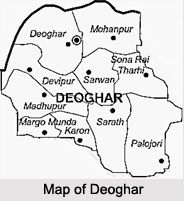
Deoghar in Jharkhand
Deoghar is the divisional headquarters of Santhal Parganas located in Jharkhand and is popular for the famous Baidyanath temple and Shiva Temples.
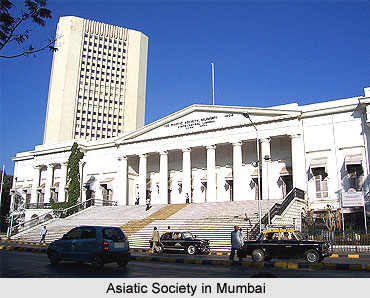
The Asiatic Society of Mumbai
Asiatic Society in Mumbai is the temple of Asian Studies from the time of British rule in India.
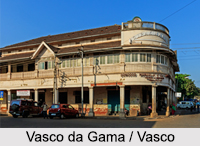
Vasco da Gama / Vasco City
Vasco da Gama / Vasco is the biggest city of Goa and is one of the most visited for its perfect amalgamation of business as well as leisure options.
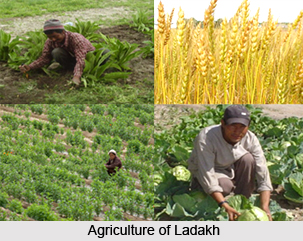
Agriculture of Ladakh
Agriculture in Ladakh is primarily practiced in the short summer season due to its cold desert climate. Farmers grow hardy crops like barley, wheat, p...
Related articles in Cities of India
Holy Cities of North India
Holy Cities of North India are having the rich history of Hinduism and the entire civilization was grown up with the hands of beliefs, rituals and the...
Holy Cities of South India
Holy Cities of South India gives the detailed cultural formation of Dravidians from the early era, which later developed to the world by the Pallavas...
Holy Cities of West India
Holy Cities in West India were established by the rulers of Rajputs and the Satvahana Dynasty and the medieval rulers of Junagadh.
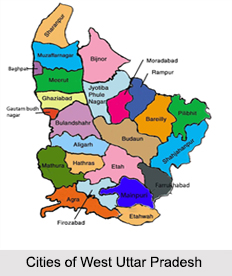
Cities of West Uttar Pradesh
Cities of West Uttar Pradesh include Meerut, Bulandshahr, Ghaziabad, Saharanpur, Muzaffarnagar, Bijnor, Bareilly, Rampur, Agra, Aligarh, Mathura and m...
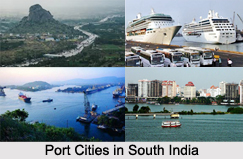
Port Cities of South India
Port Cities of South India are developed from the early phase of colonial era when the Portuguese and the French traders came to India