 Natural history and art during early British rule in India were manifested in drawings of living specimens of plant and animal life by eminent artists, resolved to make it a thesis. Within the extensive period of 1785 to 1844, Patrick Russell (1726-1805), Major-General Thomas Hardwicke (c.1755-1835) and Brian Houghton Hodgson (1800-1894) accumulated great collections of drawings of their natural history specimens. In addition to their drawings, they taught Indian artists to make thousands of illustrations of plants, birds and fishes. Hardwicke published a noteworthy book on them with his Illustrations of Indian Zoology (1830-34).
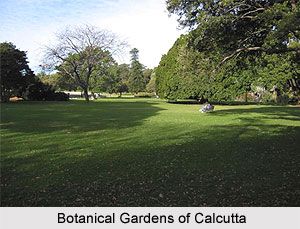
The years within 1793 to 1846 witnessed the great Botanical Gardens of Calcutta and elsewhere develop and mature to overspreading heights. The first two directors in Calcutta, William Roxburgh (1751-1815) and Nathaniel Wallich (1786-1854), employed numerous Indian artists to draw illustrations of the various collections of exotic plants and flowers. Natural history and art were two basic scholarly and popular aspects in which people could be attracted to very easily. As such, the early Britishers in India took full advantage of that fact to build India into an all-encompassing place to live.
In 1813, James Forbes produced thousands of natural history drawings of specimens found in Gujarat, as discovered in his one hundred-fifty folio volumes of papers. Many of these drawings appeared in his Oriental Memoirs (1813).
Within the years of 1873 to 1874, Edward Lear (1812-1888) visited India as the guest of Lord Northbrooke (1826-1904) where he sketched plants, birds and animals of the Indian countryside. He proved to be one of the last naturalist painters prior to the onset of photography. Photography had still not become popular in India, which acted as the guiding factor to early British naturalist painters and natural history pursuers, making these fields the most memorable ones.
This article is a stub. You can enrich by adding more information to it. Send your Write Up to content@indianetzone.com