
Najadats were a sub-sect within the Islamic sect of the Kharijites. Also known as Najadat or Najdiyya, the nucleus consisted of Kharijites from central Arabia (from a district called the Yamama) who helped Ibn az Zubayr in Mecca, but later returned to their native region and established a form of autonomous rule. From 686 to 692 their leader was Najda, and hence the name. For a time they ruled vast tracts of Arabia, even more that Ibn az Zubayr, including Bahrein and Oman (Uman) on the east coast, and parts of the Yemen and Hadramawt in the south and south-west. There were many quarrels about the leadership, and after the death of Najda in 692 the sect split up, and the parts either disappeared or were suppressed by the Umayyad generals.
Beliefs of Najadats
It has been observed that whatever information is available regarding Najdite views, there can actually be seen the beginnings of a reconsideration of the Kharijite conception of the true Islamic community in such a way so as to make allowances for human imperfections. The strict Kharijite view, from which the Najdites presumably started, was that a man who commits a grave sin belongs to the people of Hell. For the Azraqites living in a camp the man guilty of theft or adultery could easily be excluded from the camp, but it was not easy for the Najdites to banish every thief and adulterer from the entire region which they ruled. They may have thought that it was not even desirable. This was not due to any moral laxity, for they are said to have been strict about wine-drinking, but presumably due to the realization that any normal community is bound to contain both good and bad.
For a theoretical justification of the course of action that they were adopting, the Najdites made a distinction between distinction between fundamentals in religion and non-fundamentals. Among the latter they included novel legal points where no official decision had been given. Persistence in theft or adultery was regarded as "idolatry" (Shirk), presumably on the ground that it implied a false view of the nature of the community and its law or way-of-life. This would be one of the fundamentals, and like errors in the other fundamentals would involve exclusion from the community and inclusion in the people of Hell. One-off lapses into theft or adultery, however, were not regarded as affecting fundamentals. The common view that thieves and adulterers went to Hell had therefore to be modified. The Najdites allowed that God might punish them, but insisted that, if He did so, it would not be in Hell, and that he would eventually admit them to Paradise. Thus membership of the community and soundness on fundamentals led to salvation, to Paradise.
The Najdites did not have a continuing presence and were ultimately suppressed.
Najadats
Najadats were an Islamic sect falling within the greater body of the Kharijites. They derive their name from their leader Najda, who led them from 686 to 692. Their beliefs and practices was less rigorous than the other Kharijites as they had to govern a large group of people and therefore tried to water down their beliefs to include this great body of people.
Recently updated articles in Religion in India

Kusumayudha
Kusumayudha is a name of Kamadeva, the Hindu God of Love. Depicted with a sugarcane bow and flower-tipped arrows, he represents attraction and longing...

Bhoyar Caste
Bhoyar Caste is largely found in the Central Provinces of the country. Traditional occupation of Bhoyars is agriculture. They are good cultivators and...

Chasa Caste
Chasa caste is a prominent agrarian community native to Odisha. Traditionally associated with cultivation and farming, Chasas have historically played...
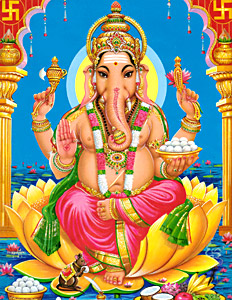
Vigneswara, A Form of Lord Ganesha
Lord Vigneswara is another form of Lord Ganesha or Vinayaka, prominently worshipped as the God of intelligence and good luck in the Indian subcontinen...
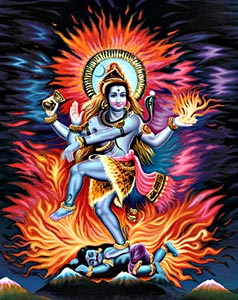
Maheswara
Maheswara, meaning “the Great Lord,” is a revered name of Lord Shiva in Hindu tradition. It represents Shiva’s supreme authority over creation, preser...
Related articles in Religion in India
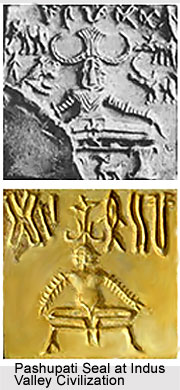
Religion in Indus Valley Civilization
Religion in Indus Valley Civilisation included Hinduism, Buddhism and Jainism. Details about the religion in Indus Valley Civilization have been gathe...

Iyer Brahmin
Iyer Brahmins are originally from Tamil Nadu of South India. They are known for their adherence to Advaita philosophy and Smarta traditions. Tradition...
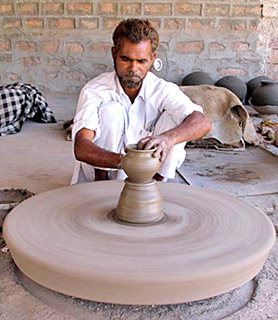
Kumbhakar / Kumhar Caste
Kumbhakar or Kumhar caste is a traditional artisan community in India known for pottery making. Derived from Sanskrit word Kumbhakar, meaning potter,...

Gujjars in Mughal Era
Gujjars in the Mughal era enjoyed great power. Further their power increased with the decline of Aurangzeb, Mughal emperor.
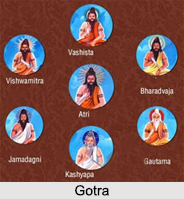
Gotra in Hinduism
In Hinduism, gotra refers to a lineage system tracing descent from ancient sages, primarily through the paternal line. Originating from Vedic traditio...