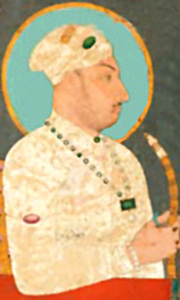
 Muhammad Shah was the nephew of Mubarak Shah and was nominated as the successor of his uncle. He was an incapable ruler and therefore paved the way for the downfall of the Sayyid dynasty. The first eight months of his reign, virtually the wazir, Sarwar-ul-mulk, enjoyed the power of the state. The wazir gave positions of importance to his loyal officers and those Hindu jagirdars who had helped him in the murder of Mubarak Shah. However, deputy commander-in-chief, Kamal-ul-mulk remained faithful to the Sayyid dynasty, kept intentions secret and formed another group of nobles against the wazir. The wazir sent him to suppress the revolt at Bayana. Once Kamal-ul-mulk took the command of the army he disclosed his plan to other nobles to displace the wazir and then returned to the capital with his army. The wazir and his supporters were eventually murdered.
Muhammad Shah now appointed Kamal-ul-mulk as his wazir and freely engaged himself in sensual pleasures. Kamal-ul-mulk was a good administrator. The neglect of the affairs of the state encouraged both internal and foreign enemies. Mahmud, the ruler of Malwa, attacked Muhammad Shah. The battle between the two near Talpat brought about conclusive result. Muhammad Shah agreed to return to his own capital and was threatened by an invasion by the ruler of Gujarat. Bahlul Lodi attacked the ruler of Gujarat while and was successful in capturing some booty.
Muhammad Shah honoured Bahlul Lodi, called him his son, gave him the title of "Khan-i-khana" and extended his possession over larger part of Punjab. It inflamed the ambition of Bhalul Lodi who attacked Delhi in 1443 A.D. in order to capture it. He failed at that time but then waited for a better opportunity. Muhammad Shah failed to safeguard his kingdom from internal disruption and foreign attacks during later years of his reign. Thus, Muhammad Shah failed as a ruler and the decline of his dynasty began during his reign. He died in 1445 A.D.
This article is a stub. You can enrich by adding more information to it. Send your Write Up to content@indianetzone.com