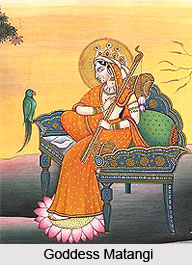
 Matangi is a virgin dedicated to Goddess Matangi. It is one of the many names of Goddess Kali. According to mythology she remains unmarried throughout her life. Earlier the Matangi System was considered to a very respectable job. The Matangis had to worship Goddess Matamma or Maremma during Kolupulu. The girl who is initiated is believed to be an incarnation of the goddess and, therefore, called Matamma.
The word `Matanga` has been derived from `Matangi.` Matanga is a large subdivision of the Madigas called Matangis. The Madigas of Karnataka address themselves as `Matangi Makkalu` which means `children of Matangi`. The Matangas lived on the outskirts of villages. They were prevented from walking in the streets, draw water from wells and were also forbidden from entering the temple premises. They did `vetti` i.e. bonded labour. A Matanga used to serve as a watchman in the fields of the feudal lord.
In the Matangi system there are three people who play an important role, they are:
(i) Pedda Golla, head of the Yadava community,
(ii) The Matangi`s maternal uncle who ties the `tali` to her.
(iii) Pedda Madiga, head of the dalit community.
The Matangis belong to the Arundhativada. Matangi`s children are regarded as members of the Matangi caste. The initiation ceremony of the Matangi used to be performed during the jatras of the village. The ceremony is performed by an elderly man of the community. During the ceremony he ties a small piece of sacred leather, locally known as `tholu billa`, with a thread around the neck of the girl who is to become a matangi. She then takes an oath of celibacy
She is considered to be `Nitya Sumangali` throughout her life because she is married to the immortal goddess or god. She is a member of her father`s family. After becoming a Matangi she is endowed with the duty of performing religious duties relating to the village jataras of Maremma or Yellamma. The children born to Matamma are considered as members of the Madiga community and no stigma is attached to them. The Matangi community does not have any sun sects.
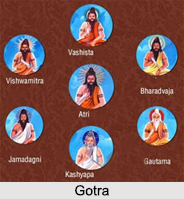
The caste is divided into a number of clans. Each Gotra or clan is further subdivided into surnames, such as Kochhari, Bandaru, Pandari, Vannela, Namala, Vaddimanu, Uliddari and Kottacheruvu. Marriage is exogamous and the structure of the family is patriarchal. These people reside with other Madigas and their houses are agglomerated.