
Marching of Combined Powers, as included in Chapter VI of Book VII in Arthashastra, stresses on the type of war strategy which includes the combination of kings of superior, inferior or equal status. According to the terms of marching with combined powers, it is suggested that the conqueror to begin with should over reach the second element i.e. the enemy who is closer to his area and enable him to undertake a march simultaneous march with him. The workings of combined forces depend on the type of agreements signed by them regarding peace, sharing of booty, and sharing of territories. The chapter includes few types of agreement according to which the combined powers shall work and fight the war. This includes agreement for peace, agreement to carry out work in different locality; agreement which should include a time factor; agreement to carry out a definite work. Overall it includes seven forms of agreement to be signed between the combined forces. Likewise it includes four types of peace, three forms of battle and agreements with definite terms and agreement without any definite terms.
Marching of combined powers specifies that while fighting a war if the booty is equally shared and distributed among all the warring kings then it is agreement for peace; an agreement of peace can be made with or without a definite promise; when an agreement specifically differentiates the areas of work, it is usually considered as agreement of peace to carry out work in a definite area. Specifically Arthashastra claims that the conqueror can sign three types of agreements which include agreement to carry pout work in a definite locality; agreement of peace with time as an important factor; and agreement to carry out a definite work. As mentioned in Arthashastra the conqueror when thinks that his army has to travel through the areas unknown through the difficult terrains, covering mountains etc then he should sign such agreement of peace to carry out work in a definite locality; when the conqueror thinks that his army has to work with food stuff which shall fall short and has to live without food and comfort for long, should sign agreement of peace with a time as a factor; and when a conqueror thinks that his army has to accomplish something which shall last long and will be of trifling nature then he should sign an agreement with a definite work .
The chapter then further demarcates seven factors involved within an agreement. Factors like space and time, with time and work, with space and work, and with space, time and work are the crucial factors involved in making an agreement. These factors are important as the conqueror has to do his own work and then overreach the work of his enemy for which he needs planning. While mentioning some of the strategies to defeat an enemy, Arthashastra enlists at least three types of peace like peace with no specific end (akritachik¡rsh ), peace with binding terms (kritasleshana), the breaking of peace (kritavid£shana), and restoration of peace broken (apas¡rnakriy ). Likewise the text also recognises three forms battle fought by a combined army which include open battle, treacherous battle, and silent battle. When, by making use of conciliation and other forms of stratagem, a new agreement of peace is made and the rights of equal, inferior, and superior powers concerned in the agreement are defined according to their respective positions, it is termed an agreement of peace with no specific end; when, by the employment of friends ,the agreement of peace made is kept secure and the terms are invariably observed and strictly maintained so that no dissension may creep among the parties, it in termed peace with binding terms; and when, having proved through the agency of traitors and spies the treachery of a king, who has made an agreement of peace, the agreement is broken, it is termed the breaking of peace; when reconciliation is made with a servant, or a friend, or any other renegade, it is termed the restoration of broken peace.
Thus, Marching of Combined Powers lays down certain conditions under which the conqueror after proclaiming war along with the combined powers makes efforts to restore peace through various agreements. Also these agreements are required to ascertain the allied kings about the fate of the war and the return of their contribution in the form of equal share in the spoils. While it keeps options for reconciliation and even threat of war to avoid actual war, it at the same time lays down the strategy for actual warfare.
Marching of Combined Powers
Marching of Combined Powers is one of the inevitable war strategies which have been included in chapter VI of book VII in Arthashastra. This advises a king who is not strong enough to fight a single war should take the help of the neighbouring kings and the allied powers and set a expedition of combined powers to wage a war against the enemy.
Recently updated articles in History of India
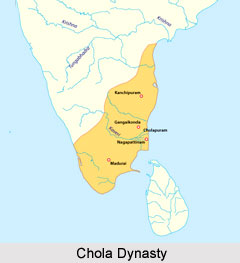
Chola Dynasty
Chola Dynasty is a Tamil dynasty and had longest duration of ruling in parts of South India. Chola dynasty had ruled South India successfully for a ex...
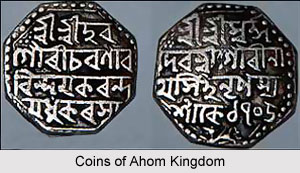
Suhungmung
Suhungmung was the fourteenth ruler of the Ahom dynasty who ruled from the period 1497 to 1539 AD. His reign was significant in terms of expansion of...
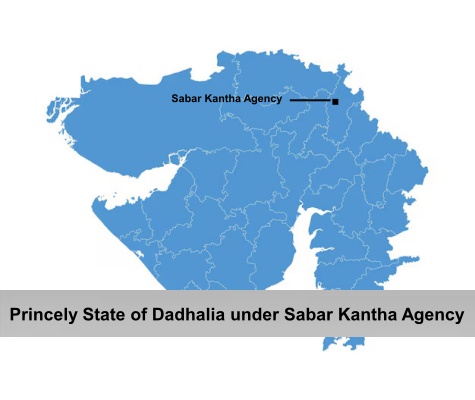
Princely State of Dadhalia
Princely State of Dadhalia was located in the present state of Gujarat. The state covered a total area of 28 sq miles and comprised of 15 villages. Th...
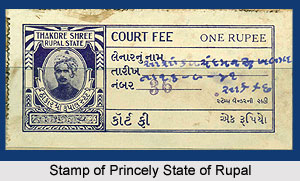
Princely State of Rupal
Princely State of Rupal was a part of the Baroda Agency, a sub division of Western India States Agency. It was under the administrative control of the...
Archaeological Sites of West Bengal
Archaeological sites of West Bengal reveal several aspects of ancient India. Excavations by the Archaeological Survey of India have furnished artefact...
Related articles in History of India

Mughal Architecture during Babur
Mughal architecture during Babur marked the foundation of a new architectural era in India, blending Timurid, Persian, and local influences. His reign...

Architecture during Sayyid and Lodi Dynasty
Architectures during the Sayyid and Lodi dynasty were mainly the tombs and monuments for the dead rulers. It were carefully designed and meticulously...

Brahmanical Sources of Ancient History
Brahmanical Sources of ancient history are contained in the Vedas and they constitute one of the most important literary sources of information about...

Coins of Chola Empire
Coins of Chola Empire were issued in gold, silver and copper and carried the Chola emblem.

Coins of Khilji Dynasty
Coins of Khilji Dynasty had an influential feature that was followed by the other dynasties.