
March of Camps entails in the Chapter II of Book X in Arthashastra, that after preparing the list of villages and forests which are situated in the way of marching which shall provide the supply of food stuff, grass, firewood and water, the conqueror should then concentrate on regulating the march of the army according to the short and long halts. Foodstuffs should be carried in double for the emergency periods; and in case of absence of some separate method to carry them the army should be entrusted to carry them themselves.
March of Camps further mentions that in case of Arraying the Army , the shastra mentions that in the front the leader (nayaka); in the centre the harem and the master (the king); on the sides horses and bodyguards (bahut-sara); at the extremity of the (marching) circular array, elephants and the surplus army; on all sides the army, habituated to forest-life; and other troops following the camp, the commissariat, the army of an ally, and his followers should select their own road: for armies who have secured suitable positions will prove superior in fight to those who are in bad positions.
March of Camps includes that the army of the lowest quality can march a yojana (55/44 miles a day); that of the middle quality a yojana and a half; and the best army two yojanas. Hence, it is easy to ascertain the rate of march. The commander should march behind and put up his camp in the front. In case of any obstruction, the army should march in crocodile array in the front, in cart-like array behind, and on the sides in diamond-like array (i.e. in four or five rows, each having its front, rear and sides) and in a compact array on all sides. When the army is marching on a path passable by a single man, it should march in pin-like array. When peace is made with one and war is to be waged with another, steps should be taken to protect the friends who are bringing help against enemies, such as an enemy in the rear, his ally, a Madhyama king, or a neutral king. Roads with obstructions should be examined and cleared. Finance, the army, the strength of the armies of friends, enemies, and wild tribes, the prospect of rains, and the seasons should be thoroughly examined. When the protective power of fortifications and stores (of the enemies) is on its decay, when it is thought that distress of the hired army or of a friend`s army (of the enemy) is impending; when intriguers are not for a quick march; or when the enemy is likely to come to terms (with the invader), slow march should be made; otherwise quick march should be made.
March of Camps further includes that in case of crossing waterways, it should be crossed with the means of elephants, planks spread over the pillars erected, bridges, boats, timber and mass of bamboos, as well as baskets covered with silk and raft. If the crossing of the river is obstructed by the enemy the army should make efforts to cross the river somewhere else but with same means.
Thus, with the chapter Kautilya enlists some of the requirements which shall be of immediate use for the army which is all set to begin its expedition against the enemy. While the earlier books equips the conqueror regarding the other requirements of the conqueror which the conqueror should keep under his observation at times of peace , the present Book denotes the requirements of the army in camp.
March of Camps
March of Camps includes a number of instructions which shall describe the way of marching to be observed by the army of the conqueror. Chapter II of Book X in Arthashastra enlists the type of army who shall begin the march.
Recently updated articles in History of India
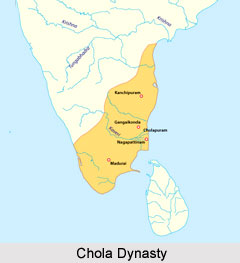
Chola Dynasty
Chola Dynasty is a Tamil dynasty and had longest duration of ruling in parts of South India. Chola dynasty had ruled South India successfully for a ex...
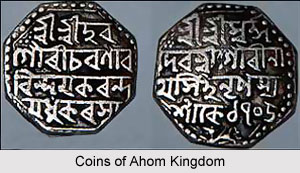
Suhungmung
Suhungmung was the fourteenth ruler of the Ahom dynasty who ruled from the period 1497 to 1539 AD. His reign was significant in terms of expansion of...
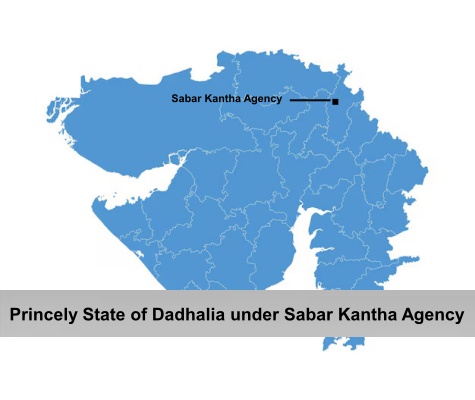
Princely State of Dadhalia
Princely State of Dadhalia was located in the present state of Gujarat. The state covered a total area of 28 sq miles and comprised of 15 villages. Th...
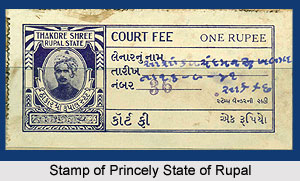
Princely State of Rupal
Princely State of Rupal was a part of the Baroda Agency, a sub division of Western India States Agency. It was under the administrative control of the...
Archaeological Sites of West Bengal
Archaeological sites of West Bengal reveal several aspects of ancient India. Excavations by the Archaeological Survey of India have furnished artefact...
Related articles in History of India

Mughal Architecture during Babur
Mughal architecture during Babur marked the foundation of a new architectural era in India, blending Timurid, Persian, and local influences. His reign...

Architecture during Sayyid and Lodi Dynasty
Architectures during the Sayyid and Lodi dynasty were mainly the tombs and monuments for the dead rulers. It were carefully designed and meticulously...

Brahmanical Sources of Ancient History
Brahmanical Sources of ancient history are contained in the Vedas and they constitute one of the most important literary sources of information about...

Coins of Chola Empire
Coins of Chola Empire were issued in gold, silver and copper and carried the Chola emblem.

Coins of Khilji Dynasty
Coins of Khilji Dynasty had an influential feature that was followed by the other dynasties.