 Manipur Rebellion was waged for an extensive period of one year, between the Kingdom of Britain and the Manipur sovereignty. Due to the pathetic disintegration of several realms after the English advent, Manipur was no exception. A major breach in its internal security led to the rebellion and the kings being crushed.
On 21st September 1890, the Maharaja of Manipur, Surya Chandra Singh, was turned out of by two younger dissident brothers. He fled to the protection of the British Political Agent, F. St C. Grimwood (d.1891). Then, the Maharaja abdicated his office and left the State of Manipur. The Government of India decided on ousting the coup`s leader, Tikendrajit Singh and replacing him with Jubraj. Thus was initiated the Manipur rebellion.
On 24th March 1891, after a day of fighting between British forces and the Manipur rebels, negotiations were agreed upon. During the process of negotiations, the rebels detained the murdered James W. Quinton (1834-1891), Chief Commissioner of Assam, Grimwood and three army officers.
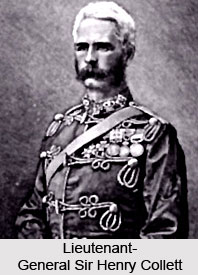
On 27th April, British forces from Assam and Burma under the command of Lieutenant-General Sir Henry Collett (1836-1902) quickly converged in Manipur, crushed the rebellion and executed Singh, Jubraj and three others.
Within the period of October 1890 to March 1891, British forces conducted operations against insurgent Black Mountain tribes on the Hazara frontier.
On 19th December, Sandeman led a mission to the Gomal Pass to gain support of the Zalli Khel Waziri, Sherani and Mahsud tribes for British use of the Pass. The British desired control of the Pass in time of war with Russia for the rapid passage of troops to Ghanzi in Afghanistan. The Manipur rebellion was successfully quelled, in order to establish English dominion.
This article is a stub. You can enrich by adding more information to it. Send your Write Up to content@indianetzone.com