
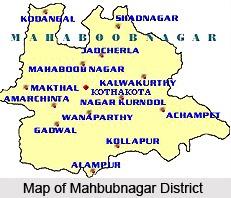
 Mahbubnagar or the Mehboobnagar district of Telangana is also known as Palamooru. Mahbubnagar town is the district headquarters. The district ranks second in the state of Telangana in terms of land area. The location of the district is strategic in the sense it is located only at a distance of 96 kilometers from the state capital Hyderabad. Mahbubnagar has been divided into 64 mandals under 4 Revenue Divisions.
Mahbubnagar District
Mahbubnagar is located towards the southern part of Hyderabad and is the second largest district in Telangana.
Introduction
Mahbubnagar or the Mehboobnagar district of Telangana is also known as Palamooru. Mahbubnagar town is the district headquarters. The district ranks second in the state of Telangana in terms of land area. The location of the district is strategic in the sense it is located only at a distance of 96 kilometers from the state capital Hyderabad. Mahbubnagar has been divided into 64 mandals under 4 Revenue Divisions.History of Mahbubnagar District
 History of Mahbubnagar district is closely linked to that of the Telengana State as it forms a part of the same.
History of Mahbubnagar district says the glorious history of Satavahana Dynasty (221BC-218 AD), part of the Chalukyan Dynasty in South India (between 5th and 11th century AD) and in the recent history, it formed the core of the Golconda State and Hyderabad State, ruled by the Qutab Shahi Dynasty (1520-1687) and Asaf Jahi Dynasty (1724-1948) until it was taken over by New Delhi in 1948. This region became independent and joined democratic India on 18th September 1948.
Telangana State in India comprises 10 districts: Adilabad, Karimnagar, Nizamabad, Medak, Warangal, Khammam, Hyderabad, Rangareddy, Nalgonda, and Mahabubnagar districts.
Mahabunagar is a southern district of Hyderabad state under the Nizam of Hyderabad. It is bordered with Krishna River in the south and surrounded by the Nalgonda district, Hyderabad, Kurnool district, Raichur and Gulbarga district. This place was formerly known as Rukmammapeta and Palamooru.
The name was changed to Mahabubnagar on 4th December 1890, in honour of Mir Mahboob Ali Khan Asaf Jah VI, the Nizam of Hyderabad (1869-1911 AD). It has been the headquarters of the district since 1883 AD. The Mahabubnagar region was once known as Cholawadi or the land of the Cholas`. It is said that the famous Golconda diamonds including famous "Kohinoor" diamond came from Mahabubnagar district.
It is very hard to understand the history of Palamoor as this region was always neglected by the rulers. And for most of the time, this region was ruled by very small regional rulers, Samasthans, Jamindars, Doras or land lords. History of this region can be understood by the dynasties ruled this region as given below.
This region was southernmost land in the Ashoka`s Empire in 250 BC. Consequently it came under the rule of a number of dynasties including the Satavahana Dynasty (221BC-218 AD), Chalukya Dynasty in South India (between 5th and 11th century AD), Rashtrakutas Dynasty - Ruled for a brief period in 9th Century, Kakatiya Dynasty (1100-1474 AD), Bahamanis Dynasty (1347 - 1518), Qutab Shahi Dynasty (1518-1687). After the decline of the Qutab Shahi dynasty, Mughal rule was established over the region. Aurangzeb, the Mughal emperor, invaded Golconda in A.D.1687 and annexed it to the Mughal Empire. Since then, Golconda became part of the Deccan Subha and a Nizam was appointed as an agent of the Mughal emperor. Thus, for about a period of 35 years it was ruled by the Mughals, the last one being Mubariz Khan. Following this, the Nizam Shahi (Asif Jahi) dynasty came into prominence (1724-1948). This dynasty acquired enormous wealth and lived a most extravagant and lavish life for that time. Nizam VII was one of the richest men the world over at his time. He was also awarded as "Faithful Ally of British". The people of the land left behind a lot of well known landmarks, rich treasures, art, lavish food style and rich culture.
Geography of Mahbubnagar District
The global position of Mahbubnagar district is on 16.73 north latitude and 77.98 east longitudes. Nalgonda and the Guntur districts stand to the east of Mahbubnagar. On the west it is bounded by the Gulbarga district of Karnataka. The Rangareddy and the Kurnool districts are towards the north and the south of Mahbubnagar respectively. Mahbubnagar occupies an area of 18,432 square kilometers. The district of Mahbubnagar is generally divided into two distinct regions. They are the plain region with low lying and scattered hills and the second is the plateau of Amarabad-Farhabad. The plateau region has a continuous range of hills with an average height of 800 meters.
 The two important rivers that flow across the district of Mahbubnagar are River Krishna and the Tungabhadra River. An important feature of the climate of Mahbubnagar is that it faces drought conditions which occur due to the scanty and erratic rainfall in the region. The average annual rainfall of the district is 604 mm. Timber trees like ebony, teak, mango, tamarind are commonly yielded from the forests of Mahbubnagar. Apart from the timber trees the forests also yield plants which can be used as fuel wood. Hence it can be said that the geographical conditions of the area does not assist the growth of a lot plants and trees.
The two important rivers that flow across the district of Mahbubnagar are River Krishna and the Tungabhadra River. An important feature of the climate of Mahbubnagar is that it faces drought conditions which occur due to the scanty and erratic rainfall in the region. The average annual rainfall of the district is 604 mm. Timber trees like ebony, teak, mango, tamarind are commonly yielded from the forests of Mahbubnagar. Apart from the timber trees the forests also yield plants which can be used as fuel wood. Hence it can be said that the geographical conditions of the area does not assist the growth of a lot plants and trees.Demography of Mahbubnagar District
The population of the district in the year 2001 was 3,513,934. The density of population in the district is 167 persons per square kilometre. Most of the people in the district dwell in the rural areas and only a meager percentage of the population which is equal to 10.57 percent stay in the urban areas. The sex ratio in the district is 973 females per thousand males.
Telegu is spoken by more than 90 percent of the people in Mahbubnagar and only a very few of them speak in the Urdu Language. Literacy rate in the region is as low as 44.44 percent. Similarly the percentage of working population in the district is 43.19.
Telegu is spoken by more than 90 percent of the people in Mahbubnagar and only a very few of them speak in the Urdu Language. Literacy rate in the region is as low as 44.44 percent. Similarly the percentage of working population in the district is 43.19.
Culture of Mahbubnagar District
The people of Mahbubnagar district are very hard working and their life style is still comparable with that of the slaves. Due to severe drought conditions in the district the people migrate to outside regions and the people of Mahbubnagar are known as cheap source of labour in the country. The economic and the educational conditions of the Mahbubnagar district are yet much backward. It is true that they have to suffer a lot of difficulties yet music is an integral part of their lives.
Education in Mahbubnagar District
The academic institutes of the Mahbubnagar district falls under the jurisdiction of the Osmania University. In addition to the various government colleges and institutes which offer undergraduate and post graduate degrees there are several private institutes in the region which cater to the academic needs of the students. Some of the well known private academic institutes of the district are SVS Medical College, Madina Group of Institutions, Jaya Prakash Narayana Engineering College and a lot more which adds to the prestige of Mahbubnagar.
Economy of Mahbubnagar District
The prime occupation of the people of Mahbubnagar is agriculture. But due to frequent droughts which are caused in Mahbubnagar, several farmers are not able to carry out their agricultural activities in a proper manner and as a result they migrate to the nearby towns. The main crops that are grown in the region are paddy, castor, pulses and jowar. The main industries of the district are cotton textiles, power generation and ceramics. Horticulture is also an important occupation for the people of Mahbubnagar. The fruits that are commonly grown in the district of Mahbubnagar are mango, sweet lime and orange.
Temples of Mahbubnagar District
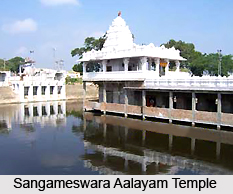 Temples of Mahbubnagar District in Telangana deal with the several ancient and medieval South Indian temples like Sangameswara Aalayam Temple, Uma Maheswari Temple, Bekkeswara Aalayam Temple and many other temples.
Mahbubnagar District is the largest district in Telangana. Telangana is a newly formed state in modern India after bifurcated from Andhra Pradesh. It is also lovingly called `Palamooru`. A number of temples braid Mahbubnagar.
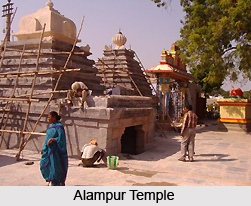
Temples of Mahbubnagar District in Telangana further add to the tourism sector of the district. The major pilgrim centres in are Alampur Temple, Manikonda Temple, Wanaparthi Temple, Malleswaram Temple, Somasila temple, Sri Rangpur Temple, Uma Maheswari Temple, Tripurantakam Umamaheshwaram temple, Bekkeswara Aalayam Temple and Nava Brahma Temple on the riverbanks of Tungabhadra. The major dynasties that ruled this place were the Cholas, Kakatiyans, Vijayanagara kings and Nizam Nawabs, proof of ancientness of the beauteous construction of these legendary temples. Lord Shiva rules mostly in the shrines, with exceptions thrown here and there. The spectacular rich heritage of these constructions lay stress on the century old times, dating back to the Ramayana and Mahabharata period with elaborate sculptural works. The region is also popular for its traditional handicrafts and handloom works. The vistas prove that Mahbubnagar served a golden preceding era, an additional profit for tourist development.
Sangameswara Aalayam Temple
Sangameswara Aalayam Temple is located at Kudali, Mahabubnagar which has a deity of Lord Shiva. This temple is located at the confluence of Tungabhadra and Krishna rivers. It was built by the Chalukyas and resembles the Alampur Navabrahmaalayas in architecture. The walls have beautiful carvings of Nataraja, Ardhanareeswara, and Andhakasura samharamurti. Regular prayers are offered. It lies 15 km from Alampur in Mahabubnagar.
Uma Maheswari Temple
This temple was built during the reign of Maurya Chandragupta contains a grand image of Errana, adored in literature. It is a hill temple, built by Kalyana Chalukyas in the seventh century itself. Umamaheshwaram temple is situated on very tall hills of Nallamala forests and dates back to 2nd century AD. To reach the temple, there are very steep and dangerous curves from the bottom of the hill. It is also known as the North Entrance to Srisailam (Jyotirlingam). Situated deep in the Nallamala forests, this place is popular for its mysterious papanashanam where there is always water, throughout the year. Nobody has found the source of water. Today it is the home to numerous "sadhus". The presiding deities in Umamaheshwaram are Mallikarjuna (Lord Shiva or Mahadeva) and Bhramaramba (Devi).
Bekkeswara Aalayam Temple
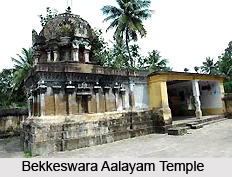
Bekkeswara Aalayam Temple is derived according to legend the name Bekku means "cat" in Kannada language. Being the ancient seat of Siva, there is a group of five Sivaalayas called Siddheswara, Kapileswara, Someswara, Malleswara and Kaleswara within 15 km of each other. The "sthalapurana" states that this village was called Narasingarayapalli. One day a cowherd saw a cow go into the palm grove and empty its udder over an anthill. Strangely a cat lying hidden in the anthill came and drank the entire quantity. The villagers dug out the anthill and found a black Shiva Linga. They built a small shrine and installed the linga calling it Bekkeswara. The lord is said to have showered boons. Later some "bhaktas" brought two Shiva-lingas from Varanasi and installed them in the same compound, but in separate shrines. They were called Moksheswara and Sakaheswara.
Tourism in Mahbubnagar District
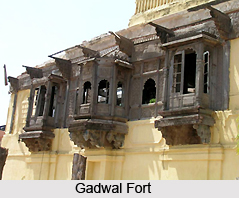
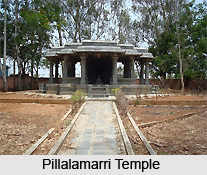
The district of Mahbubnagar has been made a picturesque location with low as well as high hills surrounding the district all around. Apart from the beautiful view there are some places of tourist attraction in the district. They are namely Pillalamarri, Srisailam, Alampur temple, Koilsagar Dam and Priyadarshini Jurala Project at Gadwal.
Recently updated articles in States of India
Bandare Waterfalls, Meghalaya
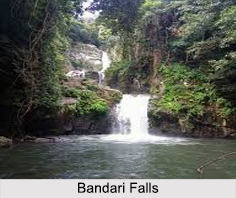
Bandare Waterfalls in South Garo Hills, Meghalaya, is a secluded natural attraction surrounded by dense subtropical forests and rugged mountain terrai...
History of Thissur District
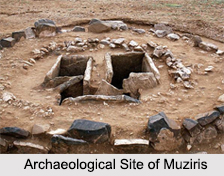
Early History of Thissur District explains flourishing of the port cities. Now these port cities are transformed into archaeological sites.
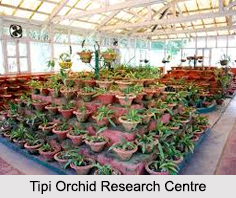
Tippi Orchid Research Centre, Arunachal Pradesh
Tippi Orchid Research Centre in Arunachal Pradesh is renowned for its rich collection of exotic and endangered orchids. Surrounded by lush rainforest...
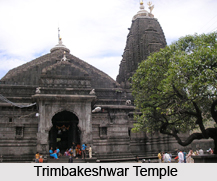
Tourism in Nashik District
Pilgrimage tourism in Nashik district involves visiting the various places of Hindu and Jain worship located here. Some of the holiest sites for Hind...
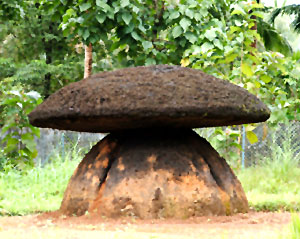
Mangadu, Kerala
Mangadu in Kerala’s Kollam district is a significant megalithic site known for its urn burials, cist burials, menhirs, and stone circles. Excavations...
Related articles in States of India
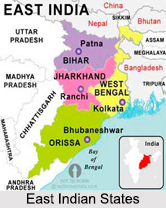
East Indian States
East Indian States comprises of Bihar, Jharkhand, West Bengal, Odisha and also the Union Territory of Andaman and Nicobar Islands. It defines the cult...
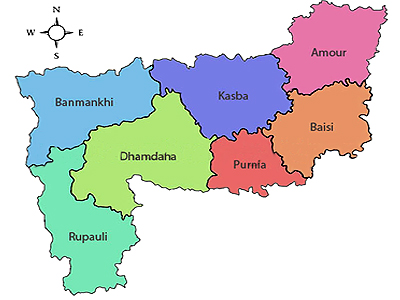
Purnia District in Bihar
Purnia District is located in Bihar and extends from River Ganga to Nepal. The district has a rich Hindu history and glorious past.
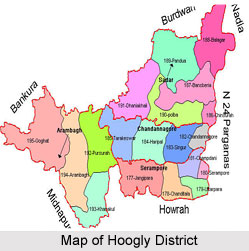
Hooghly district
Hooghly District along the bank of the river Hooghly is one of the principal trading ports of West Bengal.
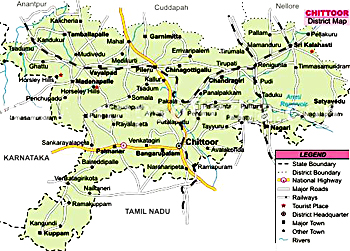
Geography Of Chittoor District
Geography of Chittoor district is spread along the topography of the land which is divided into two natural divisions; Chittoor has a dry and healthy...
Districts of West Bihar
Districts of West Bihar is comprised of medieval monuments that were built by the different governors of Mughal era.