
Lord Abhinandannatha or Abhinandan Swami was the fourth Tirthankara of the present age, Avasarpini. According to Jain philosophy, he became a siddha, an enlightened soul. Abhinandannath was born in Ayodhya in the Ikshvaku dynasty to Emperor Sanvara Raja and Queen Sidharta Rani. His birth date was the second day of the Magh shukla month of the Hindu calendar. Mahabal was the Emperor of Ratnasanchay or Mangalavati town in Purvavideh. Though he was an Emperor, he was a very simple and humble person. When someone criticized him he would humbly say that he was his true well-wisher and a friend and wasted to help him to progress by pointing out his faults.
Gradually a feeling of detachment grew in him and finally finding an appropriate moment he took Diksha or vow from Vimal Suri. Because of his simplicity and humility he became a famous and ideal Sharman in his group. It is said that as a consequence of this rare disposition and profound meditational practices he purified his soul to an extent that he acquired the Tirthankar-nam-and-gotra-karma. It is believed that after completing his age, he reincarnated as a God in the Vijay dimension.
Resurrection of Lord Abhinandannatha
When Mahaval left the Vijay dimension, he descended into the womb of queen Siddharth, wife of Emperor Samvar of Ayodhya. Because of his simplicity of attitude inherited from the earlier birth, the soul in the womb of the queen had a soothing and pacifying influence on the people of the outer world. The people of the kingdom were filled with the feelings of modesty, love and fraternity. They began honouring and greeting each other irrespective of age, caste, creed and status. People became politeness and behaved in a polished way. The augurs and other scholars were of the opinion that as the aura of a pious soul influences all the people around, the effusion of politeness was the result of the soul in the womb.
The queen gave birth to the future Tirthankara, Lord Abhinandannath on the second day of the bright half of the month of Magh. The king named his son Abhinandan meaning greeting as his influence was evident in the overt mutual greetings among the people.
Abhinandan right from his childhood days lead a very simple, normal and ordinary life with least indulgence in materialistic wants. When his father became an ascetic he ascended the throne. After a long and successful reign, he became an ascetic and indulged in rigorous penance and lofty divine practices. He achieved nirvana on the fourteenth day of the dark half of the month of Paush. Lord Abhinandan moved around for many years to illustrate the right path to millions of beings. On the eighth day of the bright half of the month of Vaishakah he achieved Nirvana at Sammetshikhar.
Lord Abhinandannatha
Lord Abhinandannatha was the son of Emperor Sanvara Raja and Queen Sidharta Rani. He was the fourth Tirthankara who attained Nirvana.
Recently updated articles in Religion in India
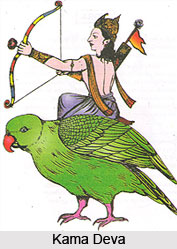
Kusumayudha
Kusumayudha is a name of Kamadeva, the Hindu God of Love. Depicted with a sugarcane bow and flower-tipped arrows, he represents attraction and longing...

Bhoyar Caste
Bhoyar Caste is largely found in the Central Provinces of the country. Traditional occupation of Bhoyars is agriculture. They are good cultivators and...

Chasa Caste
Chasa caste is a prominent agrarian community native to Odisha. Traditionally associated with cultivation and farming, Chasas have historically played...
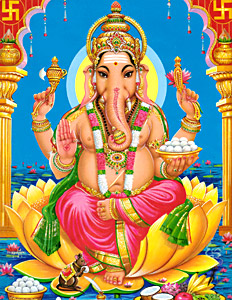
Vigneswara, A Form of Lord Ganesha
Lord Vigneswara is another form of Lord Ganesha or Vinayaka, prominently worshipped as the God of intelligence and good luck in the Indian subcontinen...
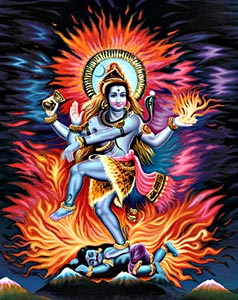
Maheswara
Maheswara, meaning “the Great Lord,” is a revered name of Lord Shiva in Hindu tradition. It represents Shiva’s supreme authority over creation, preser...
Related articles in Religion in India

Religion in Indus Valley Civilization
Religion in Indus Valley Civilisation included Hinduism, Buddhism and Jainism. Details about the religion in Indus Valley Civilization have been gathe...

Iyer Brahmin
Iyer Brahmins are originally from Tamil Nadu of South India. They are known for their adherence to Advaita philosophy and Smarta traditions. Tradition...

Kumbhakar / Kumhar Caste
Kumbhakar or Kumhar caste is a traditional artisan community in India known for pottery making. Derived from Sanskrit word Kumbhakar, meaning potter,...

Gujjars in Mughal Era
Gujjars in the Mughal era enjoyed great power. Further their power increased with the decline of Aurangzeb, Mughal emperor.

Gotra in Hinduism
In Hinduism, gotra refers to a lineage system tracing descent from ancient sages, primarily through the paternal line. Originating from Vedic traditio...