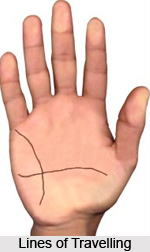
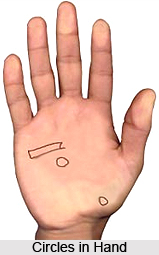
Travel lines are observed in varying forms, ranging from
prominent, well-defined markings to faint or fading lines. The characteristics
of these lines are believed to offer insight into the nature of movement in an
individual’s life. Deeper and longer lines are often interpreted as indicators
of more permanent relocations, whereas lighter or less distinct lines may
suggest temporary travel or short-term movement.
Prominent travel lines: Long, deep travel lines are
generally interpreted as indicators of major and significant journeys, such as
international relocation, life-changing voyages, or permanent geographic moves
Faint travel lines: Short and faint travel lines are
believed to signify more minor forms of travel, including work-related trips,
vacations, or short-term relocations that do not substantially alter the course
of one’s life.
Multiple travel lines: The presence of multiple
parallel travel lines is often associated with numerous distinct journeys over
time. Each line is thought to represent a separate instance of meaningful
movement or travel within an individual’s life.
Long travel lines: Long and clearly defined travel
lines are associated with more significant journeys. These may include major
life changes such as professional transitions, pursuing education abroad, or
even permanent settlement in a foreign location.
Short travel lines: Short travel lines are generally
interpreted as indicators of brief journeys, such as vacations, business trips,
or visits to relatives. When numerous short lines are present, they are often
seen as suggesting frequent travel within the country or to nearby regions,
rather than extended or long-term stays.
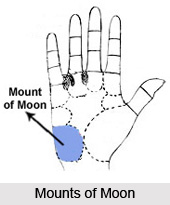
Straight travel lines: Straight travel lines are
generally interpreted as indicators of smooth and hassle-free travel
experiences. When such a line extends clearly toward the Mount of the Moon, it
is often viewed as a sign of foreign travel.
Curved travel lines: Curved travel lines are
associated with obstacles or challenges during journeys. The degree of
curvature is believed to reflect the level of difficulty, with more pronounced
curves suggesting greater complications, particularly in the context of travel
abroad.
Zigzag travel lines: Zigzag travel lines are
typically seen as representations of instability in travel patterns. They may
indicate sudden changes in travel plans, difficulty adapting to foreign
environments, or strained relationships during overseas stays. Individuals with
such lines are often thought to experience frequent relocations or face
challenges related to travel permissions and documentation.