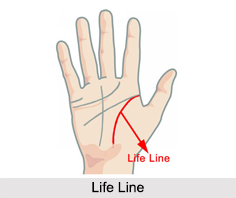
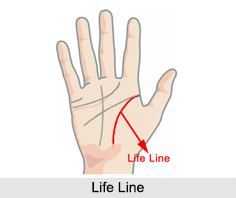
The position, length, and overall appearance of the life
line are believed to reflect different experiences, energies, and life patterns
that may influence an individual’s journey.
Short life line: A short life line may suggest that
the individual lacks grounding or stability in certain aspects of life.
Long life line: A long-life line is often associated
with good health, physical strength, vitality, and sustained energy throughout
life.
Shallow life line: A shallow but visible life line
may indicate that the person is more mentally oriented than physically driven.
Thick life line: A thick and deep life line can
reflect a personality inclined toward physical activity, high energy, and
athletic pursuits.
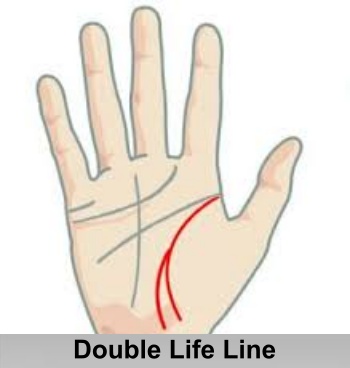
Doubled life line: Some folks have a double life
line, which is a life line with a “sister” line close to it. A doubled life
line runs parallel to the main line. This signifies a strong constitution,
resilience, and resistance to illness. This also signals protection in times
of harm.
Wavy life line: A wavy life line may point toward a
weakened physical condition or recurring health-related challenges.
Broken life line: Breaks in the life line are often
interpreted as periods of illness, hardship, or major life challenges.
Broken along bottom: If the break appears in the
lower section of the line, it may suggest health concerns or physical decline
during old age.
Chained life line: A chained appearance in the life
line indicates that the individual is strongly guided by emotions and may
experience emotionally significant events that affect life energy.
Criss-cross life line: A life line marked with
crisscross patterns may represent a life filled with interruptions,
uncertainty, or repeated stops and starts.
Downward branches: Branches extending downward from
the life line may symbolize periods of poor physical or mental health.
Upward branches: Upward-sloping branches are
generally associated with resilience, recovery, ambition, and the potential for
success.
Forked life line: A fork in the life line may
indicate a major change, redirection, or split in life path and personal
energy.
Trident life line: A trident-shaped ending is
traditionally viewed as a sign of good fortune and a strong desire for travel
or exploration.
Tassel life line: Tassel-like branches at the end of
the life line may suggest a gradual decline in energy and vitality.
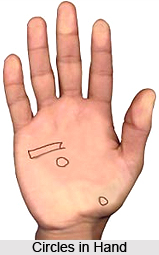
Islands in life line: Islands appearing within the
life line are often interpreted as interruptions caused by illness, emotional
struggles, or difficult life phases.
Here is a more detailed interpretation of the life line based
on the variety of its appearance in individual hands.