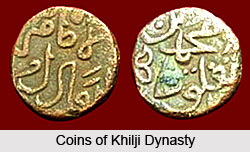
 Land revenue system in Mughal era was one of the central features of the agrarian system of that period. It witnessed several changes in Mughal period. Generally the transfer from the peasant of his surplus produce that is the produce above what was required for the family`s subsistence was largely by way of exaction of land revenue. According to historians, the equation of land revenue with surplus produce is no part of the official doctrine as expressed in the administrative documents. In Mughal India, the revenue imposed did not usually go beyond the surplus produce; this was only because such a course, leading to a wholesale extinction of the revenue-payers would have reduced the total revenues in the longer run and thus defeated its own purpose.
There are however, no concrete means of knowing what the average size of surplus produce as a portion of the total produce was in Mughal India. Owing to the differences in the production of the soil and also in climatic and social conditions that decided the minimum levels of subsistence, the size varied from one tract to another. The share that used to be taken out of the peasant`s produce without destroying his survival chances have been established by experience in each locality. It was also assumed that the land revenue did not normally exceed the surplus produce and its rates were so formulated as either to approximate to these established local rates or to remain below them. Numerous statements have been found in surveys that define the land revenue system in Mughal era as amounting to a particular portion of the total produce. However, these records did not prove any direct relationship between the magnitude of the land-revenue demand and the actual harvest.
 Archaeological surveys also showed some problems associated with the various systems of revenue assessment and collection in Mughal era. Crop rates at the beginning of Mughal Emperor Akbar`s reign had been fixed arbitrarily. They became more realistic afterwards, varying with localities, and ultimately came to be framed on the basis of the average yield worked out separately for each locality. Land revenue was later fixed in cash, not kind. Quite unlikely the prices forming the basis for changing the demand into cash were identical with those at which the peasant parted with his crop at the time of the harvest, when there was a glut in the market. Outside these provinces conditions varied considerably during the reign of Mughal Emperors.
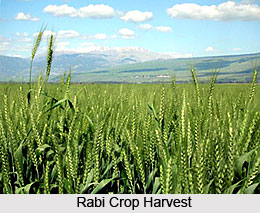
During the Mughal rule, except under simple crop-sharing the collection of land revenues and its assessments were completely different operations. Like for instance, in crop-sharing the state`s share of the grain was directly taken from the field or the threshing floor at the time of division, so that assessment was wholly distributed with, while in other systems, assessment used to take place between the time of sowing and harvesting, but collection, whether through the medium of payment was cash or other mode, usually took place at the time of the harvest. The rabi harvest was all gathered within a very short period. The revenue was paid into the treasury usually through the revenue collector, though Akbar`s administration sought to encourage the peasants to pay direct. The peasants, or their representatives were entitled to obtain proper receipts for their payments; the treasurer, on the other hand, was also asked to get the patwari`s endorsement in his register to establish the amount of payment. These regulations were largely in the nature of cautions that the administration took as a measure of protection from frauds. Further, revenue concessions were the principal instrument devised by the Mughal administration in order to encourage development.