
Kuramwar community is described as the shepherd caste residing in the southern part of India. People belonging to Kuramwar community are quite identical to the Telugu Kuruba and Tamil Kurumba. Kuramwar caste is an important caste of south India. Kuramwars are regarded as the representatives of ancient Pallava tribe, whose kings dominated the southern part for some time. Kuramwars have several indigenous customs and marriage rituals that they follow religiously.
The marriage rules of Kuramwar community are quite interesting. In their caste if any girl reaches her adolescence stage while still unmarried then she is expelled from the caste. Her parents too faces penalty for re-admission into the community. It is believed that in the past, such a girl was sacrificed to river goddess. She was kept in a small hut on the banks of the river until flood came that swept her away. Offerings were also made to river goddess. In their marriage ceremonies, prior to the wedding the father of the bridegroom observes some marks on the hair or head of the proposed bride. Some of the marks are believed to forecast future prosperity or despair to the family in which she is going to make her entry. Thus, the groom`s family remain cautious while selecting the appropriate bride.
Among the people of Kuramwar community, marriages can be celebrated only for four days in a year. These days are the fifth day of the fortnights of the month of Phalguna, tenth day of second fortnight of Phalguna and third day of the month of Baisakh. At the wedding ceremony, the bridegroom and the bride are made to seat together under a shelter and they throw coloured rice at one another. A miniature swing is put up and a doll is placed as an imitation of a child. After that the bride takes the doll and gives it to the groom saying that she will now cook food. After some time the boy returns it to the girl saying that he has to go to tend the flock. This proceeding symbolises the cares and responsibilities associated with a married life.
In Kuramwar community, divorce is not allowed. Further, if any girl returns to her father`s house, the husband cannot force her to return back to his house. Kuramwars observe several festivals. They worship Lord Ganesha on the occasion of Ganesh Chaturthi. They also worship Mallana Devi, who guards their flocks. Kuramwar caste also makes blankets.
Kuramwar Community
Kuramwar Community is the shepherd community of south India. Kuramwars are dark coloured people and they speak a dialect of the Kannada language.
Recently updated articles in Religion in India
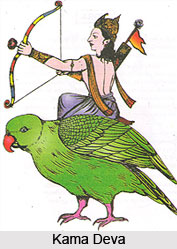
Kusumayudha
Kusumayudha is a name of Kamadeva, the Hindu God of Love. Depicted with a sugarcane bow and flower-tipped arrows, he represents attraction and longing...
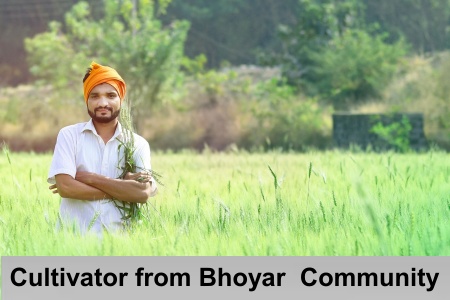
Bhoyar Caste
Bhoyar Caste is largely found in the Central Provinces of the country. Traditional occupation of Bhoyars is agriculture. They are good cultivators and...
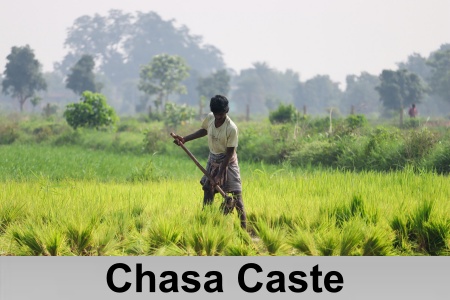
Chasa Caste
Chasa caste is a prominent agrarian community native to Odisha. Traditionally associated with cultivation and farming, Chasas have historically played...
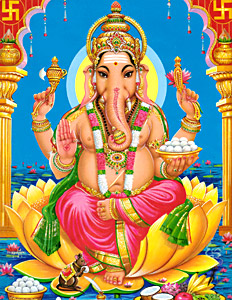
Vigneswara, A Form of Lord Ganesha
Lord Vigneswara is another form of Lord Ganesha or Vinayaka, prominently worshipped as the God of intelligence and good luck in the Indian subcontinen...
Maheswara
Maheswara, meaning “the Great Lord,” is a revered name of Lord Shiva in Hindu tradition. It represents Shiva’s supreme authority over creation, preser...
Related articles in Religion in India

Religion in Indus Valley Civilization
Religion in Indus Valley Civilisation included Hinduism, Buddhism and Jainism. Details about the religion in Indus Valley Civilization have been gathe...

Iyer Brahmin
Iyer Brahmins are originally from Tamil Nadu of South India. They are known for their adherence to Advaita philosophy and Smarta traditions. Tradition...

Kumbhakar / Kumhar Caste
Kumbhakar or Kumhar caste is a traditional artisan community in India known for pottery making. Derived from Sanskrit word Kumbhakar, meaning potter,...

Gujjars in Mughal Era
Gujjars in the Mughal era enjoyed great power. Further their power increased with the decline of Aurangzeb, Mughal emperor.

Gotra in Hinduism
In Hinduism, gotra refers to a lineage system tracing descent from ancient sages, primarily through the paternal line. Originating from Vedic traditio...