
Kaihkarya for Bhagavata, like the concept of Kaihkarya itself, is a universal one and is prevalent in some form or the other in all religious systems. It however gets an added emphasis in Vaishnavism with philosophical and theological justification. This concept is developed in Vaishnavism on the basis of the doctrine of the ontological relation of jiva or the individual self to Paramatman or God. The jiva by its very nature is a sesa or absolutely dependent on God who is Supreme Lord (sesin). It exists for the pleasure of God and as a subservient being (dasa) it is the intrinsic duty of an individual to serve God at all times (sarvakala) and in all ways (sarvavastha). On the basis of this doctrine, the kaihkarya or service to God is ordained on jiva both during the states of bondage and mukti purely for the pleasure of God.
Against this philosophic background, every deed in a broad sense becomes a kaihkarya if the same is done purely for the pleasure of God without any selfish motive. Vaishnavism has adopted the concept of niskamakarma advocated in the Bhagavad Gita and made it an integral part of every religious act. Thus, at the commencement of any religious act- whether it be a simple chanting of prayer, or the formal worship of God or an act of giving charity (dana) or an act of giving away one`s daughter in wedding (kanya dana), the individual performing it is required to say in the form of a sankalpa (declaration) that he is doing it purely for the pleasure of God (Srimannarayana prityartham or Bhagavat kaihkaryarupam).
In addition to the sahkalpa, the orthodox Vaishnavas say at the commencement of Karma with sincere faith that the very Supreme Being caused it (svayameva karayati). Similarly, at the conclusion of the karma, they repeat that it was accomplished with the grace of God (svayameva karitavri). The implication of it is that the individual is a tool in the hands of the Almighty and whatever he does is not for his selfish purpose but for the pleasure of God. This is the height of renouncement of the ego (ahamkara) and the notion of mine (mamakara). A service done in this spirit removes the sins by earning the grace of God and thereby gradually leads one to the attainment of God which is the highest goal of human life.
Though any religious act can be taken as kaihkarya in the sense explained above, Vaishnavism as a way of life has advocated certain religious activities as specific types of kaihkarya in a technical sense. These are mostly related to the various services in the temples. Any service done in a temple ranging from the simplest act of bringing flowers to the highest task of construction of a temple is a kaihkarya for God. There is a variety of such services that one can render in a temple. To name a few, lighting the oil lamp, offering flowers, waving the fan before the deity, bringing water from the river or pond for Lord`s worship, arranging food offering for God, taking out the deity in procession, recitation of songs or hymns about God, prostration before God, going round the temples, cleaning of the floor of the temples and many such acts. All these are regarded as kaihkarya. According to one`s capacity and choice any one of these acts performed with devotion is bound to earn the grace of God.
Irrespective of one`s caste or social status, everyone can easily participate in such pious activities. Though the concept of divine service is old and prevalent from prehistoric times, kaihkarya as a form of worship of God was introduced with added emphasis by Ramanuja, who was the foremost reformer of Vaishnavism. The sole consideration of Ramanuja in doing so was to involve millions of illiterate men and women in some kind of divine worship. In view of it, he encouraged his followers to engage themselves in temple activities. From the biographical account of Ramanuja we have clear evidence of how he promoted temple worship and also introduced the reforms in the mode of worship in accordance with the Pancharatra system.
The three major and oldest Vaishnava temples at Srirangam and Conjeevaram (both in Tamil Nadu) and Melkote (in Karnataka) follow even to this day the mode of worship introduced by Ramanuja in the eleventh century. He encouraged the Vaishnavas living in and around those temples to involve themselves in divine service and allocated specific duties to different families. The other Vaishnava temples have followed the same practice. This accounts for the development of the temple towns as centres of religion and culture with a large number of residential houses built around the outer temple walls. The Vaishnavas in the ancient days considered themselves as fortunate to have had an opportunity to do some kind of service in a temple without any monetary benefit. A true kaihkarya, it is believed, is that which is done not for monetary gain but as a source of divine pleasure.
Kaihkarya for Bhagavata
Kaihkarya for Bhagavata in Vaishnavism refers to the kinds of service that are to be rendered to God since the individual is said to be completely dependant on the Paramatman. It is believed that it is the duty of an individual to serve God at all times and there are certain religious activities which have been categorised as specific types of Kaihkarya in Vaishnavism.
Recently updated articles in Religion in India

Kusumayudha
Kusumayudha is a name of Kamadeva, the Hindu God of Love. Depicted with a sugarcane bow and flower-tipped arrows, he represents attraction and longing...
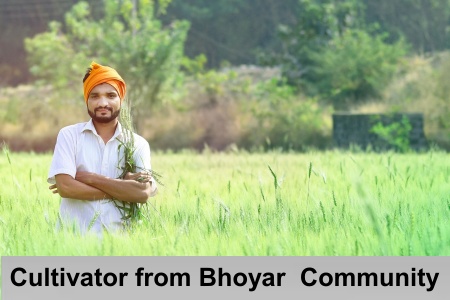
Bhoyar Caste
Bhoyar Caste is largely found in the Central Provinces of the country. Traditional occupation of Bhoyars is agriculture. They are good cultivators and...
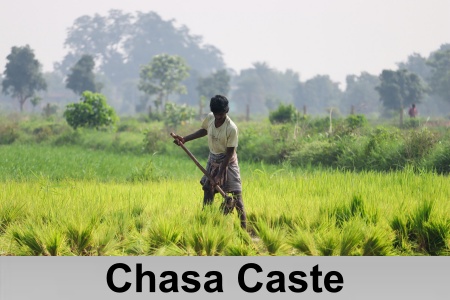
Chasa Caste
Chasa caste is a prominent agrarian community native to Odisha. Traditionally associated with cultivation and farming, Chasas have historically played...
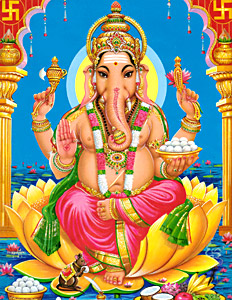
Vigneswara, A Form of Lord Ganesha
Lord Vigneswara is another form of Lord Ganesha or Vinayaka, prominently worshipped as the God of intelligence and good luck in the Indian subcontinen...
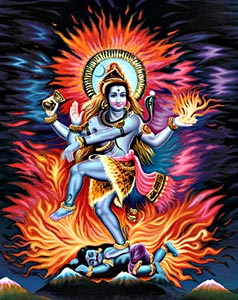
Maheswara
Maheswara, meaning “the Great Lord,” is a revered name of Lord Shiva in Hindu tradition. It represents Shiva’s supreme authority over creation, preser...
Related articles in Religion in India

Religion in Indus Valley Civilization
Religion in Indus Valley Civilisation included Hinduism, Buddhism and Jainism. Details about the religion in Indus Valley Civilization have been gathe...

Iyer Brahmin
Iyer Brahmins are originally from Tamil Nadu of South India. They are known for their adherence to Advaita philosophy and Smarta traditions. Tradition...

Kumbhakar / Kumhar Caste
Kumbhakar or Kumhar caste is a traditional artisan community in India known for pottery making. Derived from Sanskrit word Kumbhakar, meaning potter,...

Gujjars in Mughal Era
Gujjars in the Mughal era enjoyed great power. Further their power increased with the decline of Aurangzeb, Mughal emperor.

Gotra in Hinduism
In Hinduism, gotra refers to a lineage system tracing descent from ancient sages, primarily through the paternal line. Originating from Vedic traditio...