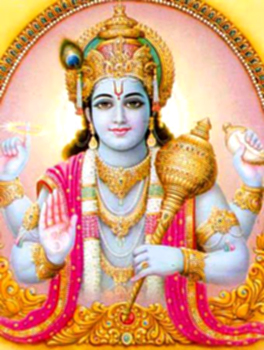
 According to the theological beliefs of Vaishnavism, the jiva is regarded as Vishnu Dasa. This means that the individual is a subservient person to Lord Vishnu. Though this concept is similar to the concept of paramatma sesa, the former is more meaningful than the latter. The word sesa is a general term which is applicable to all that exists in the universe other than God. It covers both the sentient souls as well as non-sentient material objects. The word dasa is more specific and applies exclusively to living human beings as well as celestial beings. Only they have the capacity to worship God and seek redemption. In order to establish a closer religious communion with God they regard themselves as dasas or servants of God.
More important than this, by the submission of an individual with all humility to the Almighty, he would be able to shed his egoism. It is believed that the feelings of I-ness (ahamkara) and mineness (mamakara) which are the natural mental traits caused by lack of philosophic wisdom, are the real enemies of human beings aspiring for spiritual progress. These are unethical traits causing obstruction to the realization of the existence of a higher Divine power. Hence all religions emphasise the need to forsake the egoistic tendencies and develop the ethical virtue of humility with faith in the Supreme Being in order to attain the higher spiritual goal.
The concept of dasatva as developed by Vaishnavism is intended to promote the spiritual progress by way of realizing through philosophic knowledge that as individuals they are humble before, God and that they should, therefore, submit themselves as subservient beings to the will of God. It is held that a person who develops this kind of mental attitude with the utmost faith and unshakable conviction that God is the sole protector and that he is a humble being like a doll in His hands does not have to be afraid of anything. Such a mental disposition gains added significance in the context of the self-surrender to God seeking liberation from bondage. The term narnah used in the esoteric mantras, which ordinarily means salutation, has the deeper implication of negating this kind of egoism (na-mama).