
Jimutavahana was the lord of the Vidyadharas and has been portrayed as a hero of the famous drama Nagananda, by Harshavardhana.
The play Nagananda describes the superior sentiment of self-sacrifice and devotion of Jimutavahana towards his parents. The `shringara` sentiment in the drama is introduced only as a sort of conventional affair.
In the original story of Jimutavahana it is said that, Jimutavahana leaves his empire with his parents and goes to Malaya Mountain. In this place Jimutavahana learns by his supernatural power that his relatives want to attack and occupy his kingdom knowing that he is quite powerless to defend without his `Kalpa vriksha`, the wish fulfilling tree.
Jimutavahana goes to the Gauri temple and sees Malayavati. He comes to know of her name and her life history from her companion or sakhi. Jimutavahana also relates his life history to her.
Malayavati wanted to marry Jimutavahana but it was not possible and knowing this Malayavati tries to commit suicide by hanging herself. The Goddess Gauri or Parvati prevents her from killing herself and promises her that Jimutavahana would become her husband.
Then Jimutavahana comes to know about the destruction of the Nagas by Garuda. He makes a decision that he would stop this destruction even by giving his own life. He stands on a slab of slaughter covered with a precious garment and is mistaken for a serpent by Garuda, who used to demolish the Nagas there.
The jewels and clothes which Jimutavahana was wearing fall at the feet of Malayavati and she comes to know of the death of her husband. Malayavati prepares herself for death. But at that moment Goddess Gauri appears and blesses and ultimately brings happy ending. Garuda promises not to kill any more serpents.
Jimutavahana
Jimutavahana was the son of Jimutaketu, and prince of the Vidyadharas and the hero of the Nagananda.
Recently updated articles in Religion in India
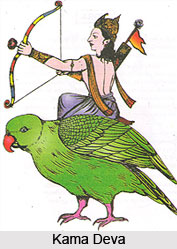
Kusumayudha
Kusumayudha is a name of Kamadeva, the Hindu God of Love. Depicted with a sugarcane bow and flower-tipped arrows, he represents attraction and longing...

Bhoyar Caste
Bhoyar Caste is largely found in the Central Provinces of the country. Traditional occupation of Bhoyars is agriculture. They are good cultivators and...
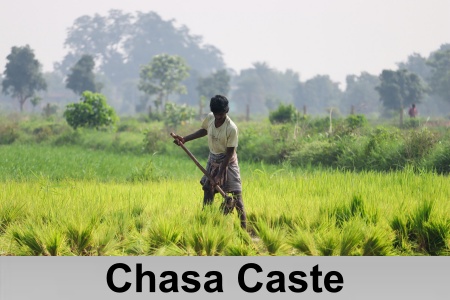
Chasa Caste
Chasa caste is a prominent agrarian community native to Odisha. Traditionally associated with cultivation and farming, Chasas have historically played...
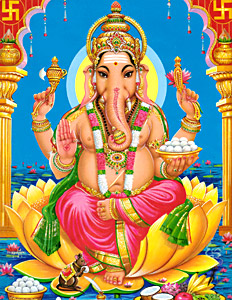
Vigneswara, A Form of Lord Ganesha
Lord Vigneswara is another form of Lord Ganesha or Vinayaka, prominently worshipped as the God of intelligence and good luck in the Indian subcontinen...
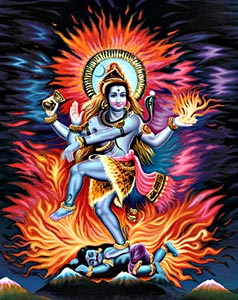
Maheswara
Maheswara, meaning “the Great Lord,” is a revered name of Lord Shiva in Hindu tradition. It represents Shiva’s supreme authority over creation, preser...
Related articles in Religion in India
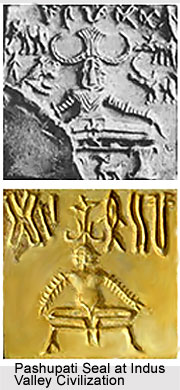
Religion in Indus Valley Civilization
Religion in Indus Valley Civilisation included Hinduism, Buddhism and Jainism. Details about the religion in Indus Valley Civilization have been gathe...
Iyer Brahmin
Iyer Brahmins are originally from Tamil Nadu of South India. They are known for their adherence to Advaita philosophy and Smarta traditions. Tradition...
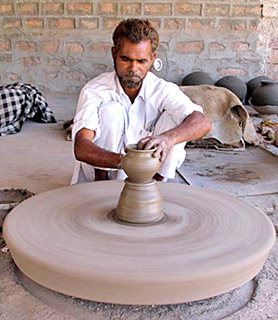
Kumbhakar / Kumhar Caste
Kumbhakar or Kumhar caste is a traditional artisan community in India known for pottery making. Derived from Sanskrit word Kumbhakar, meaning potter,...

Gujjars in Mughal Era
Gujjars in the Mughal era enjoyed great power. Further their power increased with the decline of Aurangzeb, Mughal emperor.
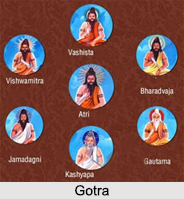
Gotra in Hinduism
In Hinduism, gotra refers to a lineage system tracing descent from ancient sages, primarily through the paternal line. Originating from Vedic traditio...