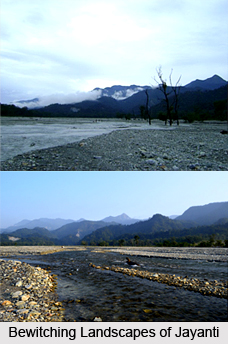
 Jayanti is a small forest village located in the Alipurduar district of the Indian state West Bengal, within the Buxa Tiger Reserve. It lies along the bank of the Jayanti River and forms a natural border with the Bhutan hills. The village is wrapped in exquisite natural beauty exhibiting scenic landscapes and wild fountains. This makes the place inviting for the hikers. There is a 13 kilometres trekking trail from Buxaduar to Jayanti which attracts a number of trekkers for exploring the dense woods of the Buxa Tiger Reserve. The village serves as a picturesque tourist destination in the Dooars region of North Bengal. Jayanti is often referred to as Queen of Dooars.
Ruins at Jayanti
Over the Jayanti River, there was a railway bridge made of steel which was constructed in the year 1915 by the East India Company for facilitating the transport of dolomite from the nearby hills to different parts of the country. However, presently the bridge is in ruins with a few steel bars and pillars left. In the year 1993 heavy flood greatly affected the bridge which almost broke down. Previously it had a height of about 52 feet which has now descended to the ground level.
Tourism of Jayanti
Jayanti offers a spellbinding view of the Himalayan mountain range in Bhutan.
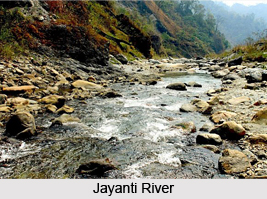 The beautiful Jayanti River and the majestic mountains around the village sketch a fascinating canvas of nature. The twittering of birds, intoxicating fragrance of nature and the serene breeze make Jayanti an ideal place for spending a leisure time for rejuvenating oneself. The bank of Jayanti River is embellished with gardens with vivid blooms. The river however is filled with pebbles forming a white river bed and remains dry most of the year. Kids fishing in the river amid the colourful garden create another wondrous sight in the village. At a few kilometres across the river Chhoto Mahakal Temple, Baro Mahakal Temple and Sati-Pith are located which are other tourist attractions. Sati-Pith is amongst the famous 51 pith of Sati and mythology states that the upper limb of Sati Maa fell here. Pokhori is another holy site located 2 kilometres away from Jayanti over the Pukhari hill. It is a pond of clean and sweet water. The pond is greatly revered by both Hindus and Buddhists. A stalactite cave called the Mahakal cave is also located in Jayanti. Ruins of historic Buxa fort is also situated nearby.
Visiting Information
Jayanti houses a forest bungalow for the tourists. The village is well connected through roadways and can be reached by buses and cabs. New Jalpaiguri and Alipurduar railway stations are the major railheads. Bagdogra hosts the nearest airport which is a domestic airport under Indian Army.