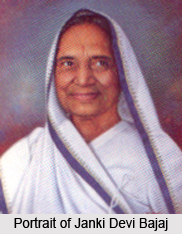
 Janaki Devi Bajaj was a famous independence activist of the country whose contribution to the field of social upliftment for women and improving the lifestyle of `harijans` is worth appreciating. She had been imprisoned by the British in the year 1932, for her active participation in the Civil Disobedience Movement. Janaki Devi Bajaj also extended her efforts to strive ceaselessly for the permission of harijans to enter temples during 1928 and other religious spots, besides embracing `khadi` and the indigenous concept of spinning on the `charkha`. In the year 1956, the Government of India awarded Janaki Devi the Padma Vibhushan, which is known to be the highest civilian award.
Early Life of Janaki Devi Bajaj
Janaki Devi Bajaj was born on 7th January, 1893 in the region of Jaora, Madhya Pradesh. She belonged to a Vaishnava Marwari family and later was wedded to the founder of the Bajaj Group named Jamnalal Bajaj in the year 1926. Janaki Devi, as a child, was influenced by the then existent social customs and traditions and was denied the privilege of formal schooling. When she was about six or seven years of age, she expressed interest in imbibing the knowledge of reading and writing on paper. Taken aback by her acute eagerness for receiving education, Shri Girdhari Lalji made arrangements for her education at her home itself. She was motivated by her mother`s compassionate nature and was dexterous in performing all kinds of embroidery and also knitting. In 1902, she travelled to Wardha in Maharashtra after her marriage.
Works of Janaki Devi Bajaj
She was inspired by Mahatma Gandhi and worked closely with him. Janaki Devi is also said to have worked for `goseva`. Following the independence of India, she joined Vinoba Bhave to work on the Bhoodan Movement. Janaki Devi Bajaj renounced the `parda` in the year 1919 and during 1921, aged 28, gave up the practise of wearing ornaments as she was greatly inspired by her husband Jamnalal Bajaj. She took up `Swadeshi` attires and completely had forsaken the utilization of foreign garments. In her days, it was a giant leap and she had to endure much social criticism and general boycott for her actions.