Jain Temple in Bajrangarh
The actual name of the Jain temple at Bajrangarh is Shri Shantinath Digamber Jain Atishaya Kshetra Bajrang Garh.

Share this Article:

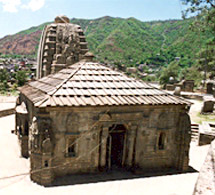
Jain Temple, Bajrangarh, Guna District
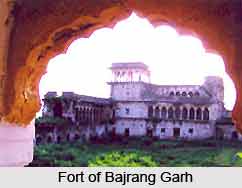
It is approximately 1200 years old, situated in the west of Guna District on the Guna-Aron-Sironj route. A place with abundance of natural flora, made famous in the world by the miraculous idols of Lord Shantinath, Kunthunath and Arahnath in standing posture. Jain Nagar was the older name of the place, which was later changed to Lord Bajrang (Hanuman) Temple in the fort of Bajrang Garh.

This Kshetra shows the broadmindedness of the famous historic businessman Shri Pada Shah, his love and faith for Jainism and the proof of proficiency of architects and artists. Shri Pada Shah built this temple in A.D.1236; he also constructed Jain Temples at many other more Teerth Kshetras. People believe that Pada Shah got hold of a touchstone near this spot, and thus could construct the temple so hastily. In V.S. 1943, some people tried to manhandle the temple, but soon after fire started to rain down, driving the people away in panic. People from all sects and castes come to worship Lord Shantinath, because they feel that by doing so all their desires will be fulfilled.

At this Kshetra the ancient temple of Lord Shantinath stands tall, shooting skywards, the apex of it dating back to more than 800 years old. The principal deity, in standing posture, is 18 feet in height, is all red in colour. Idols of Lord Kunthunath and Arahnath are installed on both the sides of Lord Shantinath, measuring 10 feet and 9 feet respectively. These three Tirthankaras were simultaneously Chakravarty and Kamdeo also. Shri Pada Shah had put up idols of these three saints in other Kshetras also. Numerous other idols of other Lords are also kept here, adding to the temple`s glory. On the walls of the temple captivating pictures connected to mythological stories are inscribed, which is worth a second look. Magnificient Samavsharan Mandir is another place worth a watch. Annual festivals of Kartik Shukla 5, Lord Shantinath`s janma (birth), Tapa and Moksha Kalyankaa celebrated on Jyeshtha Krishna 14 every year. Shri Shantinath Digambara Jain Atishaya Kshetra Bajrang Garh Managing Committee deftly manages the entire infrastructure of the Mandir. For the visiting devotees, two dharamshalas (dormitories) have been built with all kinds modern amenities.

Other remarkable temples nearby are Bhagwan Parsvnath Jinalaya in the main market area, constructed by Shri Jhhitu Shah. Another has been constructed by Shri Harish Chandra Tarka. Gorgeous Trikal Chaubeesee is being designed inside Tarkaji`s temple.
Share this Article:

Related Articles

More Articles in Temples of India


Khajuraho Temples
Khajuraho Temples are known the world over for their beauty and architectural construction. This group of temples is situated in the central Indian state of Madhya Pradesh.
Temples In Hampi
Temples in Hampi are the manifestations of rich religious beliefs and architectural and sculptural abundance.
Dilwara Temples
Dilwara Temples located at Mount Abu date back from the 11th to 13th century and rank among the popular tourist destinations of Rajasthan.
Chola Temples
Chola Temples of South India comprises of the three great temples that were constructed in the 11th and 12th century and is declared as a World Heritage Site.
Badami Cave Temples
The Badami Cave Temples, an exemplary production of Indian architecture, are situated in the town of Badami.
Temples in Guwahati
Known to be the temple town of Assam, the temples in Guwahati are a reflection of the Assamese style of culture and architecture.
West India Temples
West India Temples are worth a visit for their beautifully designed masterpieces on stone.
North Indian Temples
India has a rich cultural and historical heritage because of its temples and pilgrimage sites. The North Indian Temples are in plenty and cater to people of all religion.
South Indian Temples
South Indian Temples lavishly built and aesthetically designed, in true sense are the symbol of architectural brilliance.
East India Temples
East India temples are really fascinating and enthralling and visit to these places can mesmerize a person very easily.
Northeastern Temples of India
Religious fervor and spiritual passion enlaces the northeastern temples of India.
Central India Temples
Central Indian temples amidst their religious fervour reverberates the true spirit of Hinduism.
Temple Architecture During Rajput Period
Temple architecture during the Rajput period was inclined to the aspect of Bhakti. Rajput kings encouraged this art which is reflected in the grandeur style of the temples.
Architecture of Mata Vaishnodevi Temple
Architecture at Vaishnodevi has been the source of artistic enjoyment for many, reinstating the vitality of the Indian religiosity and cultural fervour.
History of Sri Sanjeevi Rayar Temple
Steeped in glorious history this is indeed a legendary temple.
Temples in Munnar
Munnar houses myriad temples that are visited by many people. The temples of Munnar are especially known for their festivals that are celebrated with great grandeur.
History of Indian Temples
The history of Indian temples dates back to the ancient ages and variant dynasties that have ruled throughout the ages. Every temple of every region has a story attached to it that reflects the cultures of the specific dynasty.
Kalyaneshwari Temple
Kalyaneshwari Temple is one of the well known Shakti peeth of India. Located at a distance of 20 kms from Asansol this age old temple is known for its miracles and a number of legends that attract the devotees and tourists as well.
Kalika Temple in Udhampur
Also known as Maha Kali Temple, the Kalika Temple located at the Reasi town is a holy shrine.
Medieval Temples of India
Medieval temples of India vary from each other due to the style and architecture. The impact of the prevalent kingdom is prominent in the style of building.
Temples of Ramanathapuram District
Temples of Ramanathapuram district have special significance in the state, owing to its architectural attributes.
Architecture of Brihadeeswarar Temple
Architecture of Brihadeeswarar Temple in Thanjavur reflects the Dravidian style architecture. Lord Shiva is the primary deity of this temple.