
Jain Mathematics is basically the form of Mathematics which was followed by the Jains. The Vedic Religion was replaced by the Jain religion because the Vedic Religion concentrated more on sacrificial rituals. The idea of infinite is in fact the essence of Jain Mathematics.
It can be said that the idea of infinite in Jain Mathematics had evolved from the Jain cosmology. According to the Jain cosmology time is considered eternal and without form. It is believed that the world is infinite and it was neither created nor destroyed. It was this cosmology of Jainism that had influenced the mathematical idea of the infinite. The Jain cosmology contained a time period of 2588 years.
Indians had a huge fascination with large numbers and hence they were inclined on considering numbers those were infinitely large. It is true that they had different infinite measures but they did not include those in the rigorous realm of mathematics.
Construction in Jain mathematics begins with a cylinder containing a very large radius (a radius equal to the radius of the earth) and a fixed height. This process gives the smallest possible unenumerable number.
There are five categories of infinite according to the Jain mathematics. They are infinite in one direction, infinite in two directions, infinite in area, infinite everywhere and perpetually infinite.
It was around the second century AD when Jain mathematics had evolved the concept of sets. In Satkhandagama various sets were operated with the help of logarithmic functions to base two, by squaring and extracting square roots, and by raising to finite or infinite powers. The general tendency was to repeat the operations a number of times in order to give rise to new sets.
Permutations and combinations were also important developments that were made by Jain mathematics. There has been inclusion of permutations and combinations in the Sthananga Sutra. In the Bhagabati Sutra rules are given for the number of permutations of 1 selected from n, 2 from n, and 3 from n. Similarly rules are given for the number of combinations of 1 from n, 2 from n, and 3 from n. Numbers are calculated in the cases where n = 2, 3 and 4. The author then says that one can compute the numbers in the same way for larger n.
The Jain Mathematics had gone further with the concept of logarithms. They had gradually begun to understand the law of indices. There has been a detailed explanation of the understanding of the law of indices by the Jain Mathematics in the Anuyoga Dwara Sutra.
There was a lot of confusion with regard to the value of ã in Jain mathematics. Finally it was found that the value of ã in Jain mathematics was equal to û10.
As far as the astronomical science is concerned in Jainism it was not much advanced. Only with the arrival of Aryabhata the field of astronomy developed to a large extent. Even the Jains associated the concept of eclipse with two demons namely the Rahu and the Dhruv Rahu. But at the same time it can be said that some of the astronomical calculations of Jainism were largely developed. For instance the Surya Prajnapti gives an accurate measurement of a lunar month.
Hence, it can be concluded saying that Jain Mathematics had a considerable influence in the realm of Indian Mathematics.
Jain Mathematics
Jain Mathematics saw the development of Indian Mathematics during the time of Aryabhata in the classical era.
Recently updated articles in History of India
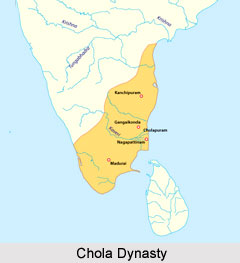
Chola Dynasty
Chola Dynasty is a Tamil dynasty and had longest duration of ruling in parts of South India. Chola dynasty had ruled South India successfully for a ex...

Suhungmung
Suhungmung was the fourteenth ruler of the Ahom dynasty who ruled from the period 1497 to 1539 AD. His reign was significant in terms of expansion of...

Princely State of Dadhalia
Princely State of Dadhalia was located in the present state of Gujarat. The state covered a total area of 28 sq miles and comprised of 15 villages. Th...

Princely State of Rupal
Princely State of Rupal was a part of the Baroda Agency, a sub division of Western India States Agency. It was under the administrative control of the...

Archaeological Sites of West Bengal
Archaeological sites of West Bengal reveal several aspects of ancient India. Excavations by the Archaeological Survey of India have furnished artefact...
Related articles in History of India

Mughal Architecture during Babur
Mughal architecture during Babur marked the foundation of a new architectural era in India, blending Timurid, Persian, and local influences. His reign...

Architecture during Sayyid and Lodi Dynasty
Architectures during the Sayyid and Lodi dynasty were mainly the tombs and monuments for the dead rulers. It were carefully designed and meticulously...

Brahmanical Sources of Ancient History
Brahmanical Sources of ancient history are contained in the Vedas and they constitute one of the most important literary sources of information about...

Coins of Chola Empire
Coins of Chola Empire were issued in gold, silver and copper and carried the Chola emblem.

Coins of Khilji Dynasty
Coins of Khilji Dynasty had an influential feature that was followed by the other dynasties.