 Indian films during the British regime were in the budding stages of later flourishments, which manifested itself after Indian Independence. With strife, rebellion, butchery and conspiracies being the order of the day, films were perhaps the last medium in which people rested their attention. Still, few that escaped the chains of massacre saw a troubled light of day. Differences between the ruled and rulers culminated in those films, only to be later banned.
In 1918, Passage of the Cinematography Act established Censor Boards in Calcutta, Madras, Bombay, Rangoon and later Lahore. A Board possessed the power to certify a film for all of India, although a Provincial Government could override a Board`s decision. Each Board consisted of the British Commissioner of Police and members of the Indian communities, i.e. Hindu, Muslim, etc. The Board evaluated the moral, racial, religious and political implications of each film.
In February 1937, the British Board of Film Censors stopped the production of the film, "The Relief of Lucknow". With its themes emanating from the Indian Sepoy Mutiny, the decision grew from the belief that the Congress Party would give the film its support in order to stir up revolutionary activities. In early 1939, after considerable review, the film was formally banned. Indian films during the British regime was by far a bit curbed down and restricted, owing to cinema`s nascent stage in India, accompanied by rising rebellions and upsurges for independence. Results were not always to the expectations of natives as well as English officers.
On 1st September 1938, "The Drum" was released for showcasing in the city of Bombay. Its themes characterised the Muslim menace as fundamentalist, backward and anti-national. In consequence, after a week of violence in Bombay, the film was withdrawn.
In 1939, the British laid out five guidelines for film making about India by British and Hollywood producers.
 Films would not be sanctioned which:
• Were based on episodes of British Indian history and/or were based on the Kipling style.
• Showed conflict between British and Indians or between Hindus and Muslims.
• Placed Indian religious or social experiences in a poor light.
• Fixed the European as hero and the Indian as villain.
• Demonstrated the Indian as inferior and dominated by the Europeans.
This policy caused British and American producers to cancel thirty-seven films from their 1939-1940 production schedule. Though Indian films today are one of the most prestigious, legendary and admired all over the world, yet, Indian films during the British regime was not much to be talked about. Its rich legacy was yet to be established, with only stray ones being made at times. Several severe factors added up to the causes though.
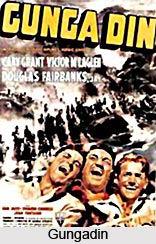
In April 1939, the Bengal Board of Film Censors banned the showing of "Gunga Din". Its projected militant Hinduism, its relationship to Thugee, its association with Kail and its underlining of caste and social divisions of India collectively led to its banning in British India.
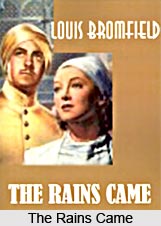
In 1940, the Twentieth-Century Fox production of "The Rains Came" projected a new image of the British as in partnership with the Indians. It explored new Imperial relationships and examined new developments in Indian society. In consequence, this film won the approval of the censors.