
 Partition of India was one of the historical steps taken on the basis of religion dividing the nation into two parts namely Union of India (also known as Republic of India) and Dominion of Pakistan (further divided into Islamic Republic of Pakistan and Peoples` Republic of Bangladesh) on 14th and 15th of August 1947. With the dissolution of British India the Partition of India was incorporated through the division of two provinces of Bengal and Punjab as Bengal was divided into East Pakistan and West Bengal and Punjab was further divided into West Punjab and East Punjab.
Partition of India
Partition of India had been one of the most rattling events of the century which uprooted millions of people from their homes and created an exception in the history of India.
Introduction
Partition of India was one of the historical steps taken on the basis of religion dividing the nation into two parts namely Union of India (also known as Republic of India) and Dominion of Pakistan (further divided into Islamic Republic of Pakistan and Peoples` Republic of Bangladesh) on 14th and 15th of August 1947. With the dissolution of British India the Partition of India was incorporated through the division of two provinces of Bengal and Punjab as Bengal was divided into East Pakistan and West Bengal and Punjab was further divided into West Punjab and East Punjab.Origin of Partition of India
The partition of India had been the real instance of peoples` demand through their representatives. The initial demand for a separate state was made by an eminent writer and philosopher Allama Iqbal who raised his voice for a separate electorate for the less represented group of Muslim Communities. With the passage of time this claim became the base of the newly emerging state of Pakistan. Among other reasons division of Indian subcontinent was important for various reasons. One such reason had been the old British policy of divide and rule which came into action in case of division of India and Pakistan. Also with the communal awards the hatred rather differences increased on both sides which could only be pacified through division of state. It was further claimed that the British wanted to make the Muslims their allies to oppose the apparent threat of the Hindu educated class. In order to gain support from the Muslims, the British supported the All-India Muslim Conference. They infused the notion that the Muslims were a separate political entity. In addition to that the Muslims were given separate electorates in local government all over British India by 1900s. With such moves the British followed a divide-and-rule policy in India. Hindus and Muslims were two separate identities which needed to be separated. All this growing anxiety only brought India closer to division. As a result such demand got its shape in the 1935 session when a formal resolution was passed claiming the separation.
Partition of India
The partition took place at the midnight of 14th and 15th August 1947. Mainly based on Famous Mountbatten Plan, the partition included division of geographical areas, population exchange, administrative structure and army, navy and air force as well. The main affected areas were Bengal, Punjab, Sindh and Jammu & Kashmir. Geographically the division included the division of rivers as well as land areas; the exchange of population meant movement of 14.5 million people crossing the borders with a total of 7,226,000 Muslims and 7,249,000 Hindus from each side.
At the midnight of 14th august the ceremony of independence was organized a day after the birth of new state of Pakistan with New Delhi as India`s capital.
At the midnight of 14th august the ceremony of independence was organized a day after the birth of new state of Pakistan with New Delhi as India`s capital.
Causes for Partition of India
Causes for Partition of India mainly rests around three vital causes which include the British policy of divide and rule on the basis of religion, races, caste and creed, the relationship of Muslim League and Indian National Congress; and the demand of Muslim league for a separate country for the Muslims living in India. The partition of India not only changed the geography of the subcontinent; it at the same time left a deep rooted impact on the hearts of people who had struggled for years to see the dawn of peace with a new India.
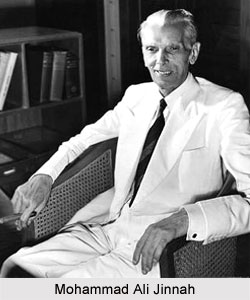
The Partition of India was based on number of factors. With the passage of time number of issues developed within Indian politics. The newly rising factors which occupied the political scenario in India included factors like rise of Communalism, creation of new political parties and their rising political awareness, the question of security of the minority groups living in India and the inherent conflict within the existing parties. As a foreign rule the British government made all efforts to understand these variations which helped them to great a strong base in India .It was only during and after the Second World War that the British Government was forced internally as well as externally to grant freedom to India. Among these factors the rise of communalism was the most alarming one which sowed the seeds of partition in the long run.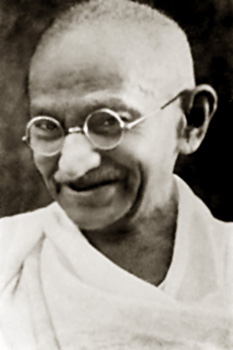 The major group affected by this was the newly created All India Muslim League under the leadership of Muhammad Ali Jinnah.
The rise of communalism which turned out to be the most important cause for the Partition of India rested mainly on three factors. Firstly, a belief which prevailed was that people of the same community who follow the same religion will have common secular interest i.e. common political, social and cultural interest; in a multi cultural society like India the secular interests of each community differs with the other; and finally communalism arises when the interests of different religions are seen as antagonistic, incompatible and hostile to each other. As these principles formed the base of the newly created parties this forced them to remain away from each other. On the other side the British rule which lasted in India for last 200 years gave full encouragement to this growing in difference. This was further encouraged by the announcement of Communal awards. The encouragement provided by the British Government could be traced back to the period of Partition of Bengal. With this the British government for the first time raised the issue of difference within the communities of Muslim and Hindus to begin with which was though vehemently protested yet led to partition of India as a whole.
With the roots of communalism already sworn by the British rulers it in the long run formed the base of the new party namely All India Muslim League. Muhammad Ali Jinnah, the pioneer of the party, was initially member of Indian National Congress but due to his differences with Mahatma Gandhi he chose to form a new party. The struggle for Pakistan continued to remain as the bone of contention till the end of the struggle till it achieved its mission.
Along with the existing dissatisfaction with the Muslim League the Indian politics faced some more changes within Indian politics. 1940s witnessed the strengthening of some of the existing parties and their new generation politicians like the Akalis of Punjab and Hindu Mahasabha who added to the existing communal drift. The major concern of the present day politics was to look after one`s own security and the existence of their own community highlighting vehemently the issue of Communalism in Indian politics.
One of the major causes for partition of India was the demand of the League for two nations based on religion.
All this proved that the basic cause for Partition of India had been mainly communal which had been encouraged by other factors as well.
The Partition of India was based on number of factors. With the passage of time number of issues developed within Indian politics. The newly rising factors which occupied the political scenario in India included factors like rise of Communalism, creation of new political parties and their rising political awareness, the question of security of the minority groups living in India and the inherent conflict within the existing parties. As a foreign rule the British government made all efforts to understand these variations which helped them to great a strong base in India .It was only during and after the Second World War that the British Government was forced internally as well as externally to grant freedom to India. Among these factors the rise of communalism was the most alarming one which sowed the seeds of partition in the long run.
The major group affected by this was the newly created All India Muslim League under the leadership of Muhammad Ali Jinnah.
The rise of communalism which turned out to be the most important cause for the Partition of India rested mainly on three factors. Firstly, a belief which prevailed was that people of the same community who follow the same religion will have common secular interest i.e. common political, social and cultural interest; in a multi cultural society like India the secular interests of each community differs with the other; and finally communalism arises when the interests of different religions are seen as antagonistic, incompatible and hostile to each other. As these principles formed the base of the newly created parties this forced them to remain away from each other. On the other side the British rule which lasted in India for last 200 years gave full encouragement to this growing in difference. This was further encouraged by the announcement of Communal awards. The encouragement provided by the British Government could be traced back to the period of Partition of Bengal. With this the British government for the first time raised the issue of difference within the communities of Muslim and Hindus to begin with which was though vehemently protested yet led to partition of India as a whole.
With the roots of communalism already sworn by the British rulers it in the long run formed the base of the new party namely All India Muslim League. Muhammad Ali Jinnah, the pioneer of the party, was initially member of Indian National Congress but due to his differences with Mahatma Gandhi he chose to form a new party. The struggle for Pakistan continued to remain as the bone of contention till the end of the struggle till it achieved its mission.
Along with the existing dissatisfaction with the Muslim League the Indian politics faced some more changes within Indian politics. 1940s witnessed the strengthening of some of the existing parties and their new generation politicians like the Akalis of Punjab and Hindu Mahasabha who added to the existing communal drift. The major concern of the present day politics was to look after one`s own security and the existence of their own community highlighting vehemently the issue of Communalism in Indian politics.
One of the major causes for partition of India was the demand of the League for two nations based on religion.
All this proved that the basic cause for Partition of India had been mainly communal which had been encouraged by other factors as well.
Impact of Partition of India
 The Partition of India was such an event which devastated both the nations, India and Pakistan, completely. The impact of the partition of India was quite distressing. The immediate result of partition was violence. Communal riots took place throughout the country destroying lives, wealth and resulting in a bitterness that was hard to wipe out. Moreover, after India attained Independence, the minorities were affected directly in the areas of partition. Their fate was in a perilous situation. In addition to this, the `Direct Action` campaign by the Muslim League was followed by the Calcutta killing and disturbances in the Noakhali district of East Bengal. Tension prevailed in the areas of Bihar and Punjab and the North-West Frontier Province as well. These areas witnessed massive bloodshed and arson.
According to the Indian Independence Act 1947 the princely states in India were left to choose whether to accede to India or Pakistan or to remain outside. As the aftermath of partition, all of them were incorporated into one or other of the new dominions. In this connection, Jammu and Kashmir had to face the question of choice. This led to further anxiety among the two communities. Observing such communal hostility, Gandhiji and Jinnah both issued a joint appeal to Lord Mountbatten. But he, too, failed to bring about any noticeable change in the relations between the two communities. The aftermath of the partition also reported to have displaced about 12 million to 15 million people in the former British Indian Empire. These refugees moved across the borders to regions which were completely foreign to them. Apart from the fact that the country was divided, the provinces of Punjab and Bengal were also separated. These divisions caused disastrous riots and claimed the lives of Hindus, Muslims and Sikhs.
 The announcement of the June 3rd plan or Mountbatten Plan and its acceptance by the political leaders temporarily tried to end the communal hostilities. But the Muslim League in the Punjab region announced that it would resist any change in the speculative division of the province. As a result, the Sikhs immediately launched a violent counter-agitation, and this again caused a dangerous situation including the impact of partition of India. Immediately thereafter, Gandhiji and the Congress leaders appealed to the Hindu and Sikh minorities in Pakistan areas to face the situation in the areas bravely and to stay in their respective homes.
But after, the announcement of the Radcliffe Award oil on 17th August, a campaign was launched to drive out the Hindus and Sikhs all over West Punjab and the North-West Frontier Province. Furthermore, serious disturbances in the Lahore, Sheikhupura, Sialkot and Gujranwala districts started to develop as the aftermath of partition. The massacre was followed by a violent anti-Muslim reaction in Amritsar. Soon after, communal turbulence engrossed the people on both sides of the border leading to the sufferance of the masses in both the countries.
Impact of Partition of India also gave rise to the problem of refugees. The Hindus and Sikhs in West Pakistan entered the Indian border by the shortest routes. The flow proceeded through East Punjab and the city and province of Delhi and overflowed into the western districts of the United Provinces. The refugees were driven from their homes under conditions of inexpressible dismay and misery. The mass destruction in Western Pakistan had its impact in East Punjab too. The trouble continued to spread in the areas of Patiala and East Punjab States to the western districts of the United Provinces, especially Meerut and Saharanpur. The States of Bharatpur, Alwar, and Delhi also witnessed the problem. The Muslims in these areas now started a mass exodus to the Pakistan border.
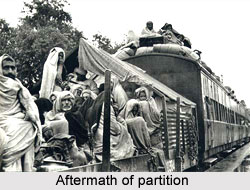 Delhi experienced major problem too. However, an effort to preserve order in the city, the District Magistrate of Delhi imposed an extended curfew from the afternoon of 28th August to 1st September. The Old City remained peaceful and quiet during this period but certain conditions were still reported in the areas inhabited by Muslims, or into which non-Muslim refugees had penetrated. In addition to that the explosion of a bomb in a Hindu locality in Karolbagh, Delhi was the first sign of a serious outbreak of rioting in the area. Moreover, there occurred frequent cases of arson and of looting. A feeling of nervousness and apprehension prevailed in the capital. Apart from looting, stabbing also occurred in different parts of the city in the Muslim and Hindu localities. Incidents of organised rioting and frequent arson in many parts of the city further worsened the situation in Delhi. Muslim shops situated in predominantly Hindu areas suffered mostly. Conditions in New Delhi, thus, deteriorated seriously.
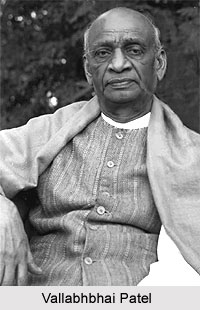
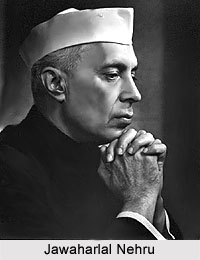
The deterioration in Delhi also reflected the condition of East Punjab, the western districts of the United Provinces and some of the Punjab and Rajasthan States. Impact of Partition of India, was obvious by the incident of breakdown of the administration. However, in order to save Delhi from the impending chaos, an Emergency Committee was set up with fifteen members. It consisted of Cabinet Ministers, the Commander-in-Chief, representatives of the Supreme Command, the Chief Commissioner of Delhi, the Inspector-General of Police, the Director-General of Civil Aviation and representatives of the Medical Department and Railways. The Cabinet Ministers were Nehru, Vallabhbhai Patel, Baldev Singh (Defence), John Matthai (Railways) and K. C. Neogy. C. M.Trivedi, Governor of East Punjab and his Premier and Home Minister, also attended the meetings when called upon. Vernon Erskine Crum was appointed Secretary of the Committee.
The main aim of the Emergency Committee was find ways and means of dealing with the deteriorating situation in the city. The Central Emergency Committee formally set up the special Committee, with Bhabha as Chairman and H. M. Patel as Vice-Chairman. Finally the Delhi Emergency Committee came into being. The Committee functioned by trying to restore peace and rescuing the Capital from continuing chaos. Thus with the Committee`s effort, normal conditions had been restored in the city within two weeks. The sense of insecurity among the Muslims disappeared. Thus, they could move about freely within the without any life threat.
Impact of Partition of India also resulted in communal migration from East Bengal. The Hindus from East Bengal had to undergo severe destitution and adversity. In fact, the problem aroused when West Pakistan officials established themselves in East Bengal. Thus it is believed that the policy of the West Pakistan officials was responsible for the mass exodus of Hindus from East Bengal.
Thus, the impact of partition of India included communal mass devastation, the two-way migration of refugees, and the failure of the administrative machinery was faced by the nation.
Recently updated articles in History of India
Chola Dynasty
Chola Dynasty is a Tamil dynasty and had longest duration of ruling in parts of South India. Chola dynasty had ruled South India successfully for a ex...
Suhungmung
Suhungmung was the fourteenth ruler of the Ahom dynasty who ruled from the period 1497 to 1539 AD. His reign was significant in terms of expansion of...
Princely State of Dadhalia
Princely State of Dadhalia was located in the present state of Gujarat. The state covered a total area of 28 sq miles and comprised of 15 villages. Th...
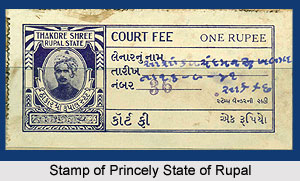
Princely State of Rupal
Princely State of Rupal was a part of the Baroda Agency, a sub division of Western India States Agency. It was under the administrative control of the...
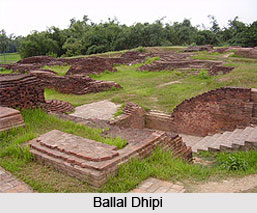
Archaeological Sites of West Bengal
Archaeological sites of West Bengal reveal several aspects of ancient India. Excavations by the Archaeological Survey of India have furnished artefact...
Related articles in History of India

Mughal Architecture during Babur
Mughal architecture during Babur marked the foundation of a new architectural era in India, blending Timurid, Persian, and local influences. His reign...

Architecture during Sayyid and Lodi Dynasty
Architectures during the Sayyid and Lodi dynasty were mainly the tombs and monuments for the dead rulers. It were carefully designed and meticulously...

Brahmanical Sources of Ancient History
Brahmanical Sources of ancient history are contained in the Vedas and they constitute one of the most important literary sources of information about...

Coins of Chola Empire
Coins of Chola Empire were issued in gold, silver and copper and carried the Chola emblem.

Coins of Khilji Dynasty
Coins of Khilji Dynasty had an influential feature that was followed by the other dynasties.