
Iconography of Lord Rama and Sita at Khajuraho Temples has been artistically carved and looks magnificent. The images of Rama and Sita located in the northern facade of the mandapa of the Parshvanatha Temple are almost 2 ft 10 in height. They are depicted as standing on a bracket in tribhanga. Here Rama possesses four arms. He is seen holding a long arrow diagonally downwards and wears a short dhoti that extends little above the knees. Its rear is in his upper right arm and the head in the lower left.
The lower right arm of Rama is placed over the head of Lord Hanuman, his fervent disciple in palita mudru with four of its fingers folded. With his upper left arm he is seen embracing Sita, his wife who is standing to his left. Rama is provided with quiver on his right shoulder. He is adorned with kirita mukuta, chhannavira, armlets, two necklaces, ear pendants, beaded bracelets, girdle that has an ornate belt with a central clasp. He also wears a long hanging garland that extends up to the knees.
The image of Sita is also visible here. Here she is represented with two arms bearing a rolled lotus in her left arm while with her right arm she holds Rama in alingana mudra. Sita is adorned with an ornamented coiffure and a saree that goes up to a little above the ankles. She is seen wearing ear rings and two necklaces. One of them is made of square pendants held together by a beaded string while the other one is made of two rows of beaded strings. One of the rings goes downwards between the breasts. Lord Hanuman is two arms and raises his left arm to touch the fingers of Rama while his right arm is folded. He is seen wearing a simple head gear, necklace, bracelets and a kaupina. The image looks stunning and has been perfectly carved with detailed elaboration.
The story of Ramayana is also famous among the Jains. It has been due importance in many Jain works from the early centuries down to the 17th century AD. Some of them are the Paumacariyam of Vimalasari (close of the 3rd century AD), Vasudevahindi written by Sanghadasa, Padmapurana of Ravisena (678 A. D ), Uttarapurana composed by Gunabhadra (9th century A.D.), Mahapurana of Puspadanta (965 A.D.), Triastisalnkapurusacaritra written by Hemachandra (12th century A. D.). Paintings of Ramakatha can be seen in the southern facade, near the Sikhara of the Parshvanatha Temple. The painting depicts Sita sitting under a tree at Asoka Vatika in Lanka after being abducted by Ravana. Hanuman is seen surrounded by demons with swords in their hands. This conveys the message of Lord Rama sending his ring to Sita.
Iconography of Rama and Sita
Iconography of Rama and Sita at Khajuraho Temples has been carved in the Parshvanatha Temple. The idols are almost 2 ft 10 in height and look magnificent.
Recently updated articles in Indian Monuments
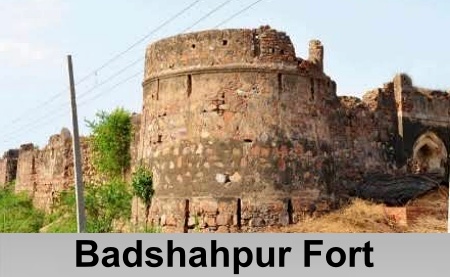
Badshahpur Fort
Badshahpur Fort is a historic defensive structure reflecting the architectural traditions of its era. Built with granite and red sandstone, the fort w...
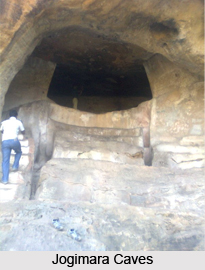
Sitabenga and Jogimara Caves
Sitabenga and Jogimara Caves in Chhattisgarh are ancient rock-cut monuments dating to the early historic period. Known for their Brahmi inscriptions,...
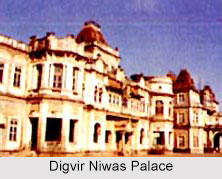
Digvir Niwas Palace
Digvir Niwas Palace in Vansda, Gujarat is one of the popular heritage buildings that reflect the majestic architecture of the early 20th century.
Historical Monuments of Satara
Among the historical monuments of Satara the fort at Satara is the most famous. Most of the constructions here belong to the Marathas.
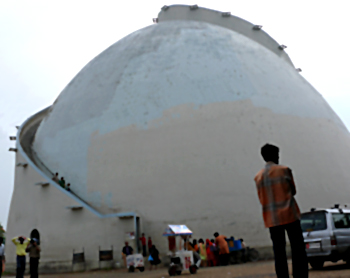
Architecture Of Bihar
Architecture of Bihar consists of Buddhist and Mughal style of architecture.
Related articles in Indian Monuments
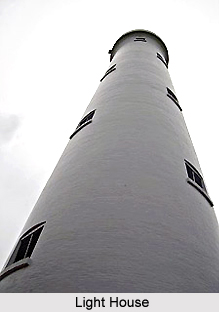
Monuments of Lakshwadeep
Monuments of Lakshwadeep are famous for their ancient religious feel and historical value.
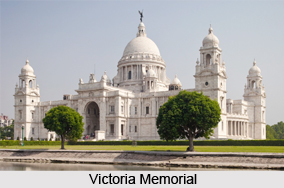
Monuments of West Bengal
Monuments of West Bengal, mainly from the British era, are considered as priceless heritage of the state and attracts many tourists to the state.
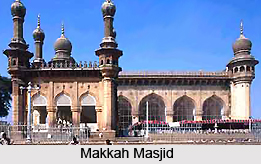
Monuments of Telangana
Monuments of Telangana covers the ancient, medieval and modern historical structures illustrating the architectural grandeur and attracting thousands...
Architecture Of Andhra Pradesh
Architecture of Andhra Pradesh is an illustration of diverse types of Hindu, Buddhist and Islamic architectural styles.
Architecture of Lucknow
Architecture of Lucknow is mostly Islamic in nature. It is representative of 18th and 19th century Indian architecture. The architecture is broadly di...