
History of Junagadh District, Gujarat, asserts about the story of origin of this part of the country, right from the time of the Mauryan Empire, continuing through the era of the Rajputs and British India. Junagadh and Mount Girnar are quite ancient parts of India, dating back to the time of Lord Krishna, while he resided in the area of Saurashtra. It is believed that the Fort of Uparkot, which constitutes the main centre of Junagadh was constructed by Chandragupta Maurya, who belonged to the Maurya Dynasty around 320 BC. However, there are certain archeological evidences which indicate the presence of a certain amount of population in Uparkot prior to the 3rd century. The term `Junagadh` implies `ancient fort`. Junagadh was a royal capital during the regime of the Mauryas and King Ashoka is said to have placed stone edicts here.
Medieval History of Junagadh District
Till the 5th century, Junagadh continued to be a significant centre and during the rule of Solankis and Rajputs, Junagadh`s importance gradually started fading. This occurred after their capital was moved to the region of Bhavnagar till the 10th century, before being shifted again to Patan till 15th century and finally to Ahmedabad when Gujarat became an independent Sultanate. During the 16th century, it was captured by the Mughals that started ruling it from Ahmedabad, right till the middle of the 18th century, when the power of the Mughal Emperors started declining. Following the downfall of the Mughals, Junagadh again was transformed into an independent princely state and was controlled by Sher Khan Babi, who was an Afghan.
Modern History of Junagadh District
During the period when India was about to attain independence from the British Raj, the princely states of the country were provided two options. One of them was that they could either accede to India while the other was that they could accede to Pakistan. However, Lord Mountbatten declared that the princely states were permitted to be a part of the nation with whom they shared their territorial borders. The Nawab of Junagadh chose to accede to the country of Pakistan, since it shared borders with that nation, via the Arabian Sea.
The Government of India protested and said that since 80 percent of the local population of Junagadh was Hindus, it should remain under the jurisdiction of India. However, the Government of Pakistan claimed that if the Indians could claim Kashmir as a part of their own dominions, despite possessing a Muslim majority, Junagadh must definitely belong to Pakistan. After a series of political conflicts and the retreat of the Nawab of Junagadh to Pakistan following intrusion into Junagadh by Indian troops, a plebiscite was arranged. Eventually, Junagadh was voted to be acceded to India after which it was proclaimed to be a portion of the state of Saurashtra, in Gujarat.
History of Junagadh District
History of Junagadh district in Gujarat describes the political scenario of this Indian district since the era of the Mauryan Dynasty.
Recently updated articles in States of India
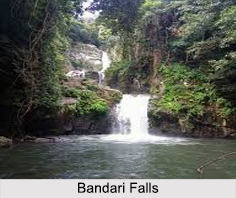
Bandare Waterfalls, Meghalaya
Bandare Waterfalls in South Garo Hills, Meghalaya, is a secluded natural attraction surrounded by dense subtropical forests and rugged mountain terrai...
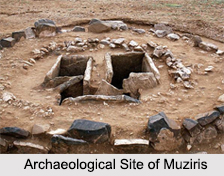
History of Thissur District
Early History of Thissur District explains flourishing of the port cities. Now these port cities are transformed into archaeological sites.
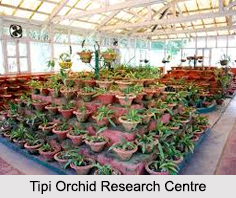
Tippi Orchid Research Centre, Arunachal Pradesh
Tippi Orchid Research Centre in Arunachal Pradesh is renowned for its rich collection of exotic and endangered orchids. Surrounded by lush rainforest...

Tourism in Nashik District
Pilgrimage tourism in Nashik district involves visiting the various places of Hindu and Jain worship located here. Some of the holiest sites for Hind...
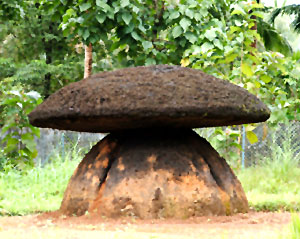
Mangadu, Kerala
Mangadu in Kerala’s Kollam district is a significant megalithic site known for its urn burials, cist burials, menhirs, and stone circles. Excavations...
Related articles in States of India
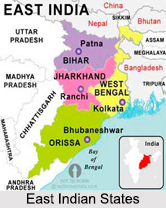
East Indian States
East Indian States comprises of Bihar, Jharkhand, West Bengal, Odisha and also the Union Territory of Andaman and Nicobar Islands. It defines the cult...
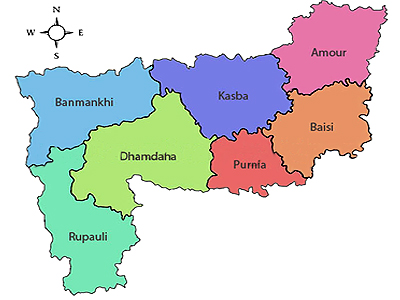
Purnia District in Bihar
Purnia District is located in Bihar and extends from River Ganga to Nepal. The district has a rich Hindu history and glorious past.
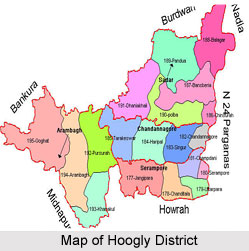
Hooghly district
Hooghly District along the bank of the river Hooghly is one of the principal trading ports of West Bengal.
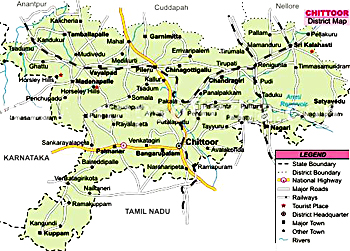
Geography Of Chittoor District
Geography of Chittoor district is spread along the topography of the land which is divided into two natural divisions; Chittoor has a dry and healthy...
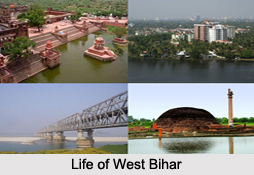
Districts of West Bihar
Districts of West Bihar is comprised of medieval monuments that were built by the different governors of Mughal era.