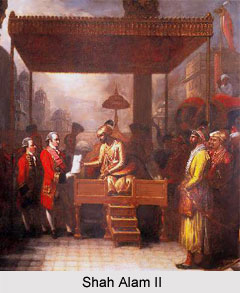
 On 12th November 1765, Clive secured from Shah Alam II, the grant of Diwani of Bengal, Bihar and Orissa. The Nawab as a result, became a mere pensioner. According to Clive`s arrangement, the Government of Mohammed Reza Khan was appointed as the Diwan. Eventually the British government started to extend their control over the administration of India. Under the administrative system of Clive, the administration of India vested in the office of the Nawab nominally, the Deputy Nawab carried out the administration and there should be an English Resident at the Durbar, who would decide every matters of incident. During this time the abuse of private trade reached a greater height than even before. The Company`s misconduct created immense resentment among the Indian administrators. Moreover Company`s illegitimate demands of the land revenue led to the gross oppression on the peasantry. The charge of collecting taxes was vested to the zamindars. The zamindars oppressed the peasants and collected taxes. In this process they often paid very little to the company because they used to cut their own shares from the tax available. In this system the company found its revenue shrinking. Hence they demanded an increase in the Indian revenue. Consequently oppression and repression increased to a higher degree. During the seven years of company`s rule, when the Dual system of administration was in operation, the company suffered from complete bankruptcy. In such circumstances, the Company decided to s introduce some orders and regulation to manage its affairs. The order and regulations laid by the company laid the foundation of the Indian Constitution in India. This led the enactment of several acts s in India s like the Regulating Act, Pitts India Act, Amending Act and the charter Acts etc.
The Regulating Act 1773 - Regulating Act, was a parliamentary enactment defining the powers and responsibilities of the various organs of the East India Company including its territorial control over Bengal. The Act remodeled the constitution of the Company both in England and India.
The Amending act of 1781- The Amending Act was enacted as a supplementary or s the remedial measure to the regulating Act of 1781. The Act exempted several actions of the public servants in the company in their official capacity. The Amending Act sought to achieve strong British government in India, which the Regulating Acts could not.
Pitt`s India Act, 1784 - The Pitts India Act enacted by the British Parliament sought to appoint a Board of Control under Pitt`s India Bill of 1784. It provided for a joint government of the Company and the Crown. The Pitt`s India Act in 1784 sought to bring alterations in the Company`s Home Government in London ands greatly extended the control of the State over the Company.
Charter Acts - Charter Acts endorsed the East India Company the exclusive rights of trade and commerce including its territorial rights. There were four Charter acts, passed in series after a gap of alternative twenty years to renew the commercial grants of the company. However through the Charter Acts the political power of the Company was curtailed.