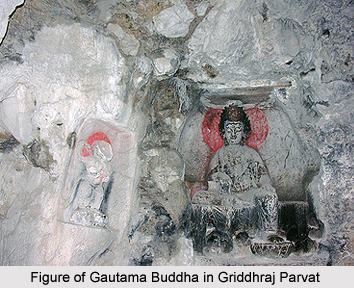
 Griddhraj Parvat is locally known as Giddhaila Pahar. It is also known as the Vulture Peak. The Vulture Peak literally means the "hill of vultures". This is a hill of religious, archaeological and ecological importance situated in Devrajnagar village of tehsil Ramnagar in Satna district of Madhya Pradesh.
Location of Griddhraj Parvat
Griddhraj Parvat or Giddhaila Pahar is located at a distance of 8 kilometres from Ramnagar town and 65 kilometres from Satna District in South. It extends from 24 degree and 18 Minutes North and 81 degree 15 minutes East latitude and longitude. The altitude of this hill is 2354 feet. It is situated between Kaimur Range in the North and Maikal Hills in the South
. Historical Importance of Griddhraj Parvat
Griddhraj Parvat is a place of great archaeological importance. There are four caves on the hill in which rock painting and mural paintings are visible. Griddhraj Parvat is a hill also has religious and ecological importance. In Skanda Purana, (Largest Mahapurana and a genre of 18 Hindu religious texts) the description of Griddhraj Parvat is found. This text mainly deals with Kartikeya, son of Lord Shiva and Parvati. This hill is mentioned as "Griddhanchal Parvat." It is also believed to be the birthplace of Sampati, the brother of Griddhraj Jatayu mentioned in Ramayana, an Indian Epic. The poet Kalidasa (greatest Indian poet and philosopher in 5th Century) mentioned this place as the most sacred in his book "Griddharaj Mahatmya" (Narad Uvach). He wrote that a dip in the Manasi Ganga River originating from Griddhraj Parvat, at an altitude of 2,354 feet, absorbs all kinds of sins of a human being. The sons of Lord Brahma and goddess Parvati first saw this hill. It is also mentioned in Shiva Samhita.
One of the most famous Chinese travellers of ancient India, Fa-Hien, who came to India in between 399 and 412 visited this place and mentioned this hill as a most holy for the Buddhists and the Hindus. In Buddhist literature also, the name of this place "Griddhraj Parvat" is also mentioned. It states that Griddhraj Parvat is one of several sites frequently visited by Gautama Buddha and his community of disciples. This hill is frequently mentioned in the Buddhist Sutras both in the "Theravada" (oldest surviving Buddhist branch of literature) and in the Mahayana Sutras, as where the Buddha gave a particular sermons to his disciples. In modern times, an annual fair is organised on every year in the month of Magha on Vasant Panchami. Thousands of people come and take a holy dip in this river.
This place is one of the unique habitats for vultures. Vultures are seen in the fissures of the hill rocks. In this place, two types of vultures are found. One is long billed vulture (Gips indicus) and second one is white backed vulture (Gips bengalensis).