 Gardens in Mughal Architecture style was deeply influenced by the Persian gardens mostly the Charbagh structure. Gardens in Mughal architecture redefine the advent of overspreading gardens, slender streams flowing by all through the middle of the garden, the rare arrival of flora from the Persian landscape, the rainbow-tinted flowering of exceptional flowers dispersing their scent and fragrance in the nearby lands or the umpteen other unique aspects that one can imagine.
History of Gardens in Mughal Architecture
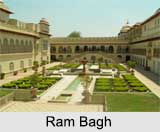
Mughal gardens and their architecture possess a splendid and fragrant proud history. Indeed, some of the gardenia instances of the Mughals in Kashmir or Delhi, do possess much popularity and respect owing to their stretch of being virtually unlimited in the length and breadth of flora and fauna. The founder of the Mughal Empire, Babur described his favourite type of garden as a "charbagh". The Agra garden was renamed after Partition of India as the Ram Bagh. The first historical study of Mughal gardens was written by Constance Villiers-Stuart, with the title "Gardens of the Great Mughals" (1913).
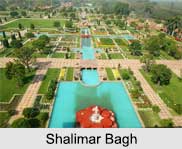
Babur had gardens in Lahore and Dholpur. His son Humayun was busy reclaiming and increasing the realm but he is known to have spent a great deal of time at his father"s gardens. Akbar built a number of gardens first in Delhi, then in Agra. These tended to be riverfront gardens rather than the fortress gardens that his predecessors built. Building riverfront rather than fortress gardens influenced later Mughal garden architecture significantly. Akbar"s area, Jahangir, did not build as much, but he helped to lay out the famous Shalimar garden and was known for his great love for flowers. Jahangir`s son, Shah Jahan, marks the peak of Mughal garden architecture and floral design.
 Symbolism of Gardens of Mughal
Mughal gardens derive chiefly from the medieval Islamic garden. Its essential features included running water and a pool to reproduce the beauties of sky and garden. The gardens consist of a raised hillock at the centre, evocative of the mountain at the centre of the universe in astrophysical depictions. The Turkish-Mongolian aspects of the Mughal garden are mostly related to the enclosure of tents, carpets and canopies reproducing travelling roots. The standard Quranic suggestions to glory were in the architecture, layout, and in the choice of plant life; but more worldly references, including numerological and zodiacal significances connected to family history or other cultural significance. The numbers eight and nine were considered favourable by the Mughals and can be found in the number of terraces or in garden architecture such as octagonal pools.
Sites of Mughal Gardens
Humayun`s Tomb, Taj Mahal, Mehtab Bagh, Shalimar Bagh (Srinagar), Yadavindra Gardens, Roshanara Bagh, Ram Bagh, Chashma Shahi, Achabal Gardens are some of the famous Mughal Gardens sites of India.