 The Left movement in India grew out of the politico-economic conditions prevailing in India owing to the evil effects of the First World War. Gradually the leftist trend intertwined in the mainstream nationalist movement in India. Left Movement in India developed into two main streams. However the Communist Party introduced the Leftist movement in India.
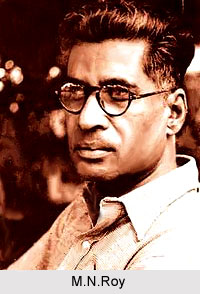
Towards the end of 1920, M.N.Roy and other Indian emigrants at Tashkent announced the formation of the communist party of India. It was the Communist Party, which induced the leftist trend in the nationalist struggle of India.
The first phase of the Leftist Movements in India was considered as the period of Conspiracy trials. The Leftist movement organized by the Communists had it birth outside India. They received thorough training in the Communist University of Toilers at Moscow. The Communist Revolutionaries also got the adequate financial support from Moscow and they crossed into India only to find themselves accused of organizing a conspiracy against the King Emperor. The movement picked up somewhat only after the communist party of Great Britain to supervise the movement in India. One of its representatives Philip Sparatt arrived in India in December 1926 and organized a number of unions, edited newspapers and launched some youth and front organizations. Four workers and peasants were organized in Bengal and Bombay, the Punjab and Uttar Pradesh. In December 1928 the All India Workers and Peasants Party came into existence. During 1928-29 the communist Party organized a series of industrial s strikes at Bombay.
The communist movement during this period became significant enough due to its involvement in the Conspiracy trials thrice, the Peshwar Conspiracy trial, the Kanpur Conspiracy Trial, and the Meerut Conspiracy trial. The Meerut Trial, which continued for over three and half years, ended with the conviction of 27 persons made martyrs of the Communist. Most of these convicted persons were nationalists` ors trade unionists. The anti British attitude of the Communists favored them to win over the sympathy of the nationalists. The Congress working Committee set up a Central Defence Committee, sanctioned a sum of Rupees 1500, and the eminent nationalist like J.L. Nehru, K.N. Katju ands F, pleaded the defence case. H Ansari. Gandhiji visited the prisoners in the jail in the year 1929 s and expressed his sympathy to the Communist leaders. Consequently the Congress leaders of the s Central Legislative Assembly strongly opposed the enactment of the Public Safety Bill, a bill that was directed against the Communists in India. In the course of long drawn out trial, the Communist leaders made political propaganda speeches, which received a wide coverage in the nationalist press. By 1934 the Communist Movement in India attained some respectability. It was right from that time considered that the Communist ideology had established in India. However in July 1934, the CPI was declared an illegal organization. The Communist Leftist Movement in India received a great blow due to this incident.