
 Naga tribe of Nagaland belongs to the race which resided in south-west China. Naga is a generic term which is applied to several clusters of tribal groups inhabiting the states of Nagaland, Manipur, South-eastern Arunachal Pradesh and eastern Assam, in the North Eastern region of India. The largest Naga populations with 15 distinct sub-tribes are found in Nagaland. They are Ao, Angami, Chakhesang, Chang, Chirr, Khahmnungan, Konyak, Lotha, Makware, Phom, Rengma, Sema, Tikhir, Yimchunger and Zeliang. The Naga groups share common cultural features like the youth dormitory system, house pattern, disposal of dead, betel chewing habit, marriage pattern, life cycle rituals, traditional political organisation and clan system. The Naga tribes were roughly classified into four categories - the Southern Nagas, the Western Nagas, the Central Nagas and the Eastern Nagas.
Naga Tribe
Naga Tribes are found in Nagaland, Manipur, South-eastern Arunachal Pradesh and eastern Assam. There are 15 sub-tribes of Naga, which are classified in four groups. They don’t believe in idol worshipping. Naga tribes speak in a variety of different Tibeto-Burman languages.
Introduction
Naga tribe of Nagaland belongs to the race which resided in south-west China. Naga is a generic term which is applied to several clusters of tribal groups inhabiting the states of Nagaland, Manipur, South-eastern Arunachal Pradesh and eastern Assam, in the North Eastern region of India. The largest Naga populations with 15 distinct sub-tribes are found in Nagaland. They are Ao, Angami, Chakhesang, Chang, Chirr, Khahmnungan, Konyak, Lotha, Makware, Phom, Rengma, Sema, Tikhir, Yimchunger and Zeliang. The Naga groups share common cultural features like the youth dormitory system, house pattern, disposal of dead, betel chewing habit, marriage pattern, life cycle rituals, traditional political organisation and clan system. The Naga tribes were roughly classified into four categories - the Southern Nagas, the Western Nagas, the Central Nagas and the Eastern Nagas.Etymology of Naga Tribes
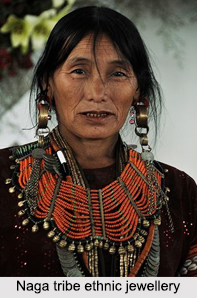
The word "Naga" is said to have been invented from the Burmese word "Naka," meaning people with earrings. Many Naga people have dropped over into adjoining Burma, Assam and Manipur also.
Language of Naga Tribes
Naga tribes speak in a variety of different Tibeto-Burman languages, with Anal, Angami, Ao, Chakhesang, Chang, Lotha, Mao, Maram, Phom, Pochuri, Poumai, Phom, Rengma, Rongmei, Sangtam, Sumi, Tangkhul, Thangal and Zeme. Naga people speak over 89 diverse languages and dialects, chiefly inarticulate with each other.
Societies of Naga Tribes
Nagas build their villages on hill tops. Naga village has been regarded as a small republic as every Naga village has existed as an independent village state or a small republic. The Naga build their granaries around their villages. The youth dormitory is known as Morung among the Nagas. It is an important centre around which the Naga folklore flourished. It is equally important as a residential and training centre for traditional art. Boy`s dormitory is known as Ikhuichi and Iloichi is the name for dormitory of the girls. Joint family is the traditional form though nuclear family has become a new trend. Agriculture is the main system which regulates the soil practice of the Naga tribes. Shifting cultivation and terrace cultivation are practiced among them.
Economy of Naga Tribes
Agriculture is the main occupation of the Nagas. The practice of jhumming is done in two ways- first for paddy cultivation and second for growing vegetables like millet, maize, oil seeds, , chilies, pumpkin, Gourd, potato, brinjal, mustard, cucumber, beans, ginger and garlic. They also collect honey, resin, seeds, barks from the jungle and sell them in the market.
The Nagas also produce a variety of wooden articles such as utensils, rice pounding tables, smoking pipes, musical instruments, cups and plates of various shapes and size. They engage in elaborate wood carvings for decorating their Morung. Nagas excel in making baskets and mats. They make earthen pots by hand alone. One of the major contributions of the Christian Church has been to liberate the Nagas from the fear of evil spirits and evils of head hunting and continuous warfare.
Food Culture of Naga Tribes
 The Naga Tribe may eat roughly everything. Rice is the staple food. Rice is eaten twice a day with fish curry, pork, mutton, or vegetables. Beef, dog, fowls, bird, fish, crabs, beetles, ant and spiders are also eaten. The entire of an animal with skin, blood, intestine and even the eyes are habitually eaten. Milk and milk products are considered as a taboo among most of the Naga tribes. The Nagas have a preference to drink yi or madhu. At the event of marriages and festivals, large quantity of madhu is consumed. Tea is commonly consumed as beverage. Tobacco smoking in pipe is also general among the Naga Tribes.
Costumes of Naga Tribes
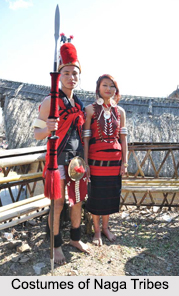
 The Naga Tribes wear a plain white cloth, locally known as "subsu". The female skirt consists of a piece of cloth about one and a half meter long and about a half meter in breadth, wrapped around the waist. The colour of dress differs from tribe to tribe. Usually, the women wear tsongtem (puttees) and the Naga men dress in lengta which consists of a narrow piece of blue or white cloth, some four feet long and 25 centimeters broad.
Religion of Naga Tribes
Nagas have no idols and they do not consider the concept of image or idol worshipping. Although Christian by faith, they follow some of the old practices of tribal religions.
Different types of Naga Tribes
Festivals of Naga Tribes
Festivals of Naga Tribes are as follows:
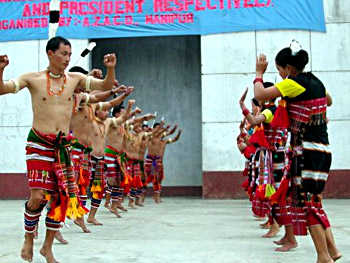 Celebrations of the festivals of Naga tribes are social and cultural in nature and symbolize the feeling of the whole community. The Nagas are proud of their rich cultural heritage which is also reflected in their festivals. The Naga festivals are multifaceted cultural phenomenon. Their festivals are related to their religion which is again associated with their economic vocations, social and cultural ethos. Their festivals are celebrated in relation with different stages of agricultural activity. Festivals are characterized by community feast and rice-beer. Offering is made to the supreme god Tingkao-Ragwang, the ancestors, the spirits and the deities in all festivals.
The Nagas perform more than seventeen festivals throughout the year. Gan Ngai, Rih Ngai, Nanu, Gantham Luithan Bapmei, Napko, Ginkimei, Ten Ngai, Nap Kaodai, Nagungkapmei, Chakak and Ponghi are the major festivals of this tribe.
Some festivals are described below:
Gan Ngai
Gan Ngai is the greatest festival. Earlier it used to be celebrated for seven days but now it is celebrated for five days. It is a post harvesting festival which is celebrated in the month of December-January every year. It is also as Chakan-Gan Ngai. Firstly, fire is produced by rubbing wood and bamboo split against each other. This fire is distributed to every house hold in the village and this is known as Mairapmei. This festival is also recognized as festival of lights. A farewell feast is celebrated for the spirits of the people who died the previous year.
Rih-Ngai
Previously Rih-Ngai lasted for three days but now it is celebrated in only on one day. It is a war festival in which a ritual is held for purifying the village and men folk who are the village warriors. This festival is not accompanied by any song and dance.
Nanu or Nanmu
Nanu or Nanmu is the children`s ear boring festival. The ears of all children born during previous year in the village are pierced on this particular day. It is celebrated in the house of Karapei Kaibang or an old woman. It is associated with fertility cult. Elderly men and women take active part in singing fertility songs. Songs are sung by men and the women dance to it. Grand feast for the villagers is arranged. The villagers pray to the concerned deity for the longevity of the new born babies and fertility of the village in this ceremony.
Gantham
This is a spring festival where all the deities are worshipped by offering animals. It is celebrated for the welfare of the people.
Napko or Napao
This festival is celebrated by the villagers as a whole or by an individual family. It is designated as soul of paddy. In this festival a pig is sacrificed and its flesh is distributed to every household in the village. Distribution of small piece of liver of that sacrificed pig is made to each family to offer to the family hearth. Agricultural activities begin after the celebration of this festival.
Gingkimei
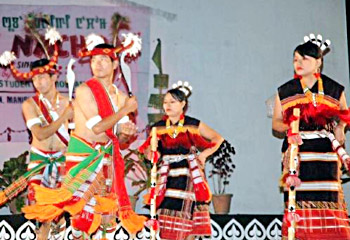 This religious festival is celebrated to satisfy the goddess of wealth. There is a belief that by offering the concerned goddess the bad spirits are driven from the house and the village. A pig is sacrificed and its meat is cooked which is distributed to every house hold. It is distributed at the front door.
Gudui
Tingkao Ragwang is the supreme good. He is worshipped before the seed is sown in the field. The god is pleased by offering chicken or pig or both. The sacrificed animal is cooked and the soup of this meat is mixed with ginger soup and is drunk by every one. This is also known as ginger soup drinking festival. In this occasion they also worship the earth for the fertility of soil and for fruitful cultivation. In the afternoon throwing of flower bouquet among the boys and girls is organised which is followed by tug-of-war competition between males and females. Female winner is the indication of good yields in the coming year.
Tun-Ngai and Ten-Ngai
Inauguration of the festival is made by producing fresh fire of Mairapmei in rainy season. This is known as social service festival because boys and girls take active part in cleaning the village roads. Ten-Ngai is related to clean the pond and paths leading to Jhum and terrace cultivation fields.
Napkaodai
This is another religious festival which is celebrated at village level. God of crops is worshipped by offering a pig. This offering is made for good crops. Uncooked meat of sacrificed pig is given to every family of the village then it is cooked at home.
Pok-Pha or Pukphat Ngai is a festival which is celebrated as a relief from hard work and expectancy of good harvest.
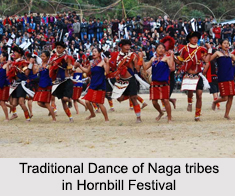
Hornbill festival is a celebration held every year from 1st to 10th December, in Nagaland. It is also called the `Festival of Festivals`.
Some other different festivals of Naga Tribes are Sekrenyi, Ngada, Amongmong.
Celebrations of the festivals of Naga tribes are social and cultural in nature and symbolize the feeling of the whole community. The Nagas are proud of their rich cultural heritage which is also reflected in their festivals. The Naga festivals are multifaceted cultural phenomenon. Their festivals are related to their religion which is again associated with their economic vocations, social and cultural ethos. Their festivals are celebrated in relation with different stages of agricultural activity. Festivals are characterized by community feast and rice-beer. Offering is made to the supreme god Tingkao-Ragwang, the ancestors, the spirits and the deities in all festivals.
The Nagas perform more than seventeen festivals throughout the year. Gan Ngai, Rih Ngai, Nanu, Gantham Luithan Bapmei, Napko, Ginkimei, Ten Ngai, Nap Kaodai, Nagungkapmei, Chakak and Ponghi are the major festivals of this tribe.
Some festivals are described below:
Gan Ngai
Gan Ngai is the greatest festival. Earlier it used to be celebrated for seven days but now it is celebrated for five days. It is a post harvesting festival which is celebrated in the month of December-January every year. It is also as Chakan-Gan Ngai. Firstly, fire is produced by rubbing wood and bamboo split against each other. This fire is distributed to every house hold in the village and this is known as Mairapmei. This festival is also recognized as festival of lights. A farewell feast is celebrated for the spirits of the people who died the previous year.
Rih-Ngai
Previously Rih-Ngai lasted for three days but now it is celebrated in only on one day. It is a war festival in which a ritual is held for purifying the village and men folk who are the village warriors. This festival is not accompanied by any song and dance.
Nanu or Nanmu
Nanu or Nanmu is the children`s ear boring festival. The ears of all children born during previous year in the village are pierced on this particular day. It is celebrated in the house of Karapei Kaibang or an old woman. It is associated with fertility cult. Elderly men and women take active part in singing fertility songs. Songs are sung by men and the women dance to it. Grand feast for the villagers is arranged. The villagers pray to the concerned deity for the longevity of the new born babies and fertility of the village in this ceremony.
Gantham
This is a spring festival where all the deities are worshipped by offering animals. It is celebrated for the welfare of the people.
Napko or Napao
This festival is celebrated by the villagers as a whole or by an individual family. It is designated as soul of paddy. In this festival a pig is sacrificed and its flesh is distributed to every household in the village. Distribution of small piece of liver of that sacrificed pig is made to each family to offer to the family hearth. Agricultural activities begin after the celebration of this festival.
Gingkimei
This religious festival is celebrated to satisfy the goddess of wealth. There is a belief that by offering the concerned goddess the bad spirits are driven from the house and the village. A pig is sacrificed and its meat is cooked which is distributed to every house hold. It is distributed at the front door.
Gudui
Tingkao Ragwang is the supreme good. He is worshipped before the seed is sown in the field. The god is pleased by offering chicken or pig or both. The sacrificed animal is cooked and the soup of this meat is mixed with ginger soup and is drunk by every one. This is also known as ginger soup drinking festival. In this occasion they also worship the earth for the fertility of soil and for fruitful cultivation. In the afternoon throwing of flower bouquet among the boys and girls is organised which is followed by tug-of-war competition between males and females. Female winner is the indication of good yields in the coming year.
Tun-Ngai and Ten-Ngai
Inauguration of the festival is made by producing fresh fire of Mairapmei in rainy season. This is known as social service festival because boys and girls take active part in cleaning the village roads. Ten-Ngai is related to clean the pond and paths leading to Jhum and terrace cultivation fields.
Napkaodai
This is another religious festival which is celebrated at village level. God of crops is worshipped by offering a pig. This offering is made for good crops. Uncooked meat of sacrificed pig is given to every family of the village then it is cooked at home.
Pok-Pha or Pukphat Ngai is a festival which is celebrated as a relief from hard work and expectancy of good harvest.
Hornbill festival is a celebration held every year from 1st to 10th December, in Nagaland. It is also called the `Festival of Festivals`.
Some other different festivals of Naga Tribes are Sekrenyi, Ngada, Amongmong.
Art of Naga Tribes
Each of Naga tribe has an exclusive way of building their huts. A general tradition among all the tribes is decorating the entrances of their houses with the heads of buffaloes. Clothing patterns are established to each tribe, and the cloth is woven by the women. They make use of beads with diversity, profusion and complexity in their jewellery with a broad choice of resources, including glass, shell, stone, teeth or tusk, claws, horns, metal, bone, wood, seeds, hair and fibre.
Weaving of colourful woollen and cotton shawls is an innermost activity for women of all Naga tribes. The Nagas are specialists in basket making. Bamboo baskets are made in narrowed and cylindrical shapes. Mats and shields of bamboo are also made. There are blacksmiths in each Naga village. They prepare dao, sickles, axes and spears. The Nagas are very good wood carvers.
Weaving of colourful woollen and cotton shawls is an innermost activity for women of all Naga tribes. The Nagas are specialists in basket making. Bamboo baskets are made in narrowed and cylindrical shapes. Mats and shields of bamboo are also made. There are blacksmiths in each Naga village. They prepare dao, sickles, axes and spears. The Nagas are very good wood carvers.
Textiles of Naga Tribes of Manipur
The Naga tribes of Manipur have similar textile technology and culture to that of the Naga tribes of Nagaland, though there are differences in designs. One of the well known Naga tribes in Manipur, the Rongmei Nagas, often called the Kabuis, bear similarity with the Zeme and Liamgmei Nagas of Assam and Nagaland, together known as the Zeliangrong Nagas. Like other Naga tribes, the Rongmeis used to grow short staple length cotton, spinning them with a drop spindle or spinning wheel and weaving fabrics with the Loins loom. However, their ginning method is better than their cousins", which they are believed to have learnt from the Mizos and Kukis. They also used nettle fibre as raw material for their textile products. Their traditional dresses, which were simple yet beautiful, have undergone considerable changes. Like their cousins, they also switched over to mill made yarns.
The traditional costume of the Rongmeis was ideally described by Dr. R. Brown, who was political Agent of Manipur. He stated in his official report that the dress of the male Kabuis was scanty; those living in the jungles only wore a small square piece of cloth in the front, hanging below and covering the privates, confined to the waist by a string. In the valley of Manipur, more decent costume was adopted - either a kilt-like piece of cloth round the waist or a short dhoti put on in Bengali fashion. The only other article of clothing worn by the men was a thick sheet of cotton cloth, when the weather was cold. The Kabui women wore a piece of cotton cloth of thick texture, put on the same way as the Meithei Phanek, reaching little below the knee. This garment is confined round the waist by a coloured scarf with fringed ends. The colour for ordinary wear is usually of a muddy hue with coloured stripes of various widths, the blue with red stripes being the favourite. Over the shoulder is worn a scarf-shaped piece of cloth, generally blue with a border and fringe of another colour. It may be interesting to note that the Phanek or long petticoat is fastened under the right breast by the Kabui women while a Meithei woman fastens it under the left breast.
On gala days or festive occasions, the ordinary plain fashions are supplanted by elaborate costumes, the men wearing coats embroidered with a fringe of green beetles" wings and a head dress ornamented with feathers of toucan or horn bill, along with silk dhotis that are usually procured from the Loi villages. The girls wear petticoats, often red, black and white stripes, with small geometrical patterns worked in that enhance the value of the cloth. The Loin cloth worn by the men are dark in colour, with white lines about 2 to 3 centimetres wide, with the centre also being white.
The Maram Naga tribe lives close to the Manipur-Nagaland border almost on the Imphal-Kohima national highway. They are considered one of the quasi-Angami tribes, given their similarity with the Angami tribe. The textile technology adopted is similar to those of Angami Nagas. The ordinary dress of a Maram Naga consists of a short black cotton kilt about 45 centimetres deep, ornamented by three or four rows of white cowries, or in the degenerated days, white trouser buttons. However, it may be noted that no man put these rows of cowries on his kilt until he had slain two men. A white cotton rug thrown over the shoulders completes the costume. The chiefs or the men who had erected a stone were privileged to wear a dark blue cloth embroidered with red yarn, the designs of which are normally animal figures or stone conventional geometrical designs. The Marams are often seen wearing the Angami dresses as well. The influence of Meithei style on their costume is also noticeable.
The Mao Nagas are another quasi-Angami tribe who also inhabit the Manipur-Nagaland border. Again there is a considerable influence of the Angami designs and styles in their textiles. The Mao tribe is further subdivided into various sub-tribes, such as Merni and Paomata, who also maintain their separate identity though textiles and dresses are more or less identical. The ordinary dress of a Mao Naga also comprises a black cotton kilt about 45 centimetres deep, ornamented by three or four rows of white cowries or in the degenerated days, white trouser buttons. It is again believed these rows of cowries were permitted only to those who had slain at least two heads. A dirty white rug thrown over the shoulders completes the costume. Headmen or "Lung Chingbas" are the men who had erected a stone and privileged to wear a dark blue cloth embroidered with red-threaded quaint figures of animals. Girls wear two garments, one of which may be regarded as worn for effect as it consists of a plain square of cloth, often dark blue or black with red border, hung round the neck over the bosom. The kilt descends to the knee which it barely covers. Older women wrap themselves up in a white rug which is thrown apparently without any method. Some ladies also wear their traditional petticoats. Many clothes are found with small geometrical patterns that are supposed to be signature or trade mark of magical origin. Like any other tribes of the region, the Mao tribe also uses shawls having typical designs of their own that can be identified easily from others, although influence of the Angami designs cannot be ruled out. The shawls were used to be of stout cotton earlier but in the contemporary scenario of scientific exploitation, they have been switched over to mill made synthetic wool. The shawls consist of four pieces of cloth woven in their wonderful Loins loom and neatly stitched together. One of the Mao designs is a shawl with black and red stripes arranged systematically. The two edge breadths have stripes about 2 to 3 centimetres wide while the centre breadth has the black stripes with faint white stripes and red stripes above about 10 centimetres wide. They also weave and wear shawls having designs exactly similar to those of the Angamis.
The Tangkhul Naga tribe are found settled in the Ukhrul district of Manipur and considered to be one of the exceptional tribes among the Nagas in many ways. It is the only tribe to have features of both Mongoloid and Aryans which makes them one of the most handsome people of the east. Among the Naga tribes settled in Manipur and Nagaland, they stand second in respect of literacy after Ao and third in respect of population after Konyaks and Angamis. Traditionally, the Tangkhuls are divided into eight regional divisions: North - Raphei, Northeast - Somra, Southeast - Kaikhang, East - Ram, South - Kamao, West - Kharao, Southwest - Kharei and Northwest - Kharas Raora. People of each division are believed to be experts in a particular skill, the product of which is consumed by the entire tribe. Therefore, they have had professional management in their tradition. The Kharaos are the expert weavers and even today they produce the bulk of cloth used by the Tangkhuls. They use technology almost identical to all other Naga tribes and that has undergone identical changes. But the design of the fabrics, whether shawls, wrappers or petticoats, are brilliant. Dull or bright red shawls embroidered with white threads are one of the popular Tangkhul shawls of Manipur.
The traditional costume of the Rongmeis was ideally described by Dr. R. Brown, who was political Agent of Manipur. He stated in his official report that the dress of the male Kabuis was scanty; those living in the jungles only wore a small square piece of cloth in the front, hanging below and covering the privates, confined to the waist by a string. In the valley of Manipur, more decent costume was adopted - either a kilt-like piece of cloth round the waist or a short dhoti put on in Bengali fashion. The only other article of clothing worn by the men was a thick sheet of cotton cloth, when the weather was cold. The Kabui women wore a piece of cotton cloth of thick texture, put on the same way as the Meithei Phanek, reaching little below the knee. This garment is confined round the waist by a coloured scarf with fringed ends. The colour for ordinary wear is usually of a muddy hue with coloured stripes of various widths, the blue with red stripes being the favourite. Over the shoulder is worn a scarf-shaped piece of cloth, generally blue with a border and fringe of another colour. It may be interesting to note that the Phanek or long petticoat is fastened under the right breast by the Kabui women while a Meithei woman fastens it under the left breast.
On gala days or festive occasions, the ordinary plain fashions are supplanted by elaborate costumes, the men wearing coats embroidered with a fringe of green beetles" wings and a head dress ornamented with feathers of toucan or horn bill, along with silk dhotis that are usually procured from the Loi villages. The girls wear petticoats, often red, black and white stripes, with small geometrical patterns worked in that enhance the value of the cloth. The Loin cloth worn by the men are dark in colour, with white lines about 2 to 3 centimetres wide, with the centre also being white.
The Maram Naga tribe lives close to the Manipur-Nagaland border almost on the Imphal-Kohima national highway. They are considered one of the quasi-Angami tribes, given their similarity with the Angami tribe. The textile technology adopted is similar to those of Angami Nagas. The ordinary dress of a Maram Naga consists of a short black cotton kilt about 45 centimetres deep, ornamented by three or four rows of white cowries, or in the degenerated days, white trouser buttons. However, it may be noted that no man put these rows of cowries on his kilt until he had slain two men. A white cotton rug thrown over the shoulders completes the costume. The chiefs or the men who had erected a stone were privileged to wear a dark blue cloth embroidered with red yarn, the designs of which are normally animal figures or stone conventional geometrical designs. The Marams are often seen wearing the Angami dresses as well. The influence of Meithei style on their costume is also noticeable.
The Mao Nagas are another quasi-Angami tribe who also inhabit the Manipur-Nagaland border. Again there is a considerable influence of the Angami designs and styles in their textiles. The Mao tribe is further subdivided into various sub-tribes, such as Merni and Paomata, who also maintain their separate identity though textiles and dresses are more or less identical. The ordinary dress of a Mao Naga also comprises a black cotton kilt about 45 centimetres deep, ornamented by three or four rows of white cowries or in the degenerated days, white trouser buttons. It is again believed these rows of cowries were permitted only to those who had slain at least two heads. A dirty white rug thrown over the shoulders completes the costume. Headmen or "Lung Chingbas" are the men who had erected a stone and privileged to wear a dark blue cloth embroidered with red-threaded quaint figures of animals. Girls wear two garments, one of which may be regarded as worn for effect as it consists of a plain square of cloth, often dark blue or black with red border, hung round the neck over the bosom. The kilt descends to the knee which it barely covers. Older women wrap themselves up in a white rug which is thrown apparently without any method. Some ladies also wear their traditional petticoats. Many clothes are found with small geometrical patterns that are supposed to be signature or trade mark of magical origin. Like any other tribes of the region, the Mao tribe also uses shawls having typical designs of their own that can be identified easily from others, although influence of the Angami designs cannot be ruled out. The shawls were used to be of stout cotton earlier but in the contemporary scenario of scientific exploitation, they have been switched over to mill made synthetic wool. The shawls consist of four pieces of cloth woven in their wonderful Loins loom and neatly stitched together. One of the Mao designs is a shawl with black and red stripes arranged systematically. The two edge breadths have stripes about 2 to 3 centimetres wide while the centre breadth has the black stripes with faint white stripes and red stripes above about 10 centimetres wide. They also weave and wear shawls having designs exactly similar to those of the Angamis.
The Tangkhul Naga tribe are found settled in the Ukhrul district of Manipur and considered to be one of the exceptional tribes among the Nagas in many ways. It is the only tribe to have features of both Mongoloid and Aryans which makes them one of the most handsome people of the east. Among the Naga tribes settled in Manipur and Nagaland, they stand second in respect of literacy after Ao and third in respect of population after Konyaks and Angamis. Traditionally, the Tangkhuls are divided into eight regional divisions: North - Raphei, Northeast - Somra, Southeast - Kaikhang, East - Ram, South - Kamao, West - Kharao, Southwest - Kharei and Northwest - Kharas Raora. People of each division are believed to be experts in a particular skill, the product of which is consumed by the entire tribe. Therefore, they have had professional management in their tradition. The Kharaos are the expert weavers and even today they produce the bulk of cloth used by the Tangkhuls. They use technology almost identical to all other Naga tribes and that has undergone identical changes. But the design of the fabrics, whether shawls, wrappers or petticoats, are brilliant. Dull or bright red shawls embroidered with white threads are one of the popular Tangkhul shawls of Manipur.
Recently updated articles in Tribes of India
Arakh Tribe
Arakh Tribe is one of the ancient tribes located in several parts of central India. Their origin dates back to the Tughlaq era. Arakh tribe appears to...
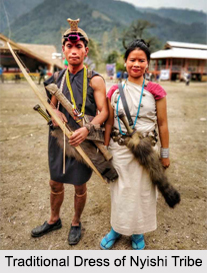
Traditional Dress of Nyishi Tribe
Traditional Dress of Nyishi Tribe is worn during festivals and social gathering. Men wear a cane helmet surmounted with the beak of the great Indian H...
Pasi Community
Pasi is an aboriginal race of India and are mainly distributed over the northern region of the country. The traditional occupation of Pasi is the extr...

Bhojas
Bhojas have been described as a very important tribe in the Aitareya Brahmana. Historical records have said that the Bhojas were settled towards the s...
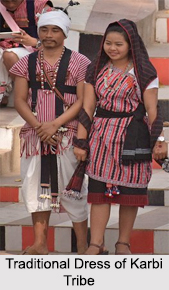
Traditional Dress of Karbi Tribe
Traditional Dress of Karbi Tribe can be easily recognized by the artistic designs inherited from their forefathers. Karbis have their own traditional...
Related articles in Tribes of India
Sentinelese Tribe
Sentinelese tribal community is one of the most isolated and secluded tribes that are found in the whole world.
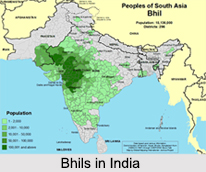
Bhil Tribe
The people of the Bhil tribe are the most widely distributed tribal groups in India.
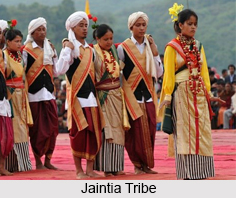
Jaintia Tribe
Jaintia Tribes are located in the Jaintia Hills of Meghalaya. They are also called the Pnars. They are famous for weaving of carpet, making of musical...
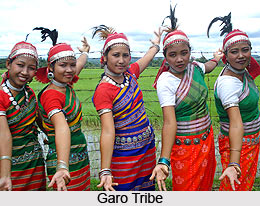
Garo Tribes
Garo Tribes are one of the matrilineal tribes of North-East India who reside in the Garo hills of Meghalaya. Historically, the tribe originated in Tib...
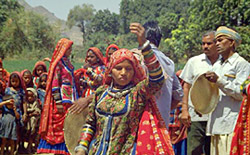
Garasia Tribe
The Garasia tribal community holds a significant position within Indian culture, renowned for their distinctive way of life and rich cultural heritage...