Home > Society > Costumes in India > Fashion Design in India
Fashion Design in India
Fashion Design in India is the stalwarts of trend setting which have had created a niche for themselves amidst the Indian populace.

Share this Article:

Introduction

Fashion Design in IndiaFashion Designs in India are the anchor to the Indian style and identity which has had earned a global fame and name. Fashion design in India is indeed a genesis that have led to the commercialization of the ethnic craftsmanship; the spice of India.

They have indeed explored the rich crucible of Indian style and design celebrating the evolution of the Indian designer by portraying the innovative craftsmanship of the Indian designers. Fashion is a term used in relation to the latest and the most admired style in clothes, dresses, garments, textiles, cosmetics, etc. Fashion designers work with colours and fabrics.

They can specialise in leisurewear, women`s wear, children`s wear, knitwear, sportswear and many others. Fashion design is not restricted to fads, which is generally known as the current look or street wear. It covers everything from uniforms to headwear and is not restricted to western culture. Technically all clothing created for a purpose is fashion design. Fashion design dictates changes in clothing over time.

It is often and wrongly perceived that fashion design is restricted to high fashion and label names. Fashion Design grew from serving a practical purpose to a recognized form of art. Modern fashion design is roughly divided into two categories, Haute Couture, and Pret-a-Porter.

Haute Couture
The term "haute couture" is French and it means "high" or "elegant." Couture literally means sewing, or high dressmaking but it indicates the business of designing, creating, and selling custom-made, high fashion women`s clothes. A designer`s haute-couture collection refers to the creation of exclusive fashions made from stylish designs made to order for wealthy and high-status clients. Thus, it is meant exclusively for private customers and is custom sized, cut and sewn made from high quality, expensive fabric and sewn with extreme attention to detail and finish, often using time-consuming hand-executed techniques.


History of Fashion Design in India

The global platform has rendered the platform such that seeking inspiration from the West has been the watchword where the influential perceptions of fashion and style were tuned to that region`s historical and geographical shadows and the conscious effort to ignore the home grown offerings, that kept in a continuation for most of the design community in a state of confusion and bewilderment. There lies the unsaid pressure to compete with or in a flow follow international fashion trends out of the context of popular climate, physique and lifestyle of the domestic customer kept the designer labels on the peripheries in terms of business, while the media made demigods out of them. Even international designer brands from the west who viewed.

Virgin state of Indian market after capturing Japan and China strived to survive the local flavour and individualism of Indian customer and moved out lock, stock and barrel. Amidst dead stocks and waning media interest the Indian.


Trends in Fashion Design in India

Trends in Fashion in India are smeared with the rich tinge of various influences and the phenomenal dating zone of style and beauty amidst the Indian sub-continent. Luxury is directly proportional to the price and affordable luxury is somewhat of an oxymoron. High-end design mixed with high-street quality abolishes the line between inclusive and exclusive, and introduces fashion to the common mass.

When the whole point of luxury is quality, most members of society can`t afford the price of luxury goods, so the concept of a fashion democracy is to include all, and bring luxury names to the masses. Products produced in heaps may promote democracy, but luxury is not something that can be mass produced. True luxury exists in the story of a product, the hand-crafted elements and the detailed labour that created it, not in a factory where there are thousands of others exactly the same.

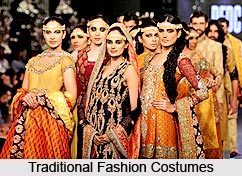
The evidence is visible all around interwoven in the land`s traditions and customs, in the sculptures of ancient temples, the frescoes of Ellora, the carefully styled hair, sensuous drapes, body adornments with jewellery, tattoos, piercing, reflecting the fashionable trends of that era. All of this has timelessly remained a reference point for artists and designers. The fluidity of soft un-constructed drapes like the Sari and the Dhoti, adapting gracefully to the user`s preference, is at once traditional and contemporary. The incredible range of intricately woven natural fabrics, with locally sourced yarns, organic to the weather is at the core of Indian fashion even today.

As also are the nature inspired motifs, printed or woven or delicately embroidered, with their timeless appeal.

Cultural democracy provides individuals with the opportunity to express themselves in various creative ways. Fashion provides a unique aesthetic out let for one to convey their personality and identity. The way we dress often organically fits us into groups or cliques that help further develop our values, lifestyle, and cultural position within society. It is a well-known fact that the Europeans came to India in search of spices and beautiful textiles, which ultimately resulted in the British Empire and their rule more by accident than by acumen.

After gaining independence in 1947 from the reigns of the mighty British, the Indians rediscovered themselves as amalgamation of the east and the west. Apart from using silhouettes from the traditional Mughal and Rajput styles, they borrowed silhouettes from the west unabashedly and felt proud to do so, they felt modern, and yet they wanted to stick to their roots. After more than sixty years of independence, Indians are more comfortable in their own skin and have realized the immense potential and the gold mine that they are sitting on when it comes to Textile crafts. This love for textile crafts can be seen in daily wear in India, people do not wear merely neutral colours, but they love vibrancy in colour and have a great taste for surface ornamentation.


Contemporary Fashion Designs in India

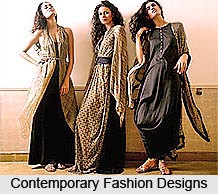
Contemporary Fashion Designs in IndiaContemporary Fashion Designs in India are the contemporary fashion fiesta the graphic fabrics, the visual orientations and the intricacy of patterns. Fashion is a term used in relation to the latest and the most admired style in clothes, dresses, garments, textiles, cosmetics, etc. Fashion designers playfully deal with colours and fabrics.

Fashion design is not restricted to fads, which is generally known as the current look or street wear. It covers everything from uniforms to headwear and is not restricted to western culture. Technically all clothing created for a purpose is fashion design. Fashion design dictates changes in clothing over time. It is often and wrongly perceived that fashion design is restricted to high fashion and label names. Fashion Design grew from serving a practical purpose to a recognized form of art.

Features of Contemporary Fashion Designs in India
The seamless reconciliation of contradictions in the evolving contemporary aesthetics influencing the works of Indian fashion designers thrive to be the key notes to the success story behind Indian Fashion designs and trends. Coexistence of tradition and modernity, maxima and minimalism, hi-tech and primeval processes in almost equal measure reflect demolition of western monopoly on fashion aesthetics and growing influence of the unfading allure of home-grown patterns and techniques. Of the many worthy names in the globalised era, the apparel and accessory segment in India, like many other traditional product segments, is undergoing an astounding change of perception.

Contemporary Fashion Designs in India While it continues to enjoy the position of being an enhancer of beauty, the new-age consumer perceives fashion as a must, manifesting the wearer`s attitude, personality and lifestyle. Fashion is now an important new sales driver in India, and domestic and international brands are scrambling to adjust their designs to cater to the Indian market. A host of variables - the buying occasion, the wearing occasion, the economic strata of the target segment and the effect of regional and religious influences on all of them are now being juggled to find the winning mix.

With mounting western influence, and a focus on revival of traditional Indian fashion elements, diversity in India sees new faces. The Indian fashion stage is a reflection of deep cultural influences, the consumer shift in the new economic scenario, and changing social perceptions. It indicates the birth of new and distinct target groups that ride on various influences to set new trends. Understanding these influencers and the various target group characteristics are key to setting foot in the Indian fashion industry.

Categories of Contemporary Fashion Designs in India
Modern fashion design is roughly divided into two categories, Haute Couture, and Pret-a-Porter. The term "haute couture" is French and it means "high" or "elegant." Couture literally means sewing, or high dressmaking but it indicates the business of designing, creating, and selling custom-made, high fashion women`s clothes. In 1858, Charles Frederic Worth created the first Couture House near the Opera in Paris. The idea behind Haute Couture is an attitude of unlimited creativity where the quality of the art and artistry of a garment is unparalleled. It is similar to a fashion house having a Research and Development Lab where new ideas and techniques are developed with no restraints on creativity or worry about funding.

Pret-a-Porter is another category the French word for the term "Ready to wear". Ready-to-wear or -porter is the fashion design term for clothing marketed in a finished condition, in standard clothing sizes. This refers to most high-end fashion designers. Some fashion houses or fashion designers create ready-to-wear lines that are mass-produced and industrially manufactured, while others offer lines that are very exclusive and produced only in limited numbers and only for a limited time. The craftsmanship of ready-to-wear clothing is also held to a lower standard than that of haute couture. High-end ready-to-wear lines are sometimes based upon a famous gown or pattern that is then duplicated to raise the designer`s visibility level. Contemporary Fashion Designs in IndiaThe modern day Indian fashion designer is in his own space, experimenting with his traditions and fusing the rich heritage of crafts and weaves to contemporary silhouettes, and getting noticed on the runways in Milan, Berlin, Paris, London and New York.

The only thing constant about Fashion is Change` said Oscar Wilde. As times revolutionize, ages modify so does fashion approach in the modern world. To be able to sustain, one has to change with the times. The Ancient civilization of India has constantly changed and adapted itself to the times, and thus is alive and kicking even after so many eons. Indian fashion has been classic for most part of time, Indians are not true believers in FADS, more often than not Indian fashion has been characterized by western influences throughout history or has been influenced due to rulers and foreigners wearing clothes that were different from the traditional. In spite of changing sensibilities of fashion, the Indian textile crafts have always immerged winners. `India lives in its villages` said Mahatma Gandhi, more than 6 decades ago, and the statement have not lost its validity.


Evolution of Indian Contemporary Fashion

Evolution of Indian Contemporary Fashion, Indian FashionThe Changing Face of Indian Fashion is the trend that does not arrive to let come and go rather the changing phases of Indian Fashion. India is a country with diversified customs and cultures. People following various traditions live here, their way of dressing also differ from each other. The traces of Indians being fashionable can be found out from the ancient remains of Harappa and Mohenjodaro civilizations. After the independence, globalization is being witnessed in the Indian fashion industry, due to which changes have occurred in the style of Indian dressing.

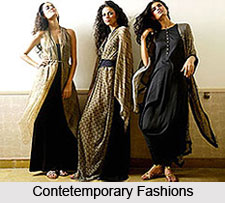
Styles of wearing saris and salwar-kameez have changed. The look is more cosmopolitan than region-specific. Different styles of blouses like katori style, halter-neck, back button blouses, high neck blouses, puffed sleeve blouses, etc. have become the hot favourite among women. The average lengths of the blouses have decreased. Saris are draped mostly in traditional back Pallo style or Gujarati style. Indian fashion scene is greatly influenced by its films. For example Mumtaz style sari draping inspired by yester-year heroine Mumtaz.

As far as salwar-kameez is concerned numerous styles and patterns can be given to this garment. For instance the kameez can be long, short, A-line, skin tight, etc. Such variations can be done to salwar as well as dupattas. Modern version of kameez is known as kurti, it could be coupled with jeans, pants or churidar. It has taken the form of Indo-western outfit. People in western countries too have started wearing kurtis.
Evolution of Indian Contemporary Fashion, Indian Fashion Emergence of Mall Culture in Indian Fashion : Mall culture is slowly and steadily growing in India. Many brands and private labels are launched in the Indian market. The first such retail outlet was Shopper`s Stop which launched India`s first multi-brand store in the year 1993. The specialty of such malls is that they offer a wide range of varied branded stuff, all under single roof. Some of the famous malls of India are Pantaloons, Westside, Lifestyle, Globus, etc.

These retail outlets have also launched clothing line under private labels, manufactured and sold by them. For example- Pantaloons has many private labels under its brand like All, Fashion station and Mela. Some of the major private labels even operate as exclusive stores. The buyer gets an international shopping experience in such retail outlets. There are no nagging sales persons pressurizing the customers to buy.

Family stores are becoming hot favourite shopping hub for the middle-class and upper middle class shoppers. These stores sell garments of nearly all age groups and sexes. Apparels of various brands can be found in family stores. They are being considered as one-stop shopping destination. Roopam, Big Bazaar, Fashion station, V-mart, Maxx, etc are examples of some family stores.

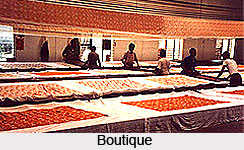
Boutiques : Another aspect seen in the changing face of Indian garment industry is the increasing popularity of `Boutiques`. A boutique is a small shop or departmental store selling designer, unique and trendy products. A wide range of it can be displayed in a boutique like watches, lingerie, evening wear, sportswear, t-shirts, tuxedos, etc.

Boutiques are generally specialty stores. Exclusive designer items can be purchased from such stores. High profile designers of India mainly merchandise through their personal boutiques. However it is not mandatory that only famous designer open a boutique. Even common person could do it and make it big in this field. It could be started even with small investment of money.

More and more Indians are inclining towards designer wear outfits due to increase in income of the people. India`s first boutique was opened in Mumbai in 1965 named `Dagina` by Mr. Chandu Morarjee. Boutiques are operated both online and offline, this concept is yielding positive outcome for the retailers.

The emergence of fashion boutiques started off from Mumbai, them spreading onto Delhi, Chennai and other metropolitan and big cities of India. Also to support this concept, art galleries came up which usually showcase either ready-to-wear or ready-to-stitch garments. India`s first art gallery was opened by Gunvanti Vilji in Mumbai in 1972 under the name `Aakar art gallery`.

These fashion stores or designer boutiques display items which cannot be found in common retail malls or shops. These specialty stores even make customized garments that are made to order.

Some time back only rich and famous people were customers of such boutiques, but now due to increasing demand of designer outfits more and more fashions stores are opening up.
Evolution of Indian Contemporary Fashion, Indian Fashion
A new genre of talented housewife developed who used to design designer outfit under their own private label. These are the designers whose clientele ranges from a common Indians to the affluent class people. The next step in retail concept was the surfacing of `Fashion Houses`, which are headed by eminent designers. Ensemble was the first fashion house of India founded in 1987. The collections available in these outlets have very high price tag which could be afforded by the rich customers only.

Advent of Brands : The market of branded garments is growing up in India. More and more people are switching on to branded apparel then non-branded ones as it provide quality assurance. Liberty shirts were the first company to sell shirts under its brand name in India during 1950`s. Then there was no looking back for the branded apparel market.

Many national as well as international brands have established themselves in Indian garment industry. Allen Solly, Van Heusen, Louis Philipe, Charagh Din, Raymonds, Arrow, etc. are some leading national brands. The branded apparel market saw a boost due to growing denim demand. Many international brands entered the denim industry in India like- Lee, Levi`s, Seven Jeans, Pepe Jeans, etc. But these foreign brands get a tough competition from Indian branded denim manufacturers like Flying Machine, Wrangler, Killer, Numero Uno, etc.

Branded clothes have captivated the market of both menswear and women`s wear and slowly catching up in children wear segment. The Indian consumer has become brand conscious which is a sign of globalization of Indian apparel industry.

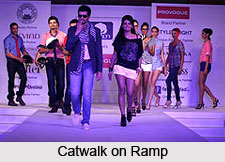
Fashion on the ramp : Displaying clothes through fashion shows is a western concept but now have become a common fashion event in India. In fashion catwalk the models display the collection of designers on ramp. In 1932 the first fashion catwalk was organized in India at Taj Mahal hotel by Catherine Courtney.

Fashion catwalk in India was started by Sylla and Nergish, the Spencer sisters. Now many conceptual, theme based fashion shows are being held in contrast to simpler forms of catwalk of yester years.

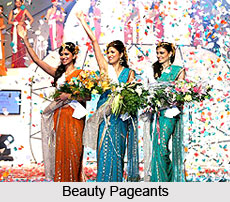
Beauty pageants : In India the popularity of beauty pageants have increased, especially Miss India contests. It has widely influenced the Indian fashion scenario. These contests are sponsored by leading companies related to textile, apparel, fashion and media. Miss India contest was first held in 1964 which was organized by Femina group. Reita Faria was the first Miss India to won international title of Miss World in 1966. She was followed by Zeenat Amaan winning the crown of Miss Asia-Pacific in 1970. Further the beauties who made it to the international beauty titles were Sushmita Sen ( Miss Universe 1994), Aishwarya Rai (Miss World 1994), Diana Hayden (Miss World 1997), Yukta Mookhey (Miss World 1999), Lara Dutta (Miss Universe 2000), Priyanka Chopra (Miss World 2000) and Dia Mirza ( Miss Asia-Pacific 2000). Eminent designers display their collection through the stunning outfits worn by these beauties. Indian fashion got international exposure and acclamation through the medium of such beauty contests.
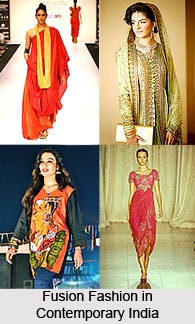
Evolution of Indian Contemporary Fashion, Indian Fashion Budding designers Indians have started experimenting with fashion trends and styles; they are all geared up for the international exposure. This fact can be proved by the existence of 80+ odd small and big fashion schools in India. Thousands of designers are produced every year by these institutes. Designers are getting exposure through fashion weeks, here they can show their talent to Indian and foreign audience. These fashion weeks have contributed to the change in style preference especially in women wear. Indo-western or fusion wear is the most preferred manner of dressing gaining popularity globally. Pure traditional outfits are worn on special occasions only. Earlier buying designer wear outfit was a very costly affair and upper class people could only afford them. But now it is possible for the common people to wear designer clothes, this change occurred due to popularity of diffusion of fashion.

Indian fashion industry has come at par with international standards. It has become one of the most happening and revenue generating industry of India. The people like to dress in style which is accepted globally. Dressing has become of the important aspect of one`s identity and personality.

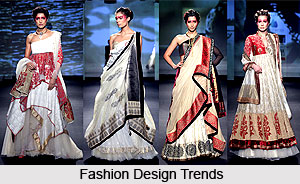
Evolution of Indian Contemporary Fashion

Evolution of Indian Contemporary Fashion, Indian FashionThe Changing Face of Indian Fashion is the trend that does not arrive to let come and go rather the changing phases of Indian Fashion. India is a country with diversified customs and cultures. People following various traditions live here, their way of dressing also differ from each other. The traces of Indians being fashionable can be found out from the ancient remains of Harappa and Mohenjodaro civilizations. After the independence, globalization is being witnessed in the Indian fashion industry, due to which changes have occurred in the style of Indian dressing.

Styles of wearing saris and salwar-kameez have changed. The look is more cosmopolitan than region-specific. Different styles of blouses like katori style, halter-neck, back button blouses, high neck blouses, puffed sleeve blouses, etc. have become the hot favourite among women. The average lengths of the blouses have decreased. Saris are draped mostly in traditional back Pallo style or Gujarati style. Indian fashion scene is greatly influenced by its films. For example Mumtaz style sari draping inspired by yester-year heroine Mumtaz.

As far as salwar-kameez is concerned numerous styles and patterns can be given to this garment. For instance the kameez can be long, short, A-line, skin tight, etc. Such variations can be done to salwar as well as dupattas. Modern version of kameez is known as kurti, it could be coupled with jeans, pants or churidar. It has taken the form of Indo-western outfit. People in western countries too have started wearing kurtis.

Evolution of Indian Contemporary Fashion, Indian Fashion Emergence of Mall Culture in Indian Fashion : Mall culture is slowly and steadily growing in India. Many brands and private labels are launched in the Indian market. The first such retail outlet was Shopper`s Stop which launched India`s first multi-brand store in the year 1993. The specialty of such malls is that they offer a wide range of varied branded stuff, all under single roof. Some of the famous malls of India are Pantaloons, Westside, Lifestyle, Globus, etc.

These retail outlets have also launched clothing line under private labels, manufactured and sold by them. For example- Pantaloons has many private labels under its brand like All, Fashion station and Mela. Some of the major private labels even operate as exclusive stores. The buyer gets an international shopping experience in such retail outlets. There are no nagging sales persons pressurizing the customers to buy.

Family stores are becoming hot favourite shopping hub for the middle-class and upper middle class shoppers. These stores sell garments of nearly all age groups and sexes. Apparels of various brands can be found in family stores. They are being considered as one-stop shopping destination. Roopam, Big Bazaar, Fashion station, V-mart, Maxx, etc are examples of some family stores.

Boutiques : Another aspect seen in the changing face of Indian garment industry is the increasing popularity of `Boutiques`. A boutique is a small shop or departmental store selling designer, unique and trendy products. A wide range of it can be displayed in a boutique like watches, lingerie, evening wear, sportswear, t-shirts, tuxedos, etc.

Boutiques are generally specialty stores. Exclusive designer items can be purchased from such stores. High profile designers of India mainly merchandise through their personal boutiques. However it is not mandatory that only famous designer open a boutique. Even common person could do it and make it big in this field. It could be started even with small investment of money.

More and more Indians are inclining towards designer wear outfits due to increase in income of the people. India`s first boutique was opened in Mumbai in 1965 named `Dagina` by Mr. Chandu Morarjee. Boutiques are operated both online and offline, this concept is yielding positive outcome for the retailers.

The emergence of fashion boutiques started off from Mumbai, them spreading onto Delhi, Chennai and other metropolitan and big cities of India. Also to support this concept, art galleries came up which usually showcase either ready-to-wear or ready-to-stitch garments. India`s first art gallery was opened by Gunvanti Vilji in Mumbai in 1972 under the name `Aakar art gallery`.

These fashion stores or designer boutiques display items which cannot be found in common retail malls or shops. These specialty stores even make customized garments that are made to order.

Some time back only rich and famous people were customers of such boutiques, but now due to increasing demand of designer outfits more and more fashions stores are opening up.
Evolution of Indian Contemporary Fashion, Indian Fashion
A new genre of talented housewife developed who used to design designer outfit under their own private label. These are the designers whose clientele ranges from a common Indians to the affluent class people. The next step in retail concept was the surfacing of `Fashion Houses`, which are headed by eminent designers. Ensemble was the first fashion house of India founded in 1987. The collections available in these outlets have very high price tag which could be afforded by the rich customers only.

Advent of Brands : The market of branded garments is growing up in India. More and more people are switching on to branded apparel then non-branded ones as it provide quality assurance. Liberty shirts were the first company to sell shirts under its brand name in India during 1950`s. Then there was no looking back for the branded apparel market.

Many national as well as international brands have established themselves in Indian garment industry. Allen Solly, Van Heusen, Louis Philipe, Charagh Din, Raymonds, Arrow, etc. are some leading national brands. The branded apparel market saw a boost due to growing denim demand. Many international brands entered the denim industry in India like- Lee, Levi`s, Seven Jeans, Pepe Jeans, etc. But these foreign brands get a tough competition from Indian branded denim manufacturers like Flying Machine, Wrangler, Killer, Numero Uno, etc.

Branded clothes have captivated the market of both menswear and women`s wear and slowly catching up in children wear segment. The Indian consumer has become brand conscious which is a sign of globalization of Indian apparel industry.

Fashion on the ramp : Displaying clothes through fashion shows is a western concept but now have become a common fashion event in India. In fashion catwalk the models display the collection of designers on ramp. In 1932 the first fashion catwalk was organized in India at Taj Mahal hotel by Catherine Courtney.

Fashion catwalk in India was started by Sylla and Nergish, the Spencer sisters. Now many conceptual, theme based fashion shows are being held in contrast to simpler forms of catwalk of yester years.

Beauty pageants : In India the popularity of beauty pageants have increased, especially Miss India contests. It has widely influenced the Indian fashion scenario. These contests are sponsored by leading companies related to textile, apparel, fashion and media. Miss India contest was first held in 1964 which was organized by Femina group. Reita Faria was the first Miss India to won international title of Miss World in 1966. She was followed by Zeenat Amaan winning the crown of Miss Asia-Pacific in 1970. Further the beauties who made it to the international beauty titles were Sushmita Sen ( Miss Universe 1994), Aishwarya Rai (Miss World 1994), Diana Hayden (Miss World 1997), Yukta Mookhey (Miss World 1999), Lara Dutta (Miss Universe 2000), Priyanka Chopra (Miss World 2000) and Dia Mirza ( Miss Asia-Pacific 2000). Eminent designers display their collection through the stunning outfits worn by these beauties. Indian fashion got international exposure and acclamation through the medium of such beauty contests.
Evolution of Indian Contemporary Fashion, Indian Fashion Budding designers Indians have started experimenting with fashion trends and styles; they are all geared up for the international exposure. This fact can be proved by the existence of 80+ odd small and big fashion schools in India. Thousands of designers are produced every year by these institutes. Designers are getting exposure through fashion weeks, here they can show their talent to Indian and foreign audience. These fashion weeks have contributed to the change in style preference especially in women wear. Indo-western or fusion wear is the most preferred manner of dressing gaining popularity globally. Pure traditional outfits are worn on special occasions only. Earlier buying designer wear outfit was a very costly affair and upper class people could only afford them. But now it is possible for the common people to wear designer clothes, this change occurred due to popularity of diffusion of fashion.

Indian fashion industry has come at par with international standards. It has become one of the most happening and revenue generating industry of India. The people like to dress in style which is accepted globally. Dressing has become of the important aspect of one`s identity and personality.


Fashion Design Council of India

Fashion Design Council of India, Indian FashionFashion Design Council of India is a non profit organisation that is accepted as it propagates fashion. Fashion Design Council of India (FDCI), thrives to be the apex body of Fashion Design in India, represented by over 350 members. Founded on the premise of promoting, nurturing and representing the best of fashion design talent in the country; its prime objective is to propagate the Business of Fashion.
Currently, the office is based in New Delhi with Mr. Sunil Sethi as the President and FDCI is supported by the Indian Textile Ministry. It also works very closely with fashion institute like NIFT.

Activities of Fashion Design Council of India
As an apex body for the fashion industry, FDCI is the nodal point for activities with the government and works closely with various Ministries. The Ministry of Commerce and Industry is supporting FDCI initiatives and facilitates international trade at the fashion weeks.

It has also played an important role in developing marketing strategies, setting standards and providing tangible value for its members over the last decade. A pan-Indian fashion body, FDCI weaves designers from various states, cities and towns of India into one cohesive body. Representing both established and emerging designers, it plays an important role in guiding the industry towards its goal of sustainable growth.

In the process of taking Indian Fashion to Global level, FDCI advises and assists fashion designers, retailers, models, make-up artists, hair stylists, choreographers and manufacturers in raising professional standards and improving business practices while creating domestic and international opportunities. It works at creating mutually beneficial tie-ups with similar councils in international fashion destinations and also with business worldwide.

FDCI is instrumental in facilitating designer corporate tie-ups, aimed at expanding the fashion market in the country and continues to make earnest endeavours to accelerate its efforts to ensure that Indian fashion creates a larger global imprint. With the undying support of the members, patrons and well wishers, including the national and international media, FDCI beckons brighter future.

Initiatives and charitable works of Fashion Design Council of India
FDI arranges the yearly mega-designer sale, presenting the designer garments at heavy discounts. 5% of the sale ensues from this event goes to the different kind of charities like Divya Chaya Turst in Kolkata, Observation Home, Mumbai, and the relief fund of Gujarat earthquake victims to name a few.

The FDI, in order to make funds for a People for Animals (PFA) scheme entered into a design coalition with the carpet weavers to weave the creations of artists such as S.H. Raza, MF Husain and Paresh Maity along with the designs of fashion designers such as Rohit Bal, Manish Arora, JJ Valaya, Rajesh Pratap Singh, Sabyasachi Mukherjee and Ritu Kumar, on a museum quality carpet that can be exhibited on walls or floors. The carpets bought from the exhibitions were accessible at a significant cheaper price to raise funds for the (PFA) programme.


Degree course in Fashion Designing

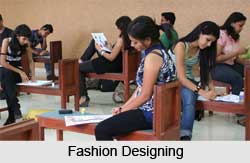
Degree course in Fashion DesigningA profession in Fashion Designing has recently emerged as one of the most sought out careers amongst students. The duration of the course is three-years.
Future prospects:
After the completion of the architecture course, the student can opt for:
• Garment Manufacturing
• Fashion Designing
• Merchandizing
• Industrial Designing
• Fashion Communication
• Accessory Designing
• Fashion Technology

Eligibility for the course:
Students who have passed the HSC examinations from any of the streams are eligible for this course.

Entrance Tests:
After the declaration of HSC examinations, the candidates are expected to give a Common Entrance Test conducted by the concerned colleges.

Top Colleges in India for Architecture:
• National Institute of Fashion Technology, www.niftindia.com
• National Institute of Design, www.nid.edu
• National Institute of Fashion Design, www.nifd.net


Share this Article:

Related Articles

More Articles in Costumes in India


Traditional Dresses of Jammu and Kashmir
The Traditional dresses of Jammu and Kashmir have historical significance to them and reflect the very rich cultural heritage of the state.
Traditional Dresses of Arunachal Pradesh
Traditional Dresses of Arunachal Pradesh reflect the ethnicity of the tribal population of the state. With 26 distinct tribes and over 100 sub-tribes, different tribes of this state wear different types of costumes.
Traditional Dresses of Assam
The traditional dress of Assam portrays the culture and essence of the state. People proudly follow the legacy left behind by their ancestors in the form of beautiful and exquisite pieces of traditional clothing worn during indigenous festivals and celebrations.
Traditional Dresses of Himachal Pradesh
Traditional Dresses of Himachal Pradesh are colourful and they vary from region to region, community to community, as well as from tribe to tribe.
Traditional Dresses of Madhya Pradesh
Traditional Dresses of Madhya Pradesh execute diversity in various aspects. Handicrafts and different textile techniques have given rise to a rich diversity of dresses of Madhya Pradesh.
Traditional Dresses of Meghalaya
The authentic and traditional dresses of Meghalaya reflect the cultural and social life of the tribal population of the state. The Khasi, Jaintias and Garos are the predominant tribes of Meghalaya region.
Traditional Dresses of Nagaland
Traditional Dresses of Nagaland mainly comprise shawls which are an extensively used item of the state. It is the most significant item used by the Naga people. The traditional dresses of Nagaland are worn mostly during the festivals.
Traditional Dresses of West Bengal
Traditional Dresses of West Bengal, with their exquisite design and traditional outlook, are appealing. The men’s and women’s wear have their own identity and characteristic features.
Traditional Dresses of Uttar Pradesh
Costumes of Uttar Pradesh are simple yet elegant. The people of Uttar Pradesh wear a variety of native and Western style dresses. They have separate category of costumes for daily wear and occasional wear as well.
Traditional Dresses of Manipur
Traditional Dresses of Manipur are simple and easy to wear. The patterns and designs on the costumes are very unique and colourful. Manipuris are setting new trends with their ancient and original attires.
Costumes of Punjab
Costumes of Punjab breathe vibrancy. Tradition marks the dress of the women:; colourful Salwar Kameez while Kurta-Pyjama or Lungi is worn by men.
Costumes of Bihar
Costumes of Bihar embody the rich cultural heritage of the state. Men don traditional outfits such as the Dhoti Mirjai, Kurta and Pajama, and Sherwani, while women grace themselves with elegant sarees and embellished lehengas.
Traditional Dresses of Jharkhand
Traditional Dresses of Jharkhand embody the simplicity and elegance of its inhabitants. From the one-piece Bhagwan worn by men to the sarees and Tussar silk sarees adorned by women, these costumes reflect the rich tribal heritage and cultural traditions of the region.
Costumes of Sikkim
Costumes and dresses of Sikkim reflect the youth and the zest that is integral to the people of this state. There are differences in clothing among the three communities of this state namely Lepchas, Bhutias and Nepalis.
Traditional Dresses of Tripura
Traditional Dresses of Tripura have their own traditional ethnicity. The traditional costumes of Tripura, such as Risa, Rignai, and Rikutu Gamcha, reflect the unique cultural heritage of the state. Skilled weavers create exquisite fabrics with intricate designs and motifs inspired by nature and tribal traditions.
Costumes of Uttarakhand
The costumes of Uttarakhand, a culturally diverse region in the Himalayas, showcase the rich heritage and traditions of its various communities. From the vibrant sarees and traditional jewelry of Garhwali and Kumaoni women to the colorful attires and unique accessories of tribal groups like Jaunsarees and Bhotias, the costumes of Uttarakhand reflect the cultural diversity, distinct identities of its people, and a trend which is suitable to the climate of the region.
Costumes of Andaman and Nicobar Islands
The costumes of Andaman and Nicobar Islands showcase a fascinating blend of indigenous tribal traditions and influences from modern settlers. While the compulsion of wearing costume for decency has not yet touched the tribes of Andaman and Nicobar islands, modern clothing adopted by certain communities reflects the diverse cultural fabric of the islands
Costumes of Lakshadweep
Costumes of Lakshadweep reflect a blend of tradition and cultural identity. Women typically wear the Kachi with a Thattam and embroidered jacket, while men don lungis. These garments, often made of silk or cotton, are now evolving with modern fabrics and styles, balancing heritage with contemporary influences.
Costumes of Chandigarh
Costumes of Chandigarh uphold a pleasing medley of rich heritage complemented with stylish modernity. The costumes of Chandigarh also showcase the city`s diverse cultural heritage and the unique beauty of enthnicity.
Traditional Dresses of Dadra and Nagar Haveli
The traditional dresses of Dadra and Nagar Haveli reflect the region’s tribal heritage. Women often wear saris, chaniyas (skirts) with blouses, or drape a turban in Maharashtrian style, while men prefer simple dhotis or loincloths. Adorned with jewelry and vibrant fabrics, these attires showcase cultural identity and community pride.
Costumes of Delhi
Costumes of Delhi embody the rich cultural heritage of the city while showcasing a unique fusion of traditional elements and modern trends. From the popular salwar kameez and sarees for women to the timeless kurta pyjamas and sherwanis for men, Delhi`s costumes make a vibrant and stylish fashion statement, reflecting the cosmopolitan nature of the city.
Costumes of Odisha
Costumes of Odisha is reflects the unique culture of the state. Odisha has an ancient culture and popular for classical dance.