 Energy resources in Madhya Pradesh have two major types, first conventional resources and second non-conventional resources. Conventional energy resources in Madhya Pradesh include Indian coal, petroleum, natural gas, atomic mineral, and hydropower. Except hydropower, all the other conventional resources are non-renewable. In Madhya Pradesh, coal is one of the main sources of energy. Non-conventional sources of energy include solar energy, wind energy, biogas, biomass energy, tidal energy, geo-thermal energy, etc. All these are renewable energy resources. Energy production in Madhya Pradesh has started from the year 1905. The main energy sources in the state are thermal power, hydropower, wind and solar energy.
Thermal power is the main source of energy in the state. The main thermal power plants are located in the main coal producing areas. The main thermal power plants of Madhya Pradesh are Amarkantak Thermal Power Plant, Satpura Thermal Power Plant, Chandani Thermal Power Centre, Jabalpur Thermal Power Plant, Sanjay Gandhi Thermal Power Plant and Pench River Thermal Power plant. Satpura Thermal Power Plant is located in Pather kheda coal area near Itarsi in Betul district, which is in the north slope of Satpura ranges. The construction in the plant was started in 1962 and completed in 1967. With the establishment of the plant, the production was started in the same year. It is joint venture of Rajasthan and Madhya Pradesh government.
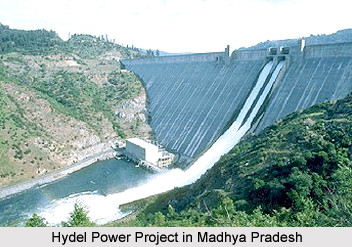
Hydropower is one of the most important renewable energy resources used in Madhya Pradesh. Along with declining natural resources due to excessive utilisation the importance of hydropower is remarkable. In Madhya Pradesh, there are ideal situations for constructing dam projects, particularly in the western part where many perennial rivers originate and flow.
The hydropower capacity of the state is 665 MW presently. Some of the main hydropower projects are Gandhi Sagar Hydropower Centre, Rana Pratap Sagar Hydropower Centre, Kota or Jawahar Sagar Hydropower Centre, Bergee Project and Ban Sagar Hydropower Centre. The degenerating trends of traditional energy resources due to excessive utilisation and limited availability pose severe threat for the future development of the area or region. The non-traditional resources are eco-friendly resources and they have much more capacity then to the traditional one. The non-conventional sources of energy are solar energy, wind energy, biogas, biomass, etc. Madhya Pradesh also has the ideal conditions for the development solar energy generation. Wind energy is another popular energy resource and the first wind energy plant is located at Dewas District.