
End of the Sixfold Policy includes the strategies according to which the state is to function externally. It further mentions the role of three ruler in doing all that is required at the end of six fold policies which includes nature of alliances, nature of movement of army according to the requirement, resting on peace and war by adopting double policy, attitude of assailable enemy and friends that deserve help, agreements regarding acquisition of gold, land and interminable agreement which is followed by the an assessment of enemies in the rear as well as assessing the attitudes of conquered kings who exist after the war.
Six fold policies as mentioned in Arthashastra include the circle of states which functions as the source of six fold policies. The six fold includes peace (sandhi), war (vigraha), observance of neutrality (asana), marching (yana), alliances (samsraya) and making peace with one and waging war with another. Kautilya lays down these conditions according to which the king is supposed to assess his own situation and then decide his plan of action.
End of the Sixfold Policy also mentions the nature of alliances which can be made within the two nations. The courses of alliance are always preferable when the advantages derived from peace and war is of equal nature and disadvantages are larger. In case of neutrality and war the situation for double alliance is more profitable which on one side equips the king to recover his resources and at the same time destroys the army and other resources of his enemy.
Among the other chapters the book discusses separately the nature of the inferior and superior kings as to who can be regarded as inferior and who can be regarded as superior and what all roles can be discharged by each. In case of marching against each other when two of whom one is assailable and the other is a strong enemy then the king with a strong enemy is supposed to charge first. In case of army, Kautilya suggests that it is easier to wage a war against the army which is full of lust and greed as they will loose on their own as impoverished with greed and list the army themselves get corrupted. Hence, Kautilya claims that no king should give; room to such causes as would bring about impoverishment, greed or disaffection among his people. If, however, they appear, he should at once take remedial measures against them.
End of six fold path deals with the various articles which are to take shape after the provision for war is ascertained. This includes agreement on acquisition of friends, gold, land interminable agreements as well as agreement to undertake work. It then takes into consideration the nature of the enemy at the rear, how to regain the lost power and the attitudes of conquered army, conquered king along with the attitude of Madhya king, the Neutral king and the circle of states.
Thus end of six fold unveils all the diplomatic strategies applied by a ruler to run his administration. The rules stated within the six fold have remained perpetual through out the history of ancient India which is regarded as the biggest contribution made by the Maurya Empire in the 4th century BC.
End of the Sixfold Policy
End of the Sixfold Policy as mentioned in Book VII mainly includes the policy of diplomacy of the king as well as his relationship with the neighbouring kings and the nature of all the kings involved in the war against a common enemy.
Recently updated articles in History of India
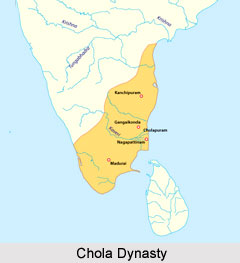
Chola Dynasty
Chola Dynasty is a Tamil dynasty and had longest duration of ruling in parts of South India. Chola dynasty had ruled South India successfully for a ex...
Suhungmung
Suhungmung was the fourteenth ruler of the Ahom dynasty who ruled from the period 1497 to 1539 AD. His reign was significant in terms of expansion of...
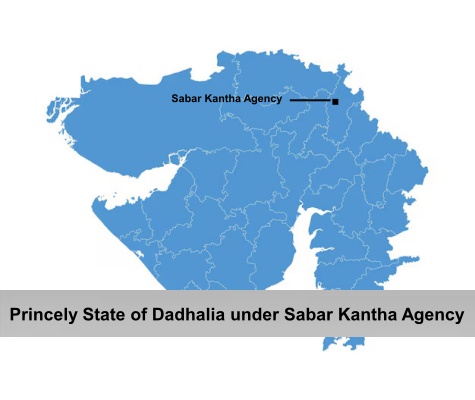
Princely State of Dadhalia
Princely State of Dadhalia was located in the present state of Gujarat. The state covered a total area of 28 sq miles and comprised of 15 villages. Th...
Princely State of Rupal
Princely State of Rupal was a part of the Baroda Agency, a sub division of Western India States Agency. It was under the administrative control of the...
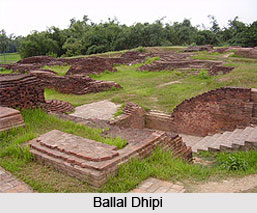
Archaeological Sites of West Bengal
Archaeological sites of West Bengal reveal several aspects of ancient India. Excavations by the Archaeological Survey of India have furnished artefact...
Related articles in History of India
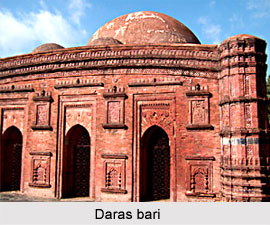
Mughal Architecture during Babur
Mughal architecture during Babur marked the foundation of a new architectural era in India, blending Timurid, Persian, and local influences. His reign...
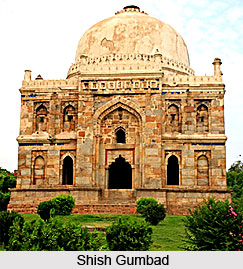
Architecture during Sayyid and Lodi Dynasty
Architectures during the Sayyid and Lodi dynasty were mainly the tombs and monuments for the dead rulers. It were carefully designed and meticulously...
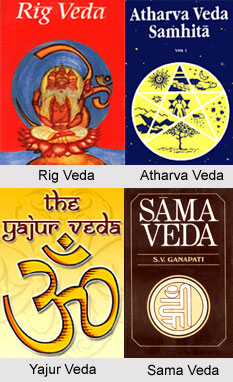
Brahmanical Sources of Ancient History
Brahmanical Sources of ancient history are contained in the Vedas and they constitute one of the most important literary sources of information about...
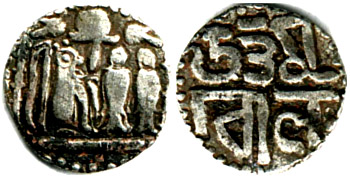
Coins of Chola Empire
Coins of Chola Empire were issued in gold, silver and copper and carried the Chola emblem.
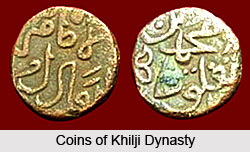
Coins of Khilji Dynasty
Coins of Khilji Dynasty had an influential feature that was followed by the other dynasties.