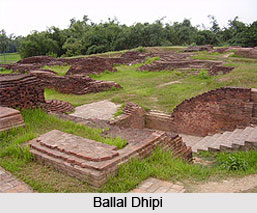
 Big and modernised cities like Mohenjodaro and Harappa are evidence of the effective economic conditions of the Indus Valley citizens. Following professions, trades etc., a picture of the economic life of people of Indus Valley is illustrated below :-
(a) Agriculture- The Harappans were agriculturalists. Their economy was entirely dominated by horticulture. The Indus River valley was quite fertile when the Harappans thrived there. Agriculture was their chief line of work. Main agricultural products comprised wheat, barely, rice, cotton, vegetables etc. There were vast storehouses to gather food grains etc. Sickles and other types of agricultural equipments have also been found.
(b) Domestication of Animals-This was another means of sustenance of the Indus Valley civilisation. The seals identified, depict that primary animals were cow, bulls, buffaloes, sheep, goat, camels etc.
(c) Hunting-Besides being a means of entertainment, hunting was also a means of sustenance. They merchandised the skins, hair and bones of different animals. Fishing was also admired.
(d) Weaving and Spinning-Various objects excavated, establish that weaving and spinning were admired among the community. Cotton as well as wool was used for designing clothes.
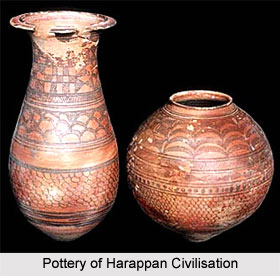
(e) Pottery-Indus Valley inhabitants were skilled to manufacture pottery of a very lofty standard and it is "the earliest example of its kind in the ancient world". It was constructed on a wheel. Numerous statuettes on the pots have been excavated. Domestic vessels like heaters, store-jars, offering stands etc., were manufactured. Glazing vessels of copper, bronze, silver and porcelain were also created.
(f) Metals and Minerals-Gold, silver, bronze and lead were utilised. Most of the pots unearthed were made from copper and bronze. The use of these metals itself establishes the economic conditions of the people. However, iron was possibly alien to them.
(g) Trade and Commerce-This ancient civilisation had trade relations with other countries. Gold, silver, copper and other precious stones which have been excavated in Mohenjodaro and Harappa, must have been fetched from foreign countries, because till then they were not found here. Trade of cloth was accomplished with other countries. Particular objects of Indus Valley Civilization discovered in Sumeria, corroborates the trade relations with foreign countries. There were trade dealings with West Asia also. The trade was achieved through river routes. The designs of boat substantiate it.
(h) Weights and Measures-Particular weights and measures were excavated during diggings in Harappa and Mohenjodaro. Some of the weights were so large that they were hauled by ropes. Others were of a small size, normally used by jewellery makers. Besides the measure of cubic system, foot system was also in vogue.
Thus, it can be seen that there was rapid economic activity in the Indus Valley and citizens were affluent.