
One of the prerequisite for a building is to have a plot. Once the right kind of plot has been selected Vastu Shastra advises that the plot is divided and then the construction work for the building proceeds following a well laid out plan.
•The plot for construction should preferably be square or rectangular.
•By drawing a central axis the plot should be divided into 4 rectangular parts. Amongst these parts construction should be done on the south west part of the west and the south directions.
•On the east and the north side it is important to leave space than that on the west and the south sides. The reason behind this is the east and the north sides get the maximum of the auspicious sunrays.
•Free space should be left on all the sides of the building. Moreover the height of the plinth should be 2 to 4 feet.
•There should be no construction for outhouse, garage shade and other units by taking the support of the compound wall in the north-east, the south-east or the north-west directions. Only a store room for lumber can be built. In case it is built the support of the south-west wall in the south-west corner should be taken.
•In the north-east block of the plot there can be a well, boring, underground water storage tank, garden or fountain. However, the ground level of these things should be less than the plinth level of the building. But these should not be constructed in front of the compound gate.
•The south-east block, at a distance of 2-3 feet from the compound wall, is suitable to construct watchman quarters, boiler room, transformer room and canteen.
• In the north-west section of the plot godown for grain, fodder for animals and store for finished product, motor garage or servant`s quarters can be built.
Division of the Plot
Vastu Shastra provides useful tips to divide the plot for construction.
Recently updated articles in Religion in India

Kusumayudha
Kusumayudha is a name of Kamadeva, the Hindu God of Love. Depicted with a sugarcane bow and flower-tipped arrows, he represents attraction and longing...
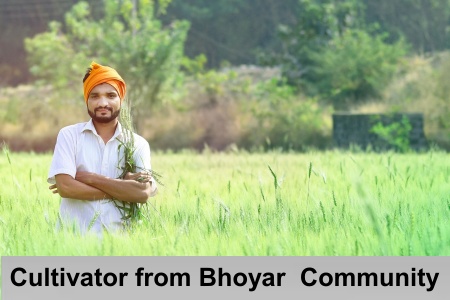
Bhoyar Caste
Bhoyar Caste is largely found in the Central Provinces of the country. Traditional occupation of Bhoyars is agriculture. They are good cultivators and...
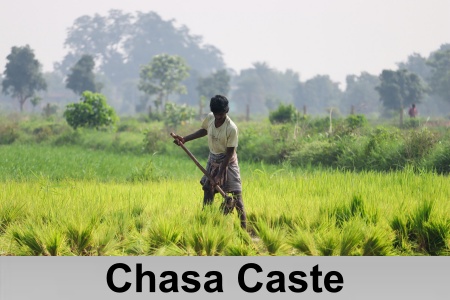
Chasa Caste
Chasa caste is a prominent agrarian community native to Odisha. Traditionally associated with cultivation and farming, Chasas have historically played...

Vigneswara, A Form of Lord Ganesha
Lord Vigneswara is another form of Lord Ganesha or Vinayaka, prominently worshipped as the God of intelligence and good luck in the Indian subcontinen...

Maheswara
Maheswara, meaning “the Great Lord,” is a revered name of Lord Shiva in Hindu tradition. It represents Shiva’s supreme authority over creation, preser...
Related articles in Religion in India
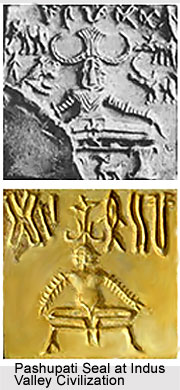
Religion in Indus Valley Civilization
Religion in Indus Valley Civilisation included Hinduism, Buddhism and Jainism. Details about the religion in Indus Valley Civilization have been gathe...
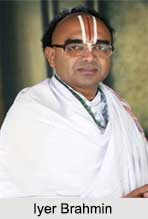
Iyer Brahmin
Iyer Brahmins are originally from Tamil Nadu of South India. They are known for their adherence to Advaita philosophy and Smarta traditions. Tradition...
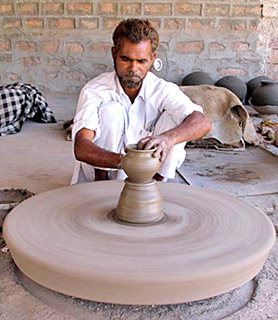
Kumbhakar / Kumhar Caste
Kumbhakar or Kumhar caste is a traditional artisan community in India known for pottery making. Derived from Sanskrit word Kumbhakar, meaning potter,...

Gujjars in Mughal Era
Gujjars in the Mughal era enjoyed great power. Further their power increased with the decline of Aurangzeb, Mughal emperor.
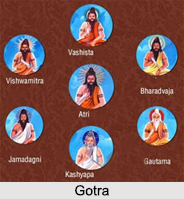
Gotra in Hinduism
In Hinduism, gotra refers to a lineage system tracing descent from ancient sages, primarily through the paternal line. Originating from Vedic traditio...