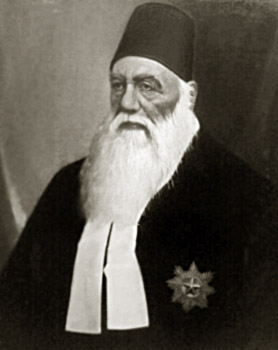
 Differences between Muslim League and the Indian National Congress can be traced back till the formation of Indian National Congress in 1885 by certain western educated Hindu elites which gave birth to a lot of discontentment and dissatisfaction among the Indian Muslims who gradually felt ignored as they were not represented in the newly made peoples` Democratic Party. This led to the growth of Aligarh school under Sir Sayeed Ahmed Khan who for the first time made it feel that the Muslims in India were actually subsiding behind due to lack of western education and that it will cost the future generations who will be deprived of any political representation. The relationship
Between Muslim league and congress saw many upheavals. At times it required cooperation from both while sometimes it stood on complete opposition to each other. Overall their relationship as well as their relationship can be assessed within various phases.
Differences between Muslim League and the Indian National Congress can be traced back till the formation of Indian National Congress in 1885 by certain western educated Hindu elites which gave birth to a lot of discontentment and dissatisfaction among the Indian Muslims who gradually felt ignored as they were not represented in the newly made peoples` Democratic Party. This led to the growth of Aligarh school under Sir Sayeed Ahmed Khan who for the first time made it feel that the Muslims in India were actually subsiding behind due to lack of western education and that it will cost the future generations who will be deprived of any political representation. The relationship
Between Muslim league and congress saw many upheavals. At times it required cooperation from both while sometimes it stood on complete opposition to each other. Overall their relationship as well as their relationship can be assessed within various phases.
First Phase of Muslim League and Congress
From its inception Indian National Congress was mainly stood as a representative body of the Hindu elites who followed the moderate methodology to confront the British government. This was not accepted and led to Congress split in 1905 giving birth to the Extremist Party on the other side. It was during the same period when All India Muslim League was also founded which represented the Muslims of India. Initially both the parties began a smooth working during this phase. Overall this phase was marked by the inception of both the parties which believed in cooperation and coexistence among the both. Although the major issue of opposition among the two had been on the question of representation which finally led to partition in the long run.
 Second phase of Muslim league and Indian National Congress
This phase is mainly known for the cooperation that existed between the two parties during the Lucknow pact, non cooperation movement and Khilafat movement. The period between 1919-20s saw the most harmonious period between the two parties which were never visible in the near future. During this period both the congress as well as Muslim league cooperated with each other which turned to be the biggest threat to the British Government which made all efforts to break this harmony. This marked the third phase of their relationship which was mainly marked by distrust, dishonour, conflicts as well as bloodshed.
Third Phase of Muslim league and Indian National Congress
The third phase mainly includes the period of 1930s and 1940s till the independence and partition of India. The golden era of Indian politics which was visible during 1920s threaten the foreign rule in the subcontinent which made all efforts to break the liaison. To begin with the introduction of communal awards followed by a number of pacts and Government acts deepened the age old discontentment between the Hindus and the Muslims. The British government along with its divide and rule policy encouraged every effort of the league to enlarge the gap between the two communities. It was with this effort that the British government took no official step to resist the two nation theory and partition later on. The main grievances which marked this phase was the issues like Hindu Muslim differences, equal representation of both in the government machinery and differences of both the communities on the basis of religion, caste and race.
The third phase was mainly marked by the overall bitterness between both the parties. One such important issue which marked the difference was the Hindu Muslim conflict. Hindus and Muslims the two largest communities living in India entered into pitched political battles as a result of the political developments that captured the Indian freedom struggle. This not only created warring agitation among both but also raised the new issue of minorities which remained a main issue of Muslim league. The differences got more furated with the results of general elections and provincial elections held under the British rule .As the league failed to gather popular support in comparison to the congress this added to the dissatisfaction. All this ended up, into loss of innocent lives and division of the subcontinent into two dominions.
Thus, the relationship between Muslim League and Indian National Congress which began nearly at the same time with a motive of smooth cooperation entered into bed of differences in the third phase which came to halt only with the partition of the sub continent. The league -congress relationship had been one of the most controversial issue during the time of Indian Independence.