
They deity of Muttal Ravuttan takes a different form according to the offerings made to him. For instance in Melacceri Draupadi temple Muttal Ravuttan is worshipped there in two forms: in one he receives vegetarian offerings, in the other non-vegetarian offerings. The former are made to an image of Muttal Ravuttan the horse-rider, sculpted in relief on a stone plaque set beside a similar plaque portraying Pottu Raja, who also receives vegetarian offerings. These two slabs stand under the entrance to the Pottu Raja mandapa and are in the direct line of sight of Draupadi, from the vantage point of her main stone image in the temple`s inner sanctum. On the other hand the no vegetarian offerings are made to an aniconic Muttal Ravuttan, roughly a rectangular slab of rock, daubed with dots of red kumkum that stands upright (lengthwise) on a concrete platform in its own separate mandapa, a box-shaped flat-roofed brick and masonry structure with its opening to the east. This mandapa stands away from the goddess`s line of sight, to the northeast of her temple`s inner sanctum.
Muttal Ravuttan has no processional icons that oversee festival ceremonies. The no vegetarian offerings to Muttal Ravuttan are made out of the goddess`s line of sight. Moreover, they are made at no regular time in her festival, but by arrangement with the pucari; or at times when there is no festival in the fulfillment of personal vows or after the main ceremonies of the festival are over.
It can be said that Muttal Ravuttan`s icons are, if anything more varied than his myths. Muttal Ravuttan is one of the figures, along with Pottu Raja, to whom the Draupadi cult imparts some of its symbolism. The aniconic Muttal Ravuttans have various settings. Some are found within the enclosure of an outer mandapa. Some are found in small enclosures within the temple grounds, often if a temple is so protected at the base of the outer wall. And some are placed adjacent to properly iconic figures: at Pakkiripalaiyam, for instance, beside a little stone image of Muttal Ravuttan`s horse; and at other places, near to anthropomorphic images of Muttal Ravuttan himself.
Although there is considerable variety, one finds representations of two general types. In one, Muttal Ravuttan is sculpted in stone and shown by him, either in the open air or in a three-sided enclosure; in the other, he is sculpted from wood and painted plaster, and is shown surrounded by various human and animal attendants in a true mandapa. The stone images show Muttal Ravuttan seated with left leg tucked, right leg forward and overhanging, paunchy belly and with moustache, turban, beard and sword. These features are all repeated in the portrayals of Muttal Ravuttan in the larger mandapas.
A core area composite of the Muttal Ravuttan images would show him with a turban, usually yellow with a flame like design rising to a point on the top, a red face, eyes bulging and glazed; perhaps golden earrings and a Shaivite namam mark on his forehead; a green jacket with epaulettes that is cinctured above his generously protruding belly; yellow or blue pantaloons; and a sword or dagger in his right hand.
Deity of Muttal Ravuttan
Deity of Muttal Ravuttan in the Draupadi Temples of South India generally has two different forms. The deities or icons of Muttal Ravuttan are found to resemble the Shaivite deities.
Recently updated articles in Religion in India
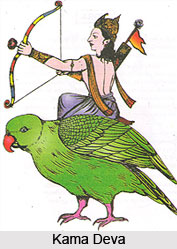
Kusumayudha
Kusumayudha is a name of Kamadeva, the Hindu God of Love. Depicted with a sugarcane bow and flower-tipped arrows, he represents attraction and longing...
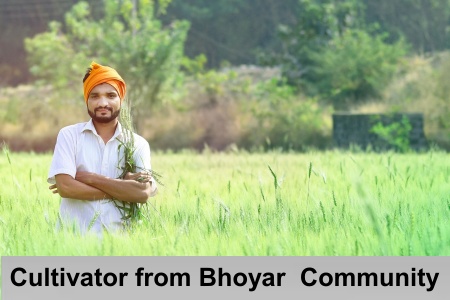
Bhoyar Caste
Bhoyar Caste is largely found in the Central Provinces of the country. Traditional occupation of Bhoyars is agriculture. They are good cultivators and...
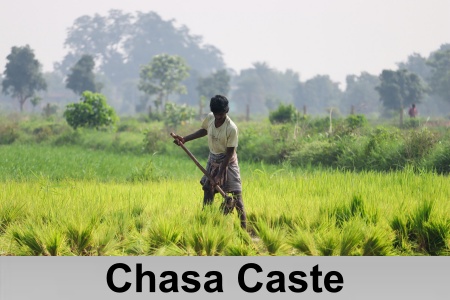
Chasa Caste
Chasa caste is a prominent agrarian community native to Odisha. Traditionally associated with cultivation and farming, Chasas have historically played...
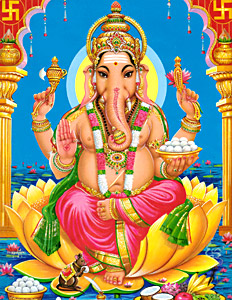
Vigneswara, A Form of Lord Ganesha
Lord Vigneswara is another form of Lord Ganesha or Vinayaka, prominently worshipped as the God of intelligence and good luck in the Indian subcontinen...
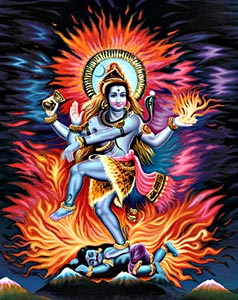
Maheswara
Maheswara, meaning “the Great Lord,” is a revered name of Lord Shiva in Hindu tradition. It represents Shiva’s supreme authority over creation, preser...
Related articles in Religion in India
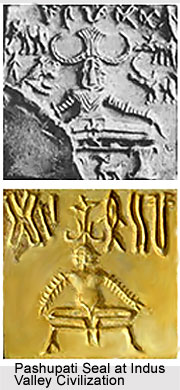
Religion in Indus Valley Civilization
Religion in Indus Valley Civilisation included Hinduism, Buddhism and Jainism. Details about the religion in Indus Valley Civilization have been gathe...
Iyer Brahmin
Iyer Brahmins are originally from Tamil Nadu of South India. They are known for their adherence to Advaita philosophy and Smarta traditions. Tradition...
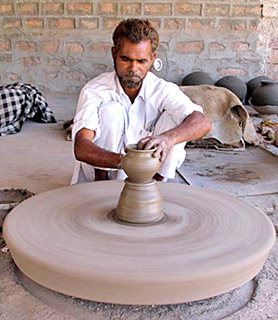
Kumbhakar / Kumhar Caste
Kumbhakar or Kumhar caste is a traditional artisan community in India known for pottery making. Derived from Sanskrit word Kumbhakar, meaning potter,...

Gujjars in Mughal Era
Gujjars in the Mughal era enjoyed great power. Further their power increased with the decline of Aurangzeb, Mughal emperor.
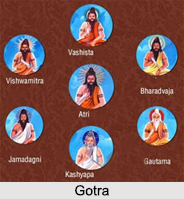
Gotra in Hinduism
In Hinduism, gotra refers to a lineage system tracing descent from ancient sages, primarily through the paternal line. Originating from Vedic traditio...