
Jainas had to fight their battle on two fronts since the days of Mahavira: against the followers of the Vedic Brahmanic religion and against Buddhists. They fought on the first front for their faith against the Vedic manifestation, its bloody sacrifices and its social order which assured precedence to the Brahmanas over all other sections of the society; and on the second, against the Buddhistic denial of the self and its doctrine of salvation which acknowledged asceticism only in a negligible measure and considered the saints other than the Tirthankaras as those who could guide one`s path to salvation. Buddhism had oppressed Jainism for some time quite strongly.
Kumarila, the restorer of the Vedic sacrificial service, and Sarikara, the pioneer of the illusionist doctrine of non-duality, also proceeded, with all the weapons of their spirit, against the Jaina-doctrine as a heterodoxy which was inimical to the Vedas. The constant progress of the movement coming from the orthodoxy against all heterodox trends increased the pressure, gradually but surely, and it weighed heavily upon the Jaina clan, and although this knew to ward-off the attacks, its position had become much weaker and it was shaken.
The consequence of the awakening of the Brahmanic religiosity was the revival of the Vaishnavite and Shaivite sects. Shaivism and Vaishnavism proved to be particularly dangerous opponents, and they did a severe damage to Jainism, particularly in the Deccan and the south.
The Shaivite sect of the Lingayats was another mighty enemy of Jainas. Lingayats proceeded against Jainas extremely fanatically, damaged their properties and life, destroyed their temples or appropriated them for their purpose. It is said that Saint Ekantada-Ramayya had particularly excelled in the propagation of the new doctrine.
It is seen from the inscription from the year 1368 that Jainas were oppressed later by the Sri Vaisnavas. Jainas then complained to King Bukkaraya-I of Vijayanagar against the persecutions to which they were subject on the side of the Vaishnavites. The king then ordered that the members of both the religions should enjoy the same cultural freedom in his land. Further he ordered that 20 guards be appointed near the Gommata-statue in Sravana Belgola to protect the shrine from denigration and saw to it that the destroyed temples were repaired.
The growing might of Hinduism was not revealed to Jainism in its losing the followers. It was also expressed in the increasing inclination of its follower`s towards Hinduistic views and customs. Thus more and more Hindu-deities were mentioned in the Jaina-literature from now on, although they have no place in the Jaina-system. They also used terms which reveal a strong Influence of the Vedanta; and in the following period, there was greater reconciliation even in the religious belief and social life.
Decline of Jainism in India
Decline of Jainism in India was mainly due to other growing religious faiths like Buddhism and the Vedic Brahmanic religion. The tenets of these religions disregarded the principles of Jainism and many places brought about a number of converts.
Recently updated articles in Religion in India
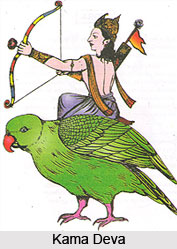
Kusumayudha
Kusumayudha is a name of Kamadeva, the Hindu God of Love. Depicted with a sugarcane bow and flower-tipped arrows, he represents attraction and longing...

Bhoyar Caste
Bhoyar Caste is largely found in the Central Provinces of the country. Traditional occupation of Bhoyars is agriculture. They are good cultivators and...
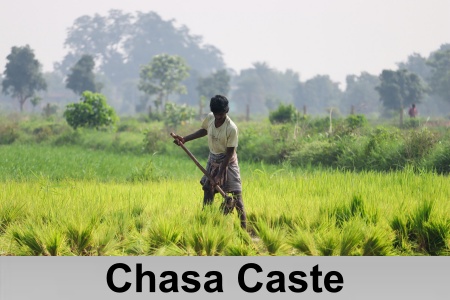
Chasa Caste
Chasa caste is a prominent agrarian community native to Odisha. Traditionally associated with cultivation and farming, Chasas have historically played...
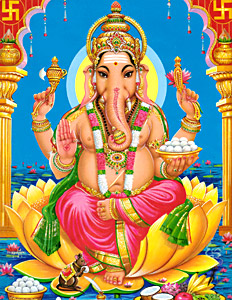
Vigneswara, A Form of Lord Ganesha
Lord Vigneswara is another form of Lord Ganesha or Vinayaka, prominently worshipped as the God of intelligence and good luck in the Indian subcontinen...
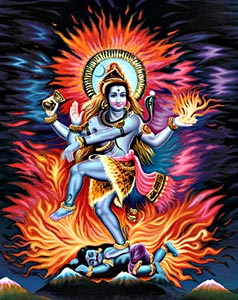
Maheswara
Maheswara, meaning “the Great Lord,” is a revered name of Lord Shiva in Hindu tradition. It represents Shiva’s supreme authority over creation, preser...
Related articles in Religion in India
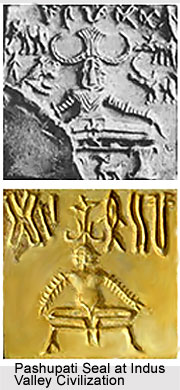
Religion in Indus Valley Civilization
Religion in Indus Valley Civilisation included Hinduism, Buddhism and Jainism. Details about the religion in Indus Valley Civilization have been gathe...
Iyer Brahmin
Iyer Brahmins are originally from Tamil Nadu of South India. They are known for their adherence to Advaita philosophy and Smarta traditions. Tradition...
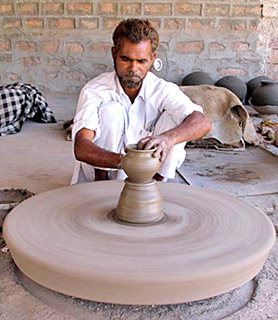
Kumbhakar / Kumhar Caste
Kumbhakar or Kumhar caste is a traditional artisan community in India known for pottery making. Derived from Sanskrit word Kumbhakar, meaning potter,...

Gujjars in Mughal Era
Gujjars in the Mughal era enjoyed great power. Further their power increased with the decline of Aurangzeb, Mughal emperor.
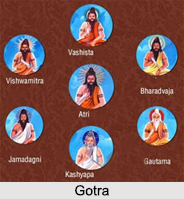
Gotra in Hinduism
In Hinduism, gotra refers to a lineage system tracing descent from ancient sages, primarily through the paternal line. Originating from Vedic traditio...