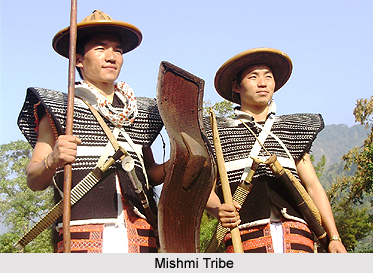
 Culture of Lohit district is very rich and includes different types of fairs and festivals of the people residing here. At Lohit district, the native population is tribal and belongs to different communities. They are mainly the Mishmi Tribe, Khamti Tribes and Singpho Tribe. Their traditional dances, games and sports can be enjoyed in celebration. Tamladu festival and Sangken are the main festivals celebrated in this district. The Mishmis on 15th of February and Sangken, the main festival of the Khamtis and Singphos, celebrate Tamladu and it is celebrated on 14th of April every year.
Sangken is the festival of Khamtis, people who reside in the plains of Lohit district. In this occasion, people offer bath to the images of Lord Buddha ceremoniously. This festival is generally celebrated in the month of April in order to welcome the beginning of the New Year and interestingly the celebrations last for three successive days. During the festival, people prepare several dishes and distribute them among relatives and friends. The main attraction of Sangken festival is the prayerful pouring of clean water on the statues of lord Buddha placed at several places by each and everyone on routine basis. The statues of Gautama Buddha are taken back to their original place of worship, from where it was originally brought with loads of fanfare and enthusiasm, on the last day of the festival.
The Mishmi tribe celebrate Tamladu where the God of earth and the God of water are worshipped for protection against all the natural calamities. In this festival the people welcome the New Year by performing a special dance with unbounded joyousness. They consider Sun God as the creator.
The Khamtis and the Singphos are Buddhist where as the Mishmis are the follower of typical faith, belief and practices. In Lohit district, Monogamous is the general rules of marriage. Singing, dancing and playing are an integral part and parcel of their life. Group dances are common along the different tribes in the district.
The Mishmis principally perform two types of dance popularly known as Buiya Dance and Nuiya. Another most attractive dance form performed by the people of this district is called as the `Khamtis Mask-dance`. In this dance form, two dancers wear heads masks representing cock`s heads and these two dancers dance like fighting cocks. Hence, it can be said that the cultures and traditions of Lohit district differ as per the beliefs of the people belonging to different tribal groups.