
Conduct of the courtiers as mentioned in Book V of Arthashastra is mainly concerned with the awards of punishments; replenishment of the treasury; concerning subsistence to government servants; the conduct of a courtier; time-serving; consolidation of the kingdom and absolute sovereignty. While it was considered necessary to remove the thorns of the society it at the same time became necessary to treat those measures to suppress the treason against the king and his kingdom. With this motive this book has been oriented towards the measures to be taken for the security of subjects both within and outside the boundaries of the kingdom.
Conduct of Courtiers include in its first part the awards of punishment in which the king is advised to be alert and observing the persons who are intriguing against the king. The king is advised to use the spy system to identify these groups of people, but at the same time he is also advised not to trust them blindly which will mislead then king. Secondly, the next chapter of the book advises the king who is running short of money can extract money from those lands which solely depend on rain for water and are rich in grains. He can also demand one-third and one-fourth of the farmers grains depending on their capacity. Even the merchants dealing with gold, silver, precious stones, horses and elephants are also supposed to contribute to the royal kosha by adding 50 karas. As such it clearly mentions the ways the king can equip himself in times of crisis which is different from regular tax collection. Rather it also makes the best utilisation of resources available with the kingdom.
The following chapter is concerned with the subsistence of the government servants who are supposed to serve the king in his fort. Their salaries are to be readjusted with other office bearers. This includes the priests, doorman, princes and prince`s nurses, commanding officers of the army and many more who are enlisted in the chapter. The following chapter is significant as it includes the specific qualification of the courtiers. Once selected for the courtship he surrenders all his allegiance to the king.
After attending to the king and the courtiers, the minister is then free to behave as a time server where he was supposed to change his behaviour according to the requirement. This helped him to show anger, displeasure and pleasure, sorrow, fear and determination. Further his responsibility increased as a minister as he was responsible for giving details of net revenue that remains after all expenditure. He was also expected to accompany the king for hunting, gambling and at times of leisure. He endeavoured to read the king`s mind and his level of consciousness towards the daily working of the ministry.
Thereafter, the minister was supposed to make all efforts to avert natural calamities in which the king was involved. In order to do so all the required writs under the state religion were to be observed.
The minister`s next job was to appoint two reliable persons under whose command the treasury and army would remain and function within the state boundaries and the premises of the fort. Further the minister was also responsible for selecting an heir apparent for the kingdom. In case of sudden demise of the king in an enemy area the minister after getting into an agreement chose either to behave as an enemy of dead king alongwith his friends and neighbours or set an army against the empire without a proper king. Overall Kautilya leaves the minister with complete sovereignty to decide the future of the king as well as the kingdom.
Thus, the Book V regarding the Conduct of the Courtiers mainly describes the powers bestowed in the minister when the king is inactive. It renders the minister as the real machine for running the administration.
Conduct Of Courtiers
Conduct of Courtiers had remained the major issue of the book V of Arthashastra. Along with regulations regarding the functioning of government, thisbook also includes the specific official conduct of the office bearers.
Recently updated articles in History of India
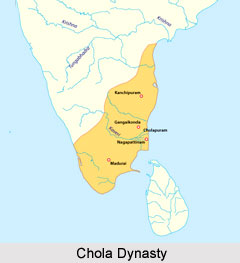
Chola Dynasty
Chola Dynasty is a Tamil dynasty and had longest duration of ruling in parts of South India. Chola dynasty had ruled South India successfully for a ex...
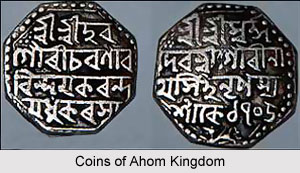
Suhungmung
Suhungmung was the fourteenth ruler of the Ahom dynasty who ruled from the period 1497 to 1539 AD. His reign was significant in terms of expansion of...
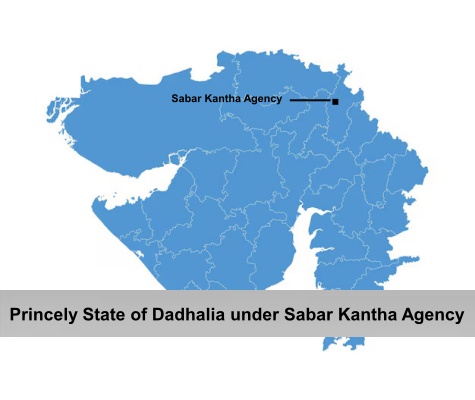
Princely State of Dadhalia
Princely State of Dadhalia was located in the present state of Gujarat. The state covered a total area of 28 sq miles and comprised of 15 villages. Th...
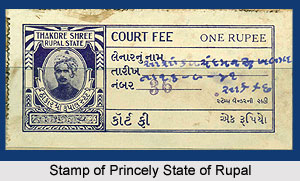
Princely State of Rupal
Princely State of Rupal was a part of the Baroda Agency, a sub division of Western India States Agency. It was under the administrative control of the...
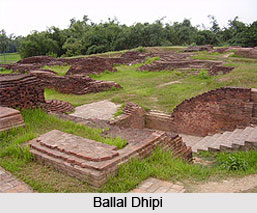
Archaeological Sites of West Bengal
Archaeological sites of West Bengal reveal several aspects of ancient India. Excavations by the Archaeological Survey of India have furnished artefact...
Related articles in History of India

Mughal Architecture during Babur
Mughal architecture during Babur marked the foundation of a new architectural era in India, blending Timurid, Persian, and local influences. His reign...

Architecture during Sayyid and Lodi Dynasty
Architectures during the Sayyid and Lodi dynasty were mainly the tombs and monuments for the dead rulers. It were carefully designed and meticulously...

Brahmanical Sources of Ancient History
Brahmanical Sources of ancient history are contained in the Vedas and they constitute one of the most important literary sources of information about...

Coins of Chola Empire
Coins of Chola Empire were issued in gold, silver and copper and carried the Chola emblem.

Coins of Khilji Dynasty
Coins of Khilji Dynasty had an influential feature that was followed by the other dynasties.